

Baton Rouge is often treated as a place to drive through between New Orleans and Lafayette, but Louisiana’s capital works well as a one- or two-night stop. The city combines state politics, river history, major universities, museums and a food scene influenced by several parts of Louisiana. Downtown sights cluster near the Mississippi, while LSU and other attractions lie farther south. That geography makes Baton Rouge easier to understand when you plan by zones rather than bouncing between individual attractions. One current detail matters for 2026: the Louisiana State Capitol building remains open, but the 27th-floor observation deck is closed for renovations according to Visit Baton Rouge.
Start with the Louisiana State Capitol
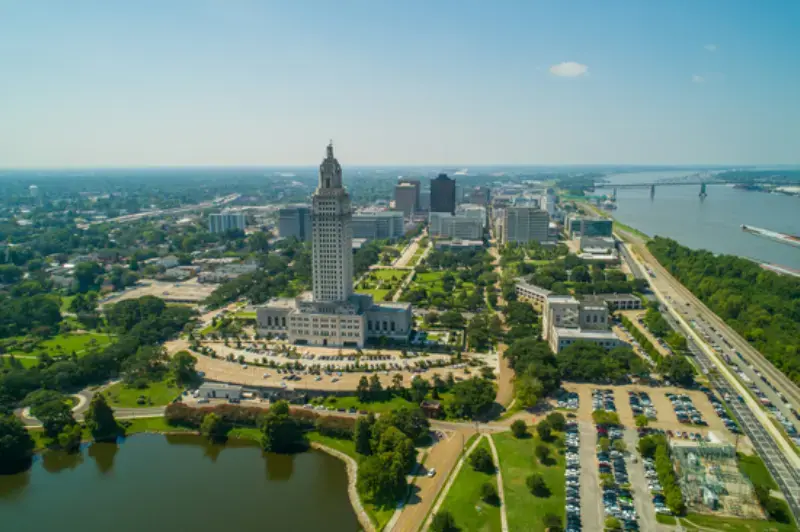
The State Capitol is the city’s defining landmark and a logical first stop for understanding Baton Rouge’s political role. Even with the observation deck currently closed, the building and grounds are worthwhile for architecture, history and the setting near Capitol Lake. Check current security and visitor hours before arriving because government-building access can change. Pair it with the nearby Capitol Park Museum if you want a broader introduction to Louisiana history rather than visiting the capitol as a quick photo stop.
Compare available accommodation for your dates, budget and preferred location before you finalize your route.
Walk the downtown riverfront and Old State Capitol
The Mississippi River gives downtown Baton Rouge its orientation. Louisiana’s Old State Capitol, with its distinctive Gothic Revival appearance, provides a dramatic contrast to the taller modern capitol. From there, the riverfront and nearby museums can be connected on foot when weather is comfortable. Summer heat makes the same route much harder at midday, so start outside and move indoors as temperatures rise.
Choose one major museum rather than trying to do all of them
The Capitol Park Museum focuses on Louisiana culture and history, while the USS KIDD Veterans Museum adds military and naval context along the riverfront. Families may also prefer attractions designed around interactive learning. Baton Rouge has enough museums that a rushed day can become entirely indoor if you are not careful. Pick the one that best complements the rest of your Louisiana route: state history if New Orleans is already heavy on music and food, or the USS KIDD if military history is a major interest.
Spend time around LSU if campus culture interests you
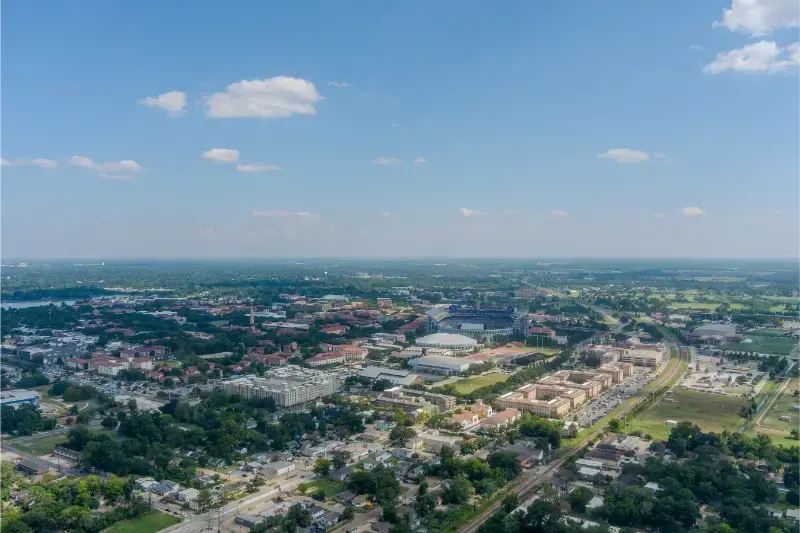
Louisiana State University shapes much of the city’s identity. On ordinary days, visitors can explore the campus area and nearby lakes, but football weekends transform traffic, hotel prices and restaurant demand. If you are not attending a game, check the LSU schedule before booking because a home weekend can make a simple overnight significantly more expensive. If you are attending, build the entire day around campus rather than trying to combine game traffic with downtown sightseeing.
Eat beyond a single definition of Louisiana food
Baton Rouge sits at a crossroads of South Louisiana flavors, so menus can include Creole, Cajun, Southern, seafood and contemporary influences. This is a good city for plate lunches, boudin, fried seafood and modern local cooking without the same visitor pressure found in central New Orleans. Ask what is seasonal and use lunch to try a casual regional specialty, then reserve dinner only if a particular restaurant matters to you.
Consider the Bluebonnet and Mid City areas for a broader visit
Downtown is best for government and river sights, but Baton Rouge spreads far beyond it. Mid City has independent food and arts activity, while the Bluebonnet area includes family-oriented attractions and shopping. These areas make more sense with a car, and they are one reason Baton Rouge works differently from New Orleans. Rather than choosing a hotel based only on the lowest rate, match the base to the part of the city you will actually use.
Add a plantation-history site only with the right expectations
The River Road corridor between Baton Rouge and New Orleans includes historic plantation sites, but interpretation varies significantly. Choose places that address slavery, forced labor and the lives of enslaved people directly rather than presenting only architecture and decorative arts. Allocate enough time for exhibits and guided interpretation. Turning these sites into quick photo stops strips away the history that makes them important.
A one-day Baton Rouge itinerary

Begin at the State Capitol and Capitol Park Museum, have lunch downtown or in Mid City, then visit the Old State Capitol and riverfront. Choose either the USS KIDD or an LSU-area stop in late afternoon. Dinner can be downtown, Mid City or near your hotel. This plan minimizes driving while still showing several sides of the city. If the capitol observation deck reopens after publication, treat it as an optional addition rather than the reason for the visit.
When to stay overnight
Stay one night if Baton Rouge breaks up a drive between New Orleans and Lafayette or if you want two museums without rushing. Two nights make sense for an LSU event, a focused River Road day or a slower food itinerary. Otherwise, Baton Rouge can be a long day trip, but the drive back to New Orleans after dinner adds fatigue that an inexpensive overnight can avoid.
Best time to visit
Spring and autumn are usually more comfortable for outdoor sightseeing than midsummer. Football season brings strong atmosphere around LSU but also traffic and higher hotel demand. Hurricane season affects the broader Gulf region from June through November, so keep weather flexibility during late-summer and early-autumn trips.
How long to stay
One full day covers the capitol area, riverfront and one major museum. One or two nights are better if you add LSU, a River Road historic site or several food stops.
Where to stay
Downtown is the best base for the capitol, museums and riverfront. Mid City works for travelers prioritizing restaurants and local neighborhoods, while the LSU area suits campus events. Compare places to stay in Baton Rouge on Booking.com
Getting around and driving
A car is useful in Baton Rouge because the city is spread out and public transit is less convenient for a multi-zone visitor itinerary. Park once downtown and walk that cluster, then drive to LSU or other districts rather than moving the car every few blocks.
Food and local culture
Use Baton Rouge to widen the Louisiana food experience beyond New Orleans. Try a plate lunch, boudin, local seafood or a contemporary Louisiana restaurant, and keep one meal casual. The city is especially useful on a road trip because good regional food is available without structuring the entire day around reservations.
Traveling with children
Families can combine the riverfront, selected museums and campus green space. In summer, limit long outdoor walks and choose indoor attractions during the afternoon. LSU game weekends can be exciting but stressful for young children if you are not attending the event.
Safety and practical details
Normal city precautions apply downtown and around nightlife. Traffic is the more persistent practical issue: rush hours, bridge approaches and football weekends can create long delays. Avoid scheduling a fixed museum ticket immediately after a long drive into the city.
A realistic itinerary
Morning at the State Capitol and Capitol Park Museum; lunch; afternoon at the Old State Capitol and riverfront; then choose USS KIDD or LSU. Stay overnight and continue toward Lafayette the next morning for an efficient east-to-west Louisiana route.
Common planning mistakes
Do not assume the State Capitol observation deck is open; it is currently closed for renovations. Other errors include booking an LSU home-game weekend unknowingly, underestimating cross-town traffic, and treating the city only as a fuel stop between New Orleans and Lafayette.
Official resources
Related Louisiana guides
- 7-day Louisiana road trip
- Lafayette and Cajun Country guide
- New Orleans travel guide
- Best time to visit Louisiana
Accessibility and pace
Louisiana travel days are often improved by reducing the number of stops. Historic districts can have uneven sidewalks, older buildings may have limited access, and wetland sites may require docks, ramps or gravel. Check accessibility details directly with the attraction or tour operator when mobility is a concern. Even without mobility limitations, building a seated break into every half-day is useful in humid weather and leaves more energy for evening food or music.
Reservations and changing conditions
Opening hours, event schedules, road conditions and tour departures can change after publication. Recheck the official links in this guide during the week before travel and again on the morning of any weather-sensitive activity. For major festivals, reserve lodging first; for ordinary dates, prioritize the experiences that are hardest to replace and keep flexible meals and neighborhood walks unbooked.
Responsible travel in Louisiana
Respect private homes, churches, cemeteries, working docks and culturally significant spaces. Do not feed wildlife, enter restricted wetland areas or step onto private property for photographs. At sites connected with slavery, plantation agriculture and Civil Rights history, choose interpretation that addresses the people and labor systems directly rather than reducing the visit to architecture. These habits make the trip both more accurate and more respectful.
Frequently asked questions
Is Baton Rouge worth visiting?
Yes if you are interested in Louisiana history, state government, LSU, riverfront museums or a logical overnight between New Orleans and Acadiana.
Is the State Capitol observation deck open?
Visit Baton Rouge currently reports the observation deck as closed for renovations, although the building remains open. Check again before visiting.
How many days do I need in Baton Rouge?
One full day is enough for the core sights. Two nights are useful if you add LSU, River Road or a slower food-focused plan.
Baton Rouge works best when you stop treating it as a highway waypoint. Give the downtown cluster a proper half-day, add one interest-specific stop, then use the city as a bridge between New Orleans and Cajun Country.
Great River Road and Whitney Plantation
- Louisiana Great River Road historic sites guide
- Whitney Plantation Louisiana guide