

10-Day Illinois Road Trip: Chicago, Galena, Springfield, Great Rivers & Shawnee. This route is designed for travelers who want Illinois to feel like a complete state rather than a Chicago city break with one extra stop. It combines architecture and museums, a historic river town, canyon hiking, Abraham Lincoln history, the Mississippi corridor and the sandstone landscapes of southern Illinois. The itinerary is deliberately paced around geographic clusters so that the trip has time for actual experiences instead of becoming a ten-day sequence of highway exits.

- 1Day 1: Chicago lakefront, Loop and architecture
- 2Days 1–2: Chicago and Oak Park
- 3Day 2: museums, neighborhoods and Oak Park
- 4Day 3: Galena
- 5Day 4: Starved Rock and Matthiessen
- 6Day 5: Springfield and Route 66
- 7Day 6: Alton, Grafton and the Great Rivers
- 8Day 7: Cahokia Mounds and the St
- 9Day 8: Giant City and Carbondale
- 10Days 8–9: Giant City and Shawnee National Forest
- 11Day 9: Garden of the Gods and Shawnee country
- 12Day 10: return north through central Illinois
Why this belongs in an Illinois trip
Illinois changes dramatically from north to south. Chicago and Lake Michigan introduce the trip with dense urban energy; northwest Illinois brings rolling hills around Galena; the Illinois River corridor adds canyons and waterfalls; Springfield provides presidential history and Route 66; the Great Rivers region shifts attention to the Mississippi; and southern Illinois feels almost Appalachian in places, with forest, bluffs and sandstone formations. Linking those regions creates one of the most varied Midwest road trips you can make without crossing multiple state borders.
Quick planning facts
- Allow 10 full days rather than counting arrival and departure as sightseeing days if you can.
- A car becomes useful once you leave Chicago; downtown Chicago itself is easier without one.
- The route includes long transfers, so two-night stops are more valuable than trying to add every town.
- Waterfalls at Starved Rock and Matthiessen depend on recent rainfall; trail conditions can change quickly.
- The final southern-Illinois section works best when you stay near Carbondale, Makanda or another Shawnee-area base.
Days 1–2: Chicago and Oak Park
Day 1: Chicago lakefront, Loop and architecture
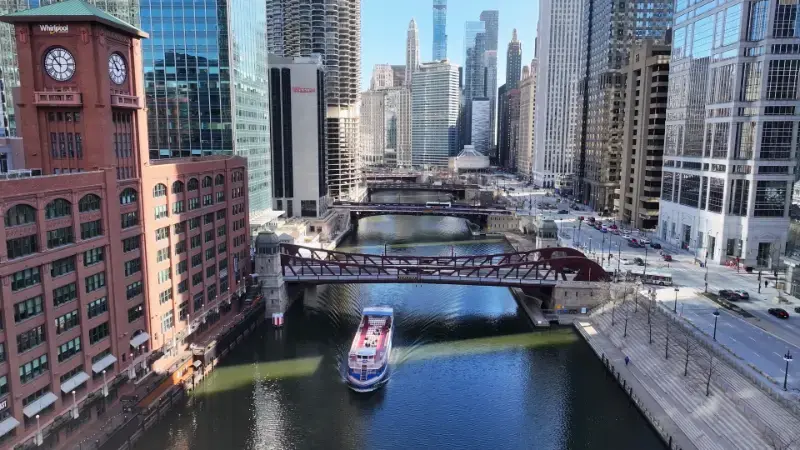
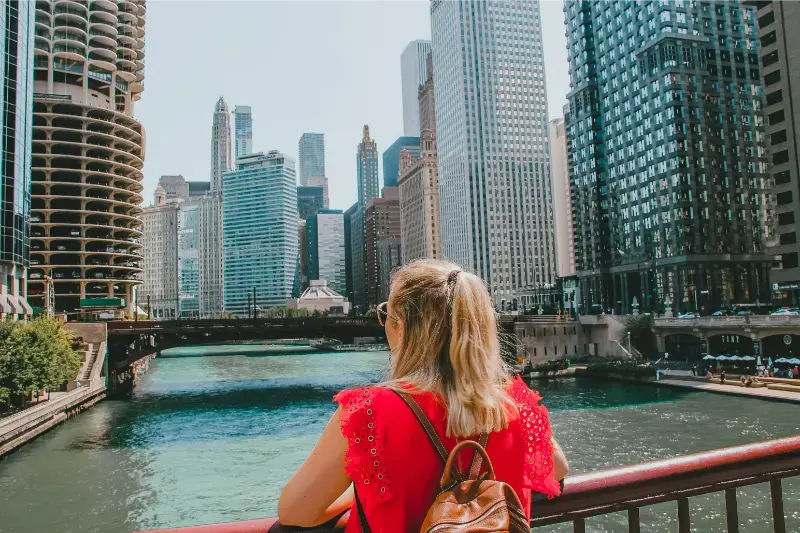
Start in Chicago without a rental car. Use the first day for a compact Loop and riverfront plan: Millennium Park, the Chicago Riverwalk and an architecture-focused experience fit naturally together. The city rewards looking up, and the river gives context to the bridges, towers and engineering that shaped downtown. If this is your first visit, resist the urge to cross the entire city before you understand the central core.
An architecture cruise is one of the rare tourist experiences that also functions as an introduction to urban history. It helps explain why later stops such as Oak Park and Springfield matter: Illinois architecture is not confined to skyscrapers, and the road trip becomes more coherent when you notice how design changes from downtown towers to Prairie School houses and historic civic buildings.
Day 2: museums, neighborhoods and Oak Park
Choose one major museum rather than three. The Art Institute works particularly well with the Loop, while the Field Museum, Shedd Aquarium and Adler Planetarium cluster on Museum Campus. In the afternoon, Oak Park can add the Frank Lloyd Wright Home and Studio, Unity Temple and a walk through residential streets lined with Prairie School architecture. If you plan an interior tour, book it before building the rest of the day.
Day 3: Galena
Pick up the rental car after Chicago rather than paying downtown parking for two days. Drive northwest to Galena and give the historic Main Street enough time to be more than a lunch stop. Galena’s topography and nineteenth-century streets create a sharp contrast with Chicago, and the town works best when you combine the central business district with a viewpoint, the Ulysses S. Grant Home or a short scenic drive outside town.
An overnight in Galena also fixes a common pacing mistake: trying to drive from Chicago to Galena, explore, and continue onward the same evening. Staying gives you quieter hours after day visitors leave and allows the next morning to begin without immediately facing another long transfer.
Day 4: Starved Rock and Matthiessen
Drive southeast toward the Illinois River valley and spend the day around Starved Rock and Matthiessen. The two parks sit close enough to combine geographically but should not be treated as identical. Starved Rock has the broader trail network and famous canyon viewpoints; Matthiessen has its own Dells landscape, bridges, stairways and seasonal water features. Choose one park as the main hike and use the other for a shorter walk if energy and parking allow.
Weekend capacity is a real planning factor, especially at Matthiessen in warmer months. Arriving early is more important than building an ambitious list of trails. If rain has been heavy, waterfall conditions can be rewarding, but wet stairs, creek crossings and mud also make the day slower. Check Illinois DNR notices on the morning of the hike.
Day 5: Springfield and Route 66
Continue south to Springfield. Build the day around the Lincoln Home National Historic Site, the Abraham Lincoln Presidential Library and Museum, the Old State Capitol area and Lincoln Tomb according to opening times rather than zigzagging across the city. The Lincoln sites work best as a connected story of home life, law, politics, the presidency and memory.
Springfield is also a natural place to introduce Route 66. A classic stop such as Cozy Dog Drive In or one of the road’s preserved signs and roadside attractions adds a lighter layer to the history-heavy day. The official Illinois Route 66 itinerary describes roughly 300 miles of the Mother Road within the state, so this road trip touches the corridor without pretending to be a dedicated Route 66 trip.
Day 6: Alton, Grafton and the Great Rivers
Move west toward Alton and Grafton for the Meeting of the Great Rivers section of the Mississippi corridor. Limestone bluffs, river views and small towns make this one of the state’s most satisfying scenic drives. Stop selectively: Alton works for history and food, Grafton for riverfront atmosphere, and Pere Marquette State Park for views and a quick outdoor break.
This is a day to avoid over-scheduling. River roads invite unplanned stops, wildlife viewing and long lunches. In winter the region is known for bald-eagle viewing; in autumn the bluff corridor can be especially colorful. In warm weather, outdoor terraces and river activities become more prominent.
Day 7: Cahokia Mounds and the St. Louis metro edge
Cahokia Mounds is one of the most important archaeological landscapes in North America and deserves more than a quick photograph from Monks Mound. Walk the grounds, use the available interpretation and pay attention to the scale of the site. The Interpretive Center has been undergoing renovation work, so always verify which interior areas are open before arrival.
Because the site is only a short drive from downtown St. Louis but remains in Illinois, it can be paired with an Illinois-side overnight around Collinsville or the Metro East. If you do cross into St. Louis for an evening, keep the Illinois itinerary focused by returning east rather than adding another state’s attractions to an already full day.
Days 8–9: Giant City and Shawnee National Forest
Day 8: Giant City and Carbondale
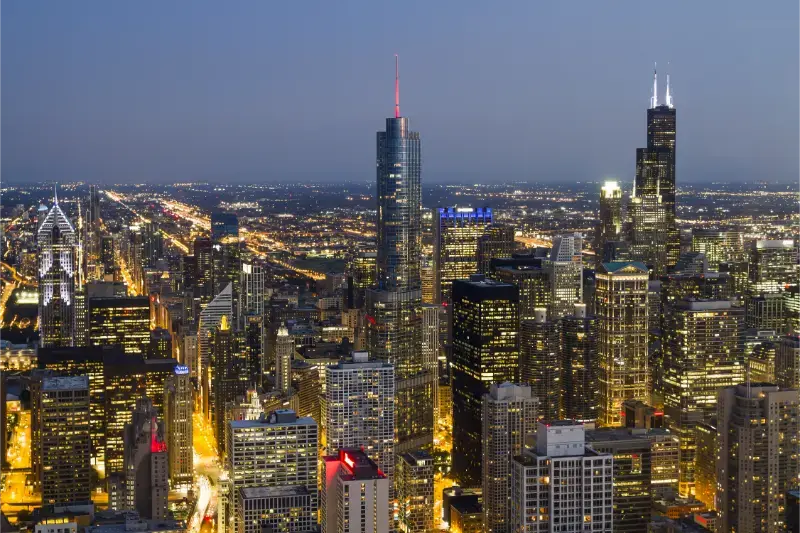
Continue south to Giant City State Park. The Giant City Nature Trail shows the park’s sandstone “streets,” while the lodge adds a historic Civilian Conservation Corps atmosphere and a practical lunch or overnight option. The park also has longer trails, cabins and camping, making it more than a quick roadside nature stop.
Day 9: Garden of the Gods and Shawnee country
Use the second southern-Illinois day for Shawnee National Forest. Garden of the Gods is the signature viewpoint, but the region is broader than one short observation trail. Depending on conditions and interests, add Rim Rock, Cave-in-Rock, the Ohio River corridor or another forest trail. The key is to group stops geographically; winding rural roads make apparent distances slower than interstate mileage.
Day 10: return north through central Illinois
The final day is a transfer day, not a hidden eleventh sightseeing day. If you are returning to Chicago, break the drive in central Illinois only if timing works. Champaign-Urbana can provide lunch and a walk around the university districts; Route 66 towns such as Pontiac make more sense if you deliberately choose that corridor. Do not add a major museum simply because it appears on the map.
If your flight leaves early, spend the previous night closer to Chicago instead of gambling on a same-day drive from southern Illinois. For an open-jaw trip, compare one-way rental costs with the time saved by departing from a different airport.
Where to stay
Compare available accommodation for your dates, budget and preferred location before you finalize your route.
Use Chicago for the first two nights, then switch to regional bases rather than commuting back to one hotel. Galena, the Starved Rock/Utica area, Springfield, the Great Rivers region and Carbondale/Shawnee each reduce backtracking. The best value is often the hotel that shortens tomorrow morning’s drive, not the cheapest room on tonight’s map.
Compare current availability and choose a base that fits the route rather than adding unnecessary driving.
Search Illinois hotels on Booking.comCompare stays in ChicagoPick up the car when leaving Chicago. This avoids downtown parking costs and lets the rental period match the portion of the trip that actually needs a vehicle.
Compare rental cars with DiscoverCarsChicago has the deepest selection of bookable experiences on this route, particularly architecture cruises, observation decks, museum tickets and walking tours. Compare options before fixing your first two days.
How to fit this into a wider Illinois itinerary
Ten days is the minimum I would use for this exact north-to-south route. With seven days, choose either northern/central Illinois or Springfield plus the southern half. With fourteen days, slow down in Chicago, Galena and Shawnee, or add Peoria/Illinois River Road without turning the trip into a race.
The road trip also works as a framework for future visits. A dedicated Route 66 trip can reuse Chicago and Springfield; a Great River Road trip can reuse Galena, Alton and Cahokia; an outdoor trip can focus on Starved Rock, Giant City and Shawnee. That modular structure is more useful than trying to see every Illinois attraction once.
Practical planning advice
Illinois weather can change the character of the route. Summer brings heat, storms and busy lakefront days; autumn is ideal for scenic driving but popular foliage weekends book early; winter can complicate rural driving while making Chicago museums and eagle-watching attractive; spring can produce strong waterfalls but also mud and storm risk. Keep one indoor alternative for each outdoor-heavy segment.
Check official park notices, attraction hours and tour availability immediately before travel. The route crosses city streets, interstates, scenic byways and rural forest roads, so driving time estimates should include parking, fuel and scenic stops. Never schedule a long sunset drive after a demanding hike just because the mileage looks manageable.
Official sources and useful planning links
- Enjoy Illinois Route 66 itinerary
- Enjoy Illinois scenic byways
- Illinois DNR parks
- Cahokia Mounds – Plan Your Visit
Frequently asked questions
Is ten days enough for Illinois?
Yes for a focused statewide route, but only if you accept that Chicago and southern Illinois each deserve more time than a checklist visit. Ten days works because this itinerary clusters destinations and limits one-night detours.
Should I rent a car in Chicago?
Not for the downtown portion. Pick up a rental when you are ready to leave the city, then return it near the end of the trip.
Can I add St. Louis?
Cahokia Mounds sits close to St. Louis, so an evening across the river is easy, but a full St. Louis sightseeing day should be treated as an extension rather than squeezed into the Illinois itinerary.
What is the hardest part of the route?
The long transition between southern Illinois and Chicago is the biggest driving commitment. Protect the final day for that transfer or add an extra overnight if your flight schedule is tight.
Plan with these Illinois guides
- Chicago travel guide
- Galena travel guide
- Starved Rock hiking guide
- Springfield travel guide
- Great River Road guide
- Shawnee National Forest guide
More Illinois travel guides
-
Chicago Architecture Guide: River Cruises, Skyscrapers, Frank Lloyd Wright & Walking Tours
Explore Chicago architecture with river cruises, Loop landmarks, Frank Lloyd Wright sites, walking tours and a practical one-day or two-day plan.
-
Best Day Trips from Chicago: Parks, Small Towns, Architecture & Lake Michigan
Best Day Trips from Chicago: Parks, Small Towns, Architecture & Lake Michigan. Practical planning, highlights, timing, where to stay and tips for building a better Illinois trip.
-
Route 66 Illinois Road Trip: Chicago to the Mississippi with the Best Stops and Practical Tips
A practical Illinois Route 66 guide for travelers who want the Mother Road experience without turning every roadside marker into a mandatory stop.
-
Best Things to Do in Chicago: 25 Essential Experiences for a First Visit
A priority-ranked Chicago sightseeing guide that helps first-time visitors choose what is genuinely worth their time and how to group attractions efficiently.
-
Best Things to Do in Chicago: Architecture, Museums, Lakefront & Neighborhoods
Best Things to Do in Chicago: Architecture, Museums, Lakefront & Neighborhoods. Practical planning, highlights, timing, where to stay and tips for building a better Illinois trip.
-
Where to Stay in Illinois: Best Bases for Chicago, Route 66, Starved Rock and Southern Illinois
A base-by-base Illinois lodging guide that focuses on drive efficiency, parking, evening atmosphere and which destinations actually justify changing hotels.