

Chicago Architecture Guide: River Cruises, Skyscrapers, Frank Lloyd Wright & Walking Tours. Chicago is one of the rare cities where architecture is not a niche interest but one of the main reasons to visit. The skyline tells a story of fire, engineering, commercial ambition, new materials and competing ideas about what a modern city should look like. A good architecture itinerary combines the river, the Loop, at least one interior and, if time allows, Frank Lloyd Wright in Oak Park or Hyde Park.
Why this belongs in an Illinois trip
Architecture gives structure to a Chicago trip. It turns the Loop from a collection of tall buildings into a readable city, explains why the river matters and connects downtown to neighborhoods where Prairie School, residential design and adaptive reuse tell a different story. Even travelers who do not normally book architecture tours often find that one guided experience makes the rest of Chicago easier to understand.
Quick planning facts
- Chicago architecture is easiest to explore on foot, by river cruise and by CTA rather than by car.
- Choose Chicago highlights architecture cruises, walking tours, bus tours and Frank Lloyd Wright sites as core architecture experiences.
- Oak Park contains the Frank Lloyd Wright Home and Studio and a dense concentration of Wright-designed homes.
- Robie House in Hyde Park and Unity Temple in Oak Park are part of the UNESCO-listed group of major Wright works.
- Popular architecture cruises can sell out on good-weather weekends; book a preferred time instead of assuming same-day space.
Start with the Chicago River
A river cruise is the best broad orientation because the waterway exposes multiple generations of downtown buildings in a short geographic corridor. The value is not simply photographing towers. A knowledgeable guide can explain how the river was engineered, why certain materials and structural systems mattered, and how the skyline developed after the Great Chicago Fire.
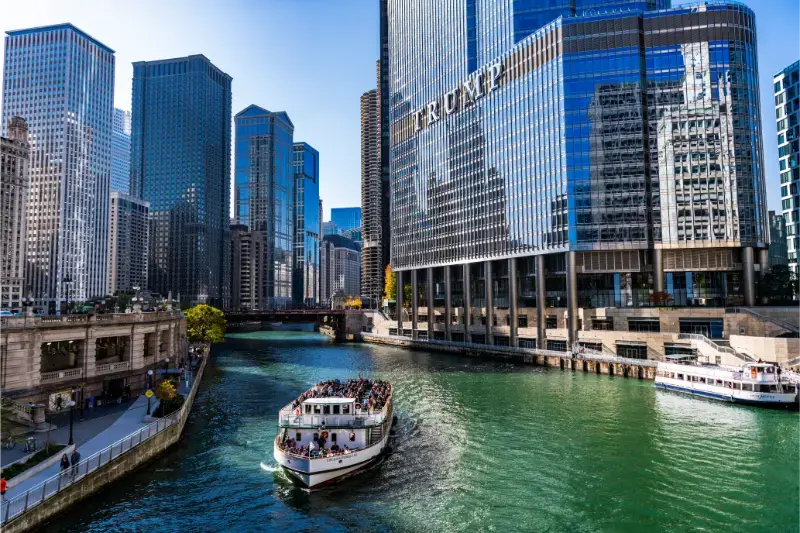
Choose a cruise time that fits the season. Midday is straightforward for first-time visitors; late afternoon can soften light on the facades; evening departures are atmospheric but make details harder to study. In spring and autumn, wind on the river can make the temperature feel much colder than it does on Michigan Avenue.
Walk the Loop after the cruise
Continue on foot while the building names and styles are still fresh. The Rookery, Monadnock Building, Chicago Board of Trade area, Federal Plaza, Marquette Building and other Loop landmarks create a compact architecture walk. You do not need to enter every building; the goal is to notice materials, proportions, street-level details and how old structures sit beside much newer towers.
Chicago’s elevated train also changes the visual experience of the Loop. Riding a short section of the “L” gives another angle on building facades and the compressed geometry of downtown streets. It is inexpensive, useful transportation and a reminder that infrastructure is part of the city’s architectural character.
Chicago Architecture Center and guided walking tours
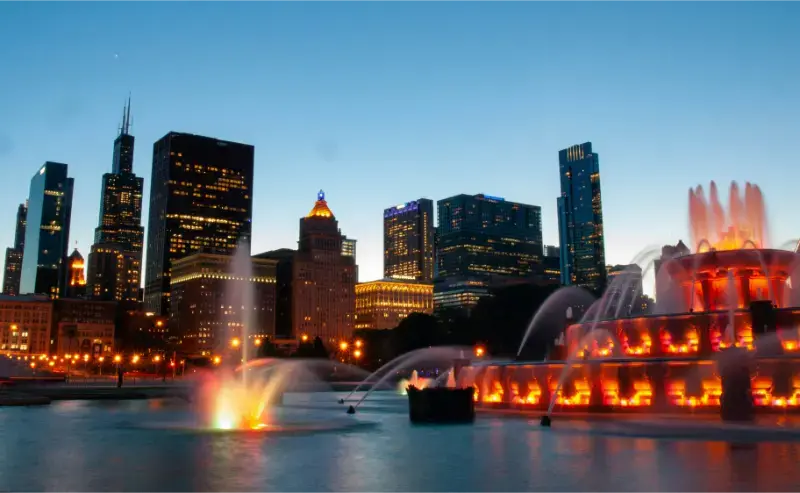
The Chicago Architecture Center is a useful anchor when you want context rather than another random landmark. Its exhibits can help explain skyscraper engineering and the city’s growth, while its walking-tour program goes deeper into specific districts, styles and architects.
Guided walks are particularly valuable if you care about interiors or details that are easy to miss. A general first-time visitor may be satisfied with one cruise plus a self-guided Loop walk; an architecture enthusiast can comfortably spend two or three days on specialized tours without repeating the same material.
Frank Lloyd Wright in Oak Park
Oak Park is the most efficient way to see Wright’s residential evolution. Start at the Home and Studio, then walk the surrounding blocks to compare early houses with later Prairie School ideas. Unity Temple adds a different building type and demonstrates how Wright approached an urban religious space rather than a private home.
The Frank Lloyd Wright Trust lists regular tour hours for the Home and Studio, Unity Temple, Robie House and the Rookery, but schedules differ by property and day of week. Book the interior you care about most first, then let the neighborhood walk remain flexible.
Robie House, Hyde Park and the South Side
Robie House is a major Prairie School work and pairs naturally with Hyde Park. If architecture is the priority, combine it with the University of Chicago campus rather than rushing back downtown immediately. Hyde Park also gives you a broader sense of Chicago beyond the Loop, with cultural institutions and historic residential streets.
This combination works especially well on a second Chicago day: downtown architecture first, then Oak Park or Hyde Park. Trying to fit the river cruise, the Loop, Oak Park and Robie House into one day creates more transit than appreciation.
A one-day architecture itinerary
For one day, book a morning river architecture cruise, walk the Riverwalk into the Loop, visit one major interior such as the Rookery lobby when accessible, stop at the Chicago Architecture Center and finish with a self-guided Loop walk. If your tour starts late, reverse the sequence so you are not racing a fixed departure time.
For two days, use day two for Oak Park and either Unity Temple or the Home and Studio. Architecture enthusiasts can add Robie House as a separate South Side segment, but most travelers will get more from two carefully chosen interiors than from four rushed tours.
Where to stay
Compare available accommodation for your dates, budget and preferred location before you finalize your route.
For a first architecture-focused trip, the Loop, River North and areas near the Chicago River are the easiest bases because you can walk to cruises and many downtown landmarks. Oak Park is better as a half-day or full-day excursion unless Wright is the main purpose of your trip.
Compare current availability and choose a base that fits the route rather than adding unnecessary driving.
Find a Chicago hotel near your architecture itineraryCompare stays in Oak ParkArchitecture cruises and guided walking tours are among Chicago’s most useful bookable experiences. Compare duration, departure point and cancellation rules rather than selecting only by price.
How to fit this into a wider Illinois itinerary
Pair this guide with the main Chicago travel guide, the museum guide and the neighborhood guide. Architecture naturally overlaps with the Riverwalk, Millennium Park, Hyde Park and Oak Park, so you can build a coherent trip without spending every hour on a formal tour.
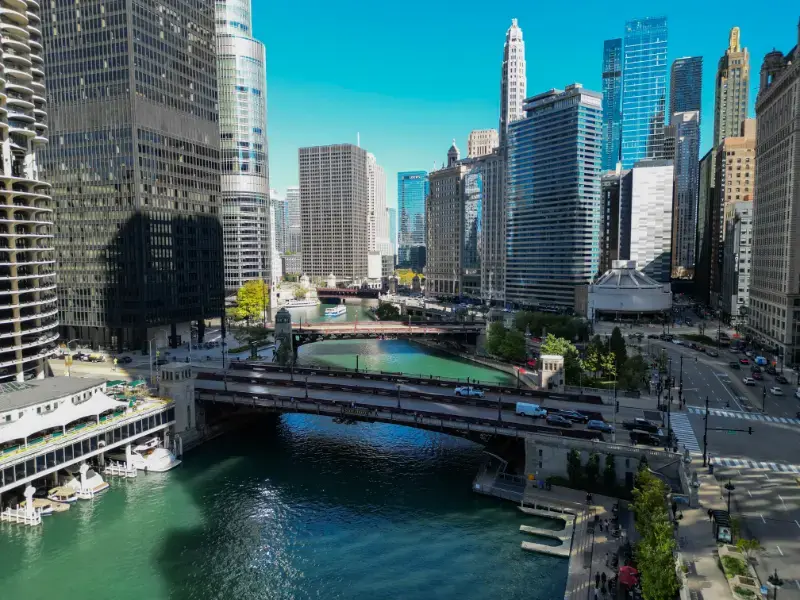
If you are continuing through Illinois, architecture provides an excellent bridge into Springfield’s civic buildings and Lincoln sites, Galena’s nineteenth-century streets and the historic structures along Route 66. The statewide road trip becomes more interesting when you notice how the built environment changes outside Chicago.
Practical planning advice
Avoid driving between downtown architecture stops. Parking is expensive and street navigation adds no value to the experience. Use walking, the CTA and commuter rail or rideshare for Oak Park depending on your schedule. Wear comfortable shoes: even a “cruise day” usually involves substantial walking before and after the boat.
Check access rules for interiors. Office buildings may restrict certain spaces, houses may require timed tours and operating hours change around holidays. Photograph respectfully inside active buildings and houses of worship, and do not assume that every famous exterior is open to visitors.
Official sources and useful planning links
- Choose Chicago – Architecture & History
- Choose Chicago – Frank Lloyd Wright
- Frank Lloyd Wright Trust – Plan Your Visit
Frequently asked questions
Is an architecture cruise worth it for a first visit?
Yes. It provides unusually efficient context for the downtown skyline and river, and it makes later self-guided walking more meaningful.
Should I visit Oak Park or Robie House?
Oak Park is better for seeing many Wright-era residential exteriors plus the Home and Studio and Unity Temple. Robie House is ideal if you want one major Prairie School interior and are already visiting Hyde Park.
How many architecture tours are too many?
For most first-time visitors, one river cruise and one focused walking or interior tour are enough. Architecture enthusiasts can add Oak Park or Hyde Park on a second day.
Where should I stay?
The Loop and River North are the most convenient for river cruises and downtown landmarks. Stay in Oak Park only if suburban architecture is a major part of the trip.
Architecture without overload
Architecture becomes easier to appreciate when you alternate formats. A river cruise gives a broad narrative; a walking tour reveals street-level details; an interior tour changes the scale; and an unguided neighborhood walk lets you process what you have learned. Four consecutive guided tours often produce less understanding than two different experiences with free time between them.
Carry a small pair of binoculars only if you already use them; otherwise your phone camera zoom is enough for cornices and upper-floor details. The most useful “gear” is comfortable footwear and the willingness to stop at a corner and look back rather than rushing to the next landmark.
Best architecture viewpoints and photo strategy
Chicago architecture reads differently from the river, street level and an observation deck. The river gives the cleanest view of facades and building relationships; the Loop gives scale and street detail; an elevated viewpoint helps you understand the city grid, lakefront and how towers cluster around transportation corridors. You do not need to pay for every viewpoint. Pick one elevated experience if skyline photography matters, then let the river cruise and walking routes provide the rest of the visual variety.
For photography, morning and late afternoon usually produce more dimensional light than the middle of the day, but downtown canyons create their own shadows at any hour. A cloudy day is not a failure: soft light can reveal stone, terra-cotta and metal details without harsh contrast. If you are carrying a camera, keep the architecture day geographically compact instead of adding multiple long transit legs simply to chase a single photograph.
Architecture with children or non-specialists
A family or mixed-interest group does not need the same level of detail as an architecture enthusiast. A river cruise is often the best shared experience because everyone gets skyline views while the guide provides as much context as each traveler wants to absorb. Follow it with a short Loop walk, lunch and a park or lakefront break rather than a second technical tour.
If only one person in the group wants Wright, consider giving Oak Park a half-day while others explore a different Chicago interest. The strongest itinerary does not force every traveler through every specialty stop. Chicago has enough museums, parks, food and neighborhoods that parallel plans can reconnect easily for dinner.
Plan with these Illinois guides
- Chicago travel guide
- Best things to do in Chicago
- Best Chicago neighborhoods
- Best day trips from Chicago
More Illinois travel guides
-
Chicago Architecture Guide: River Cruises, Skyscrapers, Frank Lloyd Wright & Walking Tours
Explore Chicago architecture with river cruises, Loop landmarks, Frank Lloyd Wright sites, walking tours and a practical one-day or two-day plan.
-
Best Day Trips from Chicago: Parks, Small Towns, Architecture & Lake Michigan
Best Day Trips from Chicago: Parks, Small Towns, Architecture & Lake Michigan. Practical planning, highlights, timing, where to stay and tips for building a better Illinois trip.
-
Route 66 Illinois Road Trip: Chicago to the Mississippi with the Best Stops and Practical Tips
A practical Illinois Route 66 guide for travelers who want the Mother Road experience without turning every roadside marker into a mandatory stop.
-
Best Things to Do in Chicago: 25 Essential Experiences for a First Visit
A priority-ranked Chicago sightseeing guide that helps first-time visitors choose what is genuinely worth their time and how to group attractions efficiently.
-
Best Things to Do in Chicago: Architecture, Museums, Lakefront & Neighborhoods
Best Things to Do in Chicago: Architecture, Museums, Lakefront & Neighborhoods. Practical planning, highlights, timing, where to stay and tips for building a better Illinois trip.
-
Where to Stay in Illinois: Best Bases for Chicago, Route 66, Starved Rock and Southern Illinois
A base-by-base Illinois lodging guide that focuses on drive efficiency, parking, evening atmosphere and which destinations actually justify changing hotels.