

Destinations › Pacific USA › Alaska travel guide › Alaska with Kids: Family Itineraries, Wildlife, Trains & Smarter Trip Planning
Alaska can be excellent with children, but the family version should be slower than the adult bucket-list version. Long drives, early boat departures, late summer light and weather-dependent activities can create a schedule that looks exciting on paper and feels exhausting by day four. Families usually get more from fewer bases, longer stays and one major activity per day.
For a first trip, Anchorage plus the Kenai Peninsula or Anchorage plus Denali is often easier than trying to combine every famous region. The Alaska Railroad can replace some driving, wildlife centers and museums create reliable low-weather days, and national parks offer junior-ranger-style learning alongside the scenery. The goal is not to remove adventure; it is to remove unnecessary logistics.
- 1Days 1–2: Anchorage
- 2Days 3–5: Seward
- 3Day 4: Families usually get more from fewer bases, longer stays and one major activity per day
- 4Day 6: Anchorage or Talkeetna transfer
- 5Days 7–9: Denali area
- 6Day 10: return toward Anchorage
Alaska with kids at a glance
| Best first bases | Anchorage, Seward, Denali area and Fairbanks depending on season |
| Ideal pace | 2–3 nights per base, with one major booked activity per day |
| Good family transport | Rental car for flexibility; Alaska Railroad for selected scenic transfers |
| Weather strategy | Pair outdoor anchor activities with museums, wildlife centers or short walks |
| Safety priority | Wildlife distance, cold-water awareness, layers and conservative remote-area planning |
Choose fewer bases before shortening each stay
Families often try to preserve an ambitious adult itinerary by giving every place one night. In Alaska, that creates constant packing plus long transfers. A child who would happily spend an hour watching sea otters may be miserable when the schedule requires leaving early because the next hotel is five hours away.

A better rule is to remove one destination, not one night from every destination. Three nights in Seward can include a boat trip, Alaska SeaLife Center time and a flexible weather morning. Two rushed nights may force the same family to take a long cruise immediately after a driving day and then repack the next morning.
Anchorage is more useful with kids than many itineraries admit
Anchorage gives families a soft landing: supermarkets, medical services, museums, easy food choices and a range of short activities. The Anchorage Museum adds culture and science without depending on weather, while the Tony Knowles Coastal Trail provides a flexible outdoor block that can be shortened at any point.
Use the city for recovery after a long flight rather than driving straight to Denali or Seward with overtired children. One calm arrival night often improves the entire trip. If you land late, make the next morning intentionally easy and collect the rental car only when everyone is ready.
Seward is one of the strongest family bases
Seward combines marine scenery with a compact harbor, the Alaska SeaLife Center and access to Kenai Fjords National Park. A shorter wildlife-and-glacier cruise may suit younger children better than the longest all-day route, especially if anyone is prone to seasickness. Ask operators about age guidance, seating, food and cancellation policies before booking.
Build a land day between major boat or driving days. A family can enjoy the SeaLife Center, harbor and a short walk without feeling that every day must be a major expedition. If the forecast is poor, this flexibility prevents the entire stay from depending on one marine window.
Denali in 2026: plan around the current road system
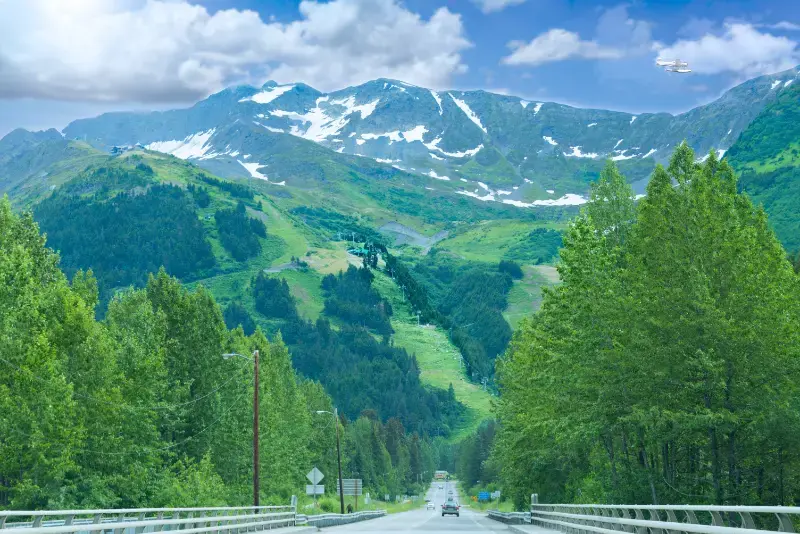
Families visiting Denali National Park in 2026 need to understand that the park road is still operating with access limited to Mile 43 because of ongoing road work. Travel Alaska notes that narrated and transit buses run to Mile 43, while free shuttle service operates between the visitor center/bus depot area and Mountain Vista and Savage River trailheads during peak times.
This can actually help family planning because you do not need to design a huge all-day road journey for younger children. Choose bus length according to attention span, bathroom needs and motion tolerance. A shorter shuttle-and-trail day can be more successful than sitting on a bus simply because the longest option seems more “complete.”
The Alaska Railroad can turn a transfer into the activity
Children who dislike long car days may enjoy the Alaska Railroad because they can move around more than in a car and watch the landscape without a parent concentrating on driving. Anchorage–Seward and Anchorage–Denali are obvious family-friendly segments when the schedule fits your route.
The tradeoff is reduced local flexibility after arrival. If your hotel is far from the station or the next day requires several independent stops, you may still need a rental car or transfer. Use the train strategically for one or two scenic legs rather than assuming the whole family trip must be rail-only.
Wildlife viewing needs stricter family rules
Children need simple instructions before the animal appears, not while everyone is excited. Establish that no one approaches wildlife, runs toward a moose, wanders ahead on a trail or leaves food unattended. In bear country, adults should understand current safety guidance and keep the group together.
The National Park Service emphasizes that Alaska’s remote areas can be far from help. With young children, choose environments where the adults can control the variables: established trails, reputable boat operators, ranger programs and accessible viewpoints. Remote backcountry can wait until skills and family experience match the setting.
Choose boat trips by child, not by headline destination
A six- or eight-hour marine tour can be unforgettable for an older child who loves wildlife and miserable for a preschooler who is cold and seasick. Ask about indoor heated seating, restroom access, food, movement restrictions and typical sea conditions. Pack more warm clothing than the harbor temperature suggests because wind on deck changes comfort quickly.
Seasickness prevention should be discussed with a pediatric clinician or pharmacist when appropriate rather than improvised from adult medication. Even on a calm day, schedule a light evening afterward. Children often process a long excursion by needing food, rest and unstructured time rather than another attraction.
Build weather-proof days into every family itinerary
Rain does not need to ruin Alaska, but it exposes overly rigid itineraries. In Anchorage, museums create strong indoor options; in Seward, the SeaLife Center fills part of a wet day; in Fairbanks, museums and cultural attractions can pair with a shorter outdoor block. Bring waterproof outer layers so light rain does not cancel every walk.
At least one day every few days should be adjustable. If the expensive boat trip moves, you can swap it with a museum or scenic-drive day without losing money. This is more useful than scheduling a different nonrefundable excursion every morning.
Family lodging: kitchens, laundry and location matter
For families, a slightly less scenic room with a refrigerator, laundry access and short walk to food can be more valuable than a remote property with a better view. After several days of wet layers and snacks, practical amenities become part of the travel experience. Check room occupancy rules carefully before assuming a standard room fits everyone.
Use Anchorage family stays, Seward family stays and Fairbanks family stays to compare current inventory. On road trips, prioritize parking and easy check-in. In summer, reserve early near Denali and Seward because family-sized rooms disappear faster than single rooms.
A realistic 10-day first Alaska trip with kids
Older children and teenagers can handle more ambitious hiking or a longer marine day, while younger children may need even slower pacing. The structure is more important than the exact destinations: alternate high-stimulation activities with flexible days and avoid three consecutive dawn departures.
- Days 1–2: Anchorage. Recover from travel, museum/coastal trail, collect supplies and keep the first day light.
- Days 3–5: Seward. One marine day, one SeaLife Center/short-hike day and one flexible weather block.
- Day 6: Anchorage or Talkeetna transfer. Keep the travel day simple rather than adding a major excursion.
- Days 7–9: Denali area. One park bus/shuttle day, one short-trail or visitor-center day and a spare weather/rest block.
- Day 10: return toward Anchorage. Avoid a very long same-day drive immediately before an international flight.
Families visiting in winter need a different trip
Winter can be excellent for the northern lights, dog sledding and snow experiences, especially around Fairbanks, but extreme cold changes the margin for error. Short outdoor sessions with reliable warm-up locations are better for young children than long stationary waits outside. Frostbite risk and vehicle reliability deserve adult attention even when the activity itself looks simple.
If aurora is the goal, an accommodation with an indoor waiting area or wake-up system may be worth paying more for. Do not expect children to stay outside from 10 p.m. to 2 a.m. simply because adults can. Build the viewing strategy around sleep, warmth and family temperament.
Use official safety guidance, especially outside developed areas
The National Park Service Alaska safety page is the best starting point for wildlife, weather, river and backcountry safety across Alaska’s national parks. It stresses that help may be far away and that travelers should leave itineraries, understand hazards and prepare for rapidly changing conditions.
Family travel becomes easier when adults decide in advance what not to do. A remote hike after a sleepless night, an unnecessary late drive or a wildlife stop in an unsafe shoulder is rarely worth the risk. Alaska offers enough extraordinary experiences that you can skip one and still have an exceptional trip.
Continue planning your Alaska trip
Use the Anchorage guide, Seward guide, Denali guide, Alaska Railroad guide and best time to visit Alaska guides to build a family route that matches your children’s ages. For winter families, add the northern lights guide; for a summer road trip, adapt our 14-day Alaska road trip by removing rather than adding stops.