

Arizona can change character between breakfast and dinner. You might begin among saguaros outside Tucson, climb toward pine forest by afternoon, and finish looking across a canyon where the last light catches an isolated ridge. That variety is the pleasure of traveling here. It is also the reason a list of places needs a little geography behind it.
These fifteen destinations offer different kinds of days: city neighborhoods, red-rock walks, Indigenous cultural landscapes, old mining streets, and long views from the Colorado Plateau. Use them to choose a route that interests you. A first visit does not need to include everything, and the most memorable stop may be the one where you have time to stay after the first photograph.
1. Grand Canyon South Rim: give the view a morning
The South Rim is the strongest introduction to the Grand Canyon for most first-time visitors. Start by standing still at an overlook, then walk a selected stretch of rim rather than immediately moving the car. The landscape becomes easier to read when you notice a formation from several angles: a shadowed side canyon, a pale band of rock, the immense distance to the opposite rim.
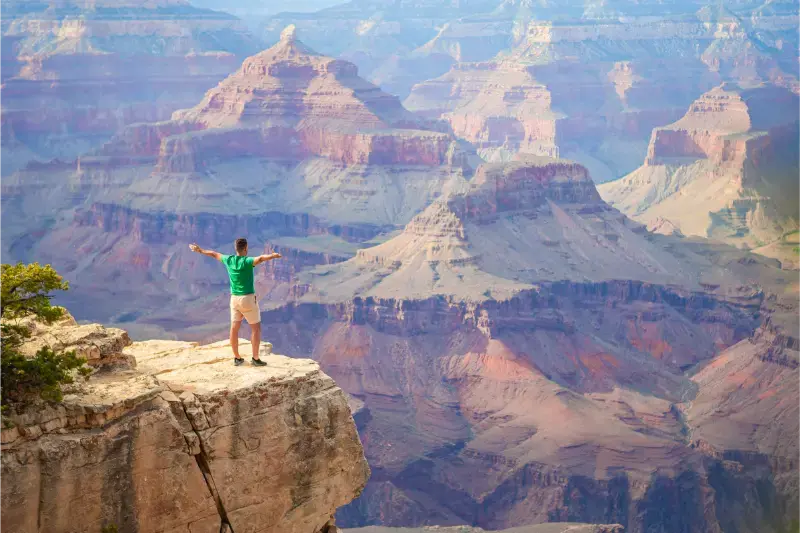
An overnight stay nearby makes this visit much more flexible than a long return drive from Phoenix. You can see evening light, eat dinner, and come back the next morning without beginning with several hours on the road. The South Rim guide explains the village, eastern overlooks, and shuttle-served Hermit Road as separate parts of a visit.
2. Sedona: red rocks with a town between the trails
Sedona rewards travelers who want scenery without spending every hour in a remote park. Red formations rise beyond shops and lodging, and Highway 179 offers a memorable approach from the south. Choose a trail for its terrain and access, then leave room for galleries, a quiet meal, or the courtyards at Tlaquepaque. A good Sedona day has some variety within it.
Two or three nights work especially well if hiking matters to you. Cathedral Rock involves steep scrambling; the short distance does not make it an easy walk. Bell Rock’s lower paths offer a different experience from climbing higher on the formation. Trailhead transport also needs planning: the city's shuttle system serves selected trailheads from park-and-ride lots rather than every destination in town.
3. Flagstaff: forest, a downtown evening, and a useful pause
Flagstaff brings a different texture to an Arizona trip: pine trees, cooler high-country air, and a downtown where a dinner stop can turn into an evening on foot. It is a useful base when your interests include northern Arizona beyond a single famous overlook. Avoid treating the city purely as a place to sleep between long drives; give the center some daylight and choose one local visit.
For a road trip, Flagstaff can also provide a practical break between Sedona and the Grand Canyon. Decide whether you want that break enough to move hotels, though. Adding one more base means packing again, finding parking again, and losing some of the morning you hoped to spend outside. Its value comes from the activities you actually plan there.
4. Page and Lake Powell: build around one booked experience
Page sits among landscapes with different managers, entrances, and rules. An Antelope Canyon tour, the Horseshoe Bend overlook, and a Lake Powell outing are separate visits. Choose your main experience first, then arrange the rest around its real check-in time and meeting point. Two nights usually give the area a more comfortable shape than a transfer afternoon followed by an early departure.
Water-based plans deserve particular attention. A lake-view photograph does not tell you which launch, marina, beach, or boat service will work on your dates. Use Glen Canyon's current conditions and your operator’s instructions before setting out. Page also provides useful everyday services between more remote stays: groceries, fuel, laundry, and a straightforward dinner can be welcome parts of the journey.
5. Antelope Canyon: a guided encounter with sandstone
Inside Antelope Canyon, the view becomes intimate. Curving walls narrow the sky to a ribbon, and changes in light reveal folds that look quite different a few steps farther along. Entry to Upper and Lower Antelope requires an authorized guided tour. You cannot substitute a national parks pass or arrive expecting to wander through independently.
Upper and Lower are different routes, with different physical requirements and booking arrangements. Compare the complete outing, including transfers, stairs, exit path, and restrictions on belongings. A higher price or a famous departure time does not guarantee particular lighting. The Antelope Canyon comparison helps match a tour to your group; the Navajo Nation park page provides the underlying entry rules.
6. Monument Valley: stay long enough to watch the shadows move
Monument Valley’s buttes rise above an open valley that can feel almost impossible to fit into a photograph. It is a living Navajo landscape spanning the Arizona–Utah border. A guided visit offers access and interpretation that differ from driving the designated scenic loop yourself. Ask about the route and the guide’s approach, as well as duration and vehicle type.
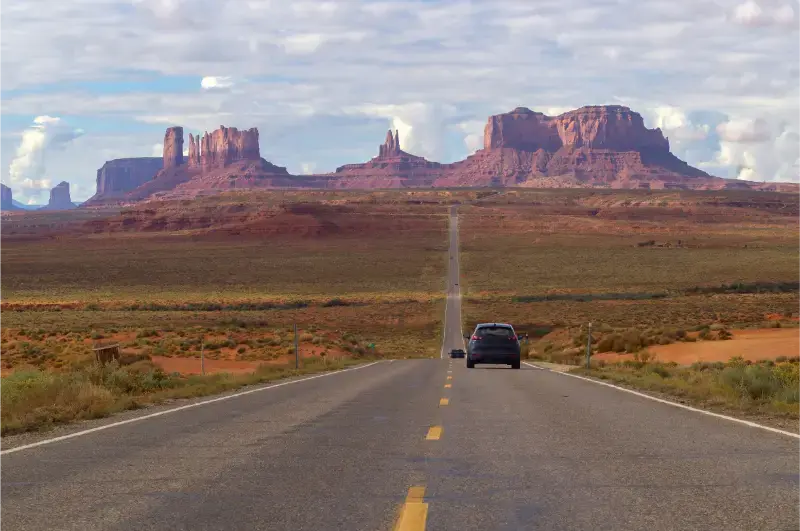
If your schedule allows, spend a night locally. That gives you more choice over light and reduces pressure to complete a remote drive after your visit. The tribal park’s latest visitor page has dated hours and entry information; older listings on other pages can differ. Leave time to speak with artisans when they welcome conversation, and ask before photographing people or their work.
7. Phoenix: discover the desert from a city base
Phoenix is worth visiting for more than its airport. A city stay can combine an introduction to Sonoran Desert plants, museum time, and neighborhoods where dinner is part of the outing. Plan by district instead of crossing the metropolitan area several times each day. A morning attraction followed by lunch nearby will often feel better than three reservations scattered across the valley.
Season changes the experience sharply. Cooler months favor more outdoor time; summer calls for a substantially different schedule and realistic expectations about walking. If you arrive after a long flight, a Phoenix night also gives you space to collect the car, buy supplies, and rest before a northern road trip. That can be more useful than squeezing an immediate transfer into the itinerary.
8. Scottsdale: choose the kind of stay you mean
Old Town Scottsdale and a resort farther north produce different holidays. In the center, you can organize time around galleries, public art, shops, and nearby restaurants. At a resort, the grounds, pool, and time spent at the property may be the main reason to stay. Check the actual address and the route to your evening plans before comparing room prices.
Scottsdale works as an alternative metropolitan base rather than an obligatory extra hotel after Phoenix. If you have only a couple of nights in the area, choose the location that fits your interests and visit the other district from there. Include parking, mandatory fees, and transport in the comparison. A lower room rate outside your chosen area can mean repeated drives.
9. Tucson and Saguaro: a desert stay with its own identity
Tucson deserves a separate portion of a trip. Its food, neighborhoods, mountain backdrop, and nearby desert landscapes make a strong combination, especially when you can spend several mornings outdoors. Saguaro National Park has two districts on opposite sides of the city: west is the Tucson Mountain District, east the Rincon Mountain District. They are not neighboring entrances to a single short scenic loop.
Choose the district that suits the day’s route and the trails or drive you want. Leave time for the city afterward rather than attempting every desert attraction in one continuous outing. The park planning pages explain the two areas. For travelers arriving in the cooler season, Tucson can anchor a rewarding southern Arizona trip without adding the entire northern circuit.
10. Petrified Forest: look closely as well as far away
Petrified Forest offers colorful badlands, open skies, and pieces of ancient wood transformed into stone. The landscape invites both wide views and patient attention to small patterns. Follow the park road with time for chosen stops and a walk, rather than assuming the drive alone will explain the place. The north and south have different concentrations of features.
This park fits an eastern Arizona or Interstate 40 journey particularly well. It is a substantial detour from a compact Phoenix–Sedona–Grand Canyon loop, so add it for its own appeal. Check operating hours and conditions before planning late light: road access has a closing time. Leave petrified wood and other natural and cultural objects where they belong.
11. Winslow: a town stop with a clear purpose
Winslow can work as a shorter stop on an east–west journey. Go because you want to spend time with its railroad and Route 66 associations, explore the center, or arrange a meal and a pause from highway driving. The familiar corner photograph can be enjoyable, but it need not be the entire visit.
It helps to decide how Winslow fits with your overnight base. A stop on the way toward Petrified Forest has a different rhythm from a special return drive from Sedona. If an individual restaurant or historic property is central to your plan, verify its current visitor arrangements before arriving. Town stops become more rewarding when they serve an interest instead of simply adding another name to the route.
12. Prescott: a slower change of scene
Prescott offers a town-centered break from the larger scenic circuit. The courthouse area, historic streets, and nearby outdoor possibilities lend themselves to a stay with less constant movement. It can suit travelers who enjoy browsing, a relaxed lunch, and time in one place after several days of long-distance driving.
Include Prescott deliberately rather than as a hurried detour between distant bookings. Ask what you would remove elsewhere to give it a useful afternoon and evening. If the answer is a second Grand Canyon morning that matters more to you, save Prescott for another visit. If small-town time is one of the things you travel for, it can be a sensible anchor for a different route through central Arizona.
13. Jerome: a hillside town that rewards walking slowly
Jerome’s steep setting is part of its character. Streets, galleries, and buildings seem to stack against the slope, with views opening across the Verde Valley. Comfortable shoes and an unhurried pace matter here; this is not a place where every promising doorway sits on a level shopping street. Consider mobility needs when deciding how much walking to plan.
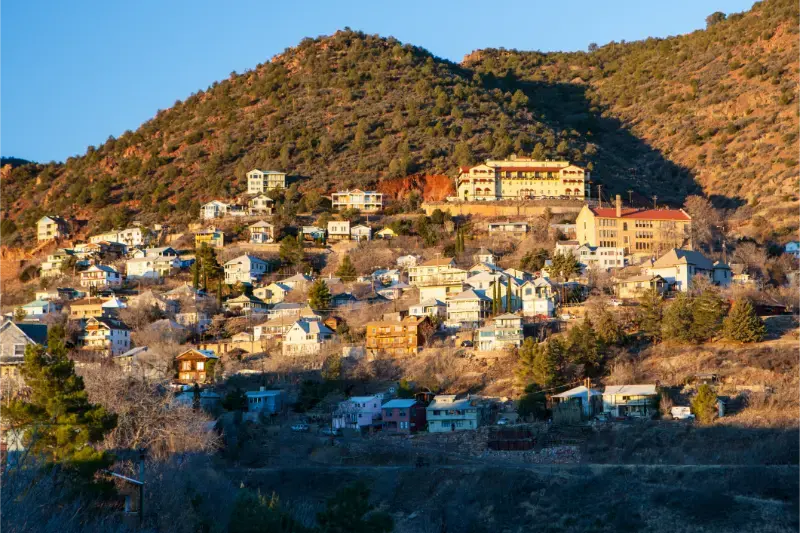
The town can pair with a Verde Valley stay or a carefully chosen outing from Sedona. Give it a specific time allocation rather than attaching it to an already crowded transfer day. Parking, lunch, and the return drive all occupy real time. Choosing a few streets and one visit of particular interest will make the stop feel more complete than rushing around every listed attraction.
14. Bisbee: make room for the southeast
Bisbee has an individual atmosphere, shaped by its mining history, hillside buildings, stairways, and independent businesses. It is especially appealing when you want a town stay with character rather than another large desert resort. Spend time walking the center, looking into open galleries, and choosing a meal that encourages you to linger.
Its location changes the route calculation. Bisbee belongs naturally to a southeastern Arizona extension, often with Tucson, rather than a spare afternoon in a northern itinerary. If a mine tour interests you, check the operator’s current age, access, clothing, and reservation requirements. Staying overnight makes sense when the town itself is part of the holiday, not simply a destination reached after a long drive.
15. Montezuma Castle: a meaningful Verde Valley visit
Montezuma Castle introduces a very different scale of attention: a cliff dwelling viewed from below, set within a landscape with a much longer human story than the modern highway corridor suggests. Read the interpretation and resist treating it only as a photograph between Phoenix and Sedona. The visit gains meaning when you consider the people who built and lived here.
The National Park Service information distinguishes the main monument from Montezuma Well, a separate site with its own approach. Visitors do not climb into the cliff dwelling. Check current access and opening arrangements, then decide whether one site or both fit the day. A focused cultural stop can add more to your trip than another distant viewpoint seen from the car.
Turn the list into a trip you can enjoy
For a first northern Arizona week, start with Sedona, the South Rim, and perhaps Page. Add Phoenix for arrival or departure. A southern trip could instead give Tucson several nights, include Bisbee, and use Phoenix or Scottsdale as another base. An east–west journey might emphasize Flagstaff, Winslow, and Petrified Forest. These are different holidays; none becomes better simply by absorbing all the others.
Before booking, compare the weather at each elevation and the full cost of admissions. Grand Canyon’s 2026 nonresident rules can add charges for visitors age sixteen and older unless qualifying pass coverage applies; tribal parks and municipal parking have separate systems. Use Arizona's official destination information to explore your chosen region, then spend your planning energy on the days you will actually have. The distances will feel less demanding when the places between them have a purpose.
Compare the options
| Choice | What it offers | Planning detail |
|---|---|---|
| Northern first trip | Sedona + South Rim + optional Page | Give each landscape useful time |
| Desert and towns | Phoenix or Scottsdale + Tucson + Bisbee | A separate southern itinerary |
| Eastern route | Flagstaff + Winslow + Petrified Forest | Check park road closing times |
| Tribal landscapes | Antelope Canyon or Monument Valley | Use the appropriate Navajo access system |
Find your bearings
Open the map in a new tab · Orientation map; use the official local map for trail access and closures.
Frequently asked questions
Can all fifteen destinations fit a first week?
No. Choose a regional route. A northern circuit and a Tucson–Bisbee extension need different time allocations.
Does the national parks pass cover Navajo parks?
No. Tribal entry, guided tours and municipal parking use separate arrangements.
Is the North Rim interchangeable with the South Rim?
No. They have different road approaches, accommodation and operating conditions.
Plan the next part of your trip
- Best Time to Visit Arizona: Month-by-Month Weather & Trip Guide
- Where to Stay in Arizona: Best Bases for Every Type of Trip
- 7 Days in Arizona: The Best First-Time Itinerary
Arrange your stay and activities
Some booking links below are affiliate links. We may earn a commission if you book through them.
Compare stays: Arizona USABrowse tours and experiencesCompare rental cars
Match the location, meeting point and cancellation terms to your itinerary before booking.
Official sources and visitor information
- City of Sedona: trailhead transit and current routes
- Glen Canyon: current conditions and launch alerts
- Navajo Nation: Antelope Canyon access and tribal fees
- Monument Valley: dated autumn 2026 hours and entry notice
- Saguaro National Park: plan your visit
- Petrified Forest: road hours and seasons
- Montezuma Castle: main site and Montezuma Well directions
- Arizona Office of Tourism: destinations
Last updated: October 18, 2026.