

The best places to visit in Florida depend less on a universal ranking than on the kind of trip you want. Miami and Key West are both warm, photogenic and famous, yet they create completely different vacations. Orlando can absorb a week without a beach. The Panhandle has some of the state’s most beautiful Gulf water but sits far from South Florida. The Everglades is not a city break at all, but skipping it can leave a first trip feeling oddly incomplete.
Use this guide to match destinations to your interests and trip length. If you are still deciding how the state fits together, begin with our Florida Travel Guide and then build a route around two or three compatible regions.
Best Florida destinations at a glance
| Place | Best for | Minimum useful stay |
|---|---|---|
| Miami & Miami Beach | Culture, food, architecture, beach, nightlife | 3 nights |
| Florida Keys | Island road trip, water, reef, Key West | 3–5 nights |
| Orlando | Theme parks and family attractions | 4–7 nights |
| Everglades | Wildlife, wetlands and nature | 1–2 days |
| Sarasota & Siesta Key | Beach + arts + easy Gulf Coast pace | 2–3 nights |
| Tampa & St. Petersburg | Urban Gulf Coast, museums, food | 2–3 nights |
| St. Augustine | History and walkability | 2 nights |
| Naples & Marco Island | Relaxed upscale South Florida | 2–4 nights |
| Space Coast | Space program + Atlantic coast | 1–2 nights |
| Panhandle / Emerald Coast | Long beach stays | 3–7 nights |
1. Miami & Miami Beach — best all-around first stop
Miami works when you want energy and variety. South Beach gives you the visual shorthand—Art Deco facades, palms and ocean—but the mainland neighborhoods add the depth: Little Havana for Cuban-American culture, Wynwood for contemporary art and nightlife, Coconut Grove for shade and a slower tropical feel, Brickell for a modern skyline and dining.
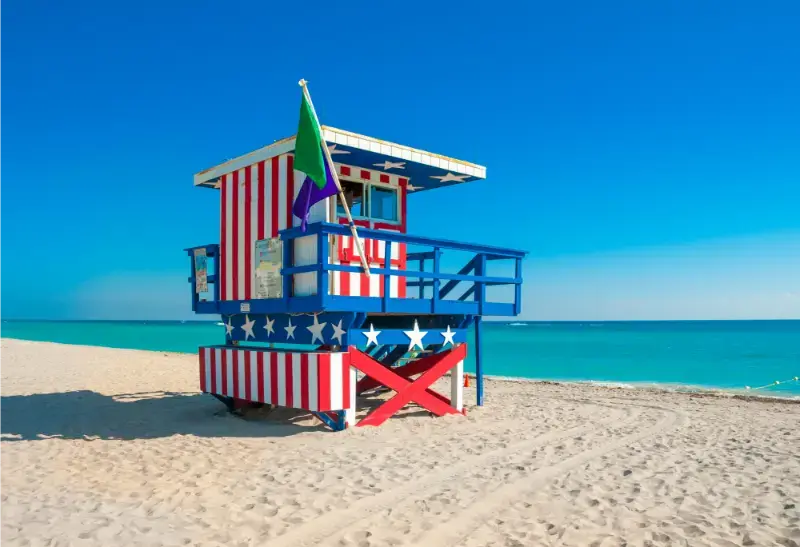
Read our Miami Travel Guide before choosing a hotel. Staying in the wrong part of the metro area can turn a short trip into a transport problem.
2. Florida Keys — best for the road itself
The Keys are not one destination but an island chain. Key Largo makes sense for reef and water activities, Islamorada for a relaxed fishing-and-dining stop, Marathon for central positioning, the Lower Keys for quieter nature, and Key West for history, nightlife and a compact Old Town. The Overseas Highway is the connective experience.
Three nights is enough to understand the route; five or six gives you time to stop without watching the clock. If snorkeling or diving matters, weather flexibility is valuable.
3. Orlando — best for major attractions
Orlando earns its global reputation for theme parks, but a good visit starts by deciding what you will not do. Walt Disney World, Universal Orlando, SeaWorld and other attractions can each consume full days. Add local neighborhoods, Winter Park or a resort day to prevent the trip from becoming one long queue.
4. Everglades National Park — best for seeing Florida as an ecosystem
The Everglades is the place that most clearly explains South Florida’s natural identity. Sawgrass marsh, mangroves, birds, alligators and seasonal water patterns create a landscape that cannot be understood from a beach resort. A half-day can provide an introduction, but a full day is much better.
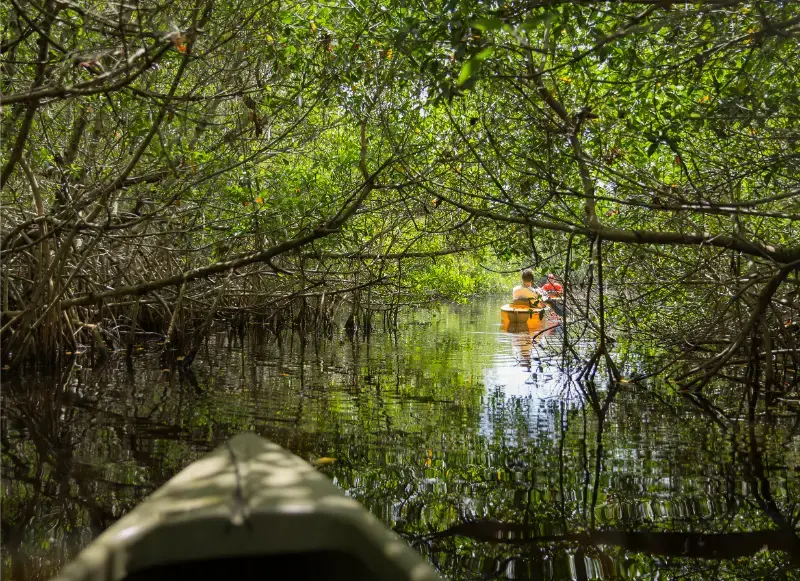
The park has multiple entrances and environments. Choose the entrance according to the experience you want, not only according to the shortest drive from your hotel.
5. Sarasota & Siesta Key — best beach + culture combination
Sarasota gives you an unusually balanced Gulf Coast stop: galleries and museums on the mainland, white-sand beaches on the barrier islands, good restaurants and a scale that is easier to manage than Miami. Siesta Key is especially famous for fine quartz sand and family-friendly facilities.
6. Tampa & St. Petersburg — best underrated urban pair
Tampa and St. Petersburg sit close enough to combine but feel different. Tampa has a stronger business-city energy, Cuban history and major sports; St. Petersburg has a more compact arts identity, a waterfront and fast access to beaches. Together they are ideal for travelers who want Florida without basing the trip on theme parks.
7. St. Augustine — best for history
Founded in 1565, St. Augustine layers Spanish colonial history, a major stone fort, narrow central streets and coastal access into a walkable stay. Two nights lets you see the historic core after day-trippers leave and still have time for the coast.
8. Naples & Marco Island — best for a polished, slower finish
Naples and Marco Island work well when the goal is beach time, sunsets and comfortable restaurants rather than nightlife or a packed sightseeing schedule. They also fit naturally with a South Florida trip that includes Everglades or Southwest Florida.
9. Space Coast — best for a uniquely American day
Kennedy Space Center gives Florida a major travel experience that has nothing to do with beaches or resorts. The surrounding coast makes it easy to add a night rather than visit on an exhausting out-and-back from Orlando. If a launch is scheduled, treat it as a bonus until the timing is confirmed close to the date.
10. Fort Lauderdale — best alternative to Miami Beach
Fort Lauderdale has a large beach, waterways and a growing dining scene with a somewhat calmer rhythm than central South Beach. It can also be a practical arrival or departure base depending on flights. Travelers who want South Florida without Miami’s intensity often prefer it.
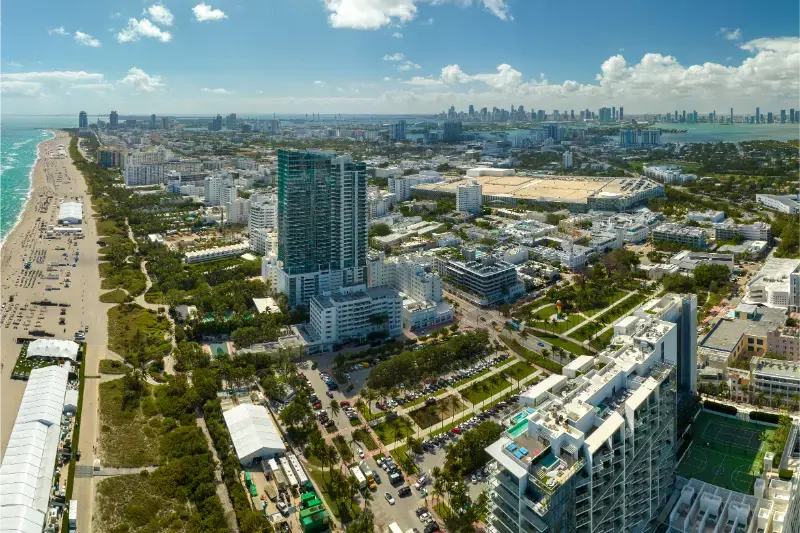
11. Palm Beaches — best for elegance and easy coastal days
Palm Beach and West Palm Beach offer a different South Florida mood: landscaped streets, cultural venues, Atlantic beaches and polished hotels. The area is useful as a standalone short break or as a stop between Miami and the Space Coast.
12. Crystal River and the Nature Coast — best for springs and wildlife
North of Tampa, the Nature Coast is lower-rise and more ecologically focused. Crystal River is particularly associated with manatees and spring-fed water. Winter is a major season for manatee viewing, but wildlife should be approached under current protection rules and with responsible operators.
13. Amelia Island — best for a quieter Atlantic island
Near the Georgia border, Amelia Island combines beach, historic Fernandina Beach and a slower coastal atmosphere. It is geographically better paired with Jacksonville and St. Augustine than with Miami or Orlando, which is why it often belongs on a second Florida trip.
14. Panhandle / Emerald Coast — best for a beach-first vacation
Destin, Fort Walton Beach and communities along 30A are known for bright Gulf water and pale sand. The Panhandle is excellent for a long beach stay but far from South Florida; combining it with Miami or the Keys in a short trip makes little geographic sense.
15. Florida’s springs — best for something visitors do not expect
Florida has major spring systems where clear freshwater flows through forested landscapes. Depending on the spring, visitors may swim, paddle, snorkel or tube. These experiences are particularly valuable for repeat visitors who think they already understand the state from its coasts.
Choose your Florida based on the traveler you are
| Travel style | Best matches |
|---|---|
| First trip from overseas | Miami + Everglades + Keys + Orlando |
| Beach without nightlife | Sarasota, Naples, Anna Maria Island, Panhandle |
| Families with young children | Orlando + Gulf Coast or Space Coast |
| Couples | Miami/Coconut Grove, Keys, Naples, Sarasota |
| Wildlife and nature | Everglades, springs, Nature Coast, Keys |
| History and culture | St. Augustine, Miami neighborhoods, Tampa/Ybor City |
| Repeat visitors | Panhandle, springs, Amelia Island, Nature Coast, smaller Gulf islands |
The biggest planning mistake: mixing distant regions because they share a state
Key West to the Panhandle is an enormous geographic jump. Miami to Orlando is a real transfer. Even Tampa to Miami is not a casual afternoon drive if traffic is poor. Build the trip from clusters rather than collecting names from a statewide top-10 list.
How many Florida destinations should you combine?
- 4–5 days: one destination, perhaps with a nearby day trip.
- 7 days: two connected bases, such as Miami + Keys or Orlando + Space Coast.
- 10 days: two major regions plus one nature stop.
- 14 days: three or four regions with several two-night stays.
- 3 weeks: enough time for South Florida, Keys, Gulf Coast and Central/North Florida without rushing.
A final way to choose
Ask what you would regret missing, then build around that answer. If the dream is the Florida Keys, do not sacrifice island time to squeeze in Tampa. If children have been waiting years for Orlando, give the parks enough days. If wildlife is the priority, place the Everglades and springs at the center. Florida rewards decisive itineraries more than comprehensive ones.
Useful official resources
For a ready-made route through several of these destinations, see the Florida 2-week road trip.
Atlantic coast or Gulf coast: which side fits you?
The Atlantic side generally feels more energetic and ocean-facing, with Miami, Fort Lauderdale, Palm Beach, the Space Coast and northeast Florida forming very different but connected coastal experiences. The Gulf side is often chosen for sunset beaches, calmer vacation rhythms and bases such as Naples, Sarasota, St. Petersburg and the Panhandle. This is not a rule about wave height on a specific day; it is a planning distinction about city style, geography and how you want evenings to feel.
If you only have a week, choosing one coast can produce a better trip than crossing the peninsula repeatedly. A Miami–Keys trip is coherent. Sarasota–St. Petersburg–Orlando is coherent. Miami–Destin–Key West in seven days is a transport project.
Which Florida airport should shape the itinerary?
Florida has several major gateways, so flight availability can reduce driving dramatically. Miami International and Fort Lauderdale-Hollywood serve South Florida; Orlando International is the obvious Central Florida gateway; Tampa International works well for the central Gulf Coast; Jacksonville supports northeast Florida; smaller airports can be useful for specific beach regions. Compare an open-jaw ticket before assuming you must return to the airport where the trip began.
The best destination list becomes much more practical once you overlay the airports. A one-way Miami-to-Orlando itinerary, for example, can save an unnecessary return drive and give those hours back to the trip.
Smaller destinations can be just as rewarding as Florida’s headline cities. See our best small beach towns, Palm Beach guide and Anna Maria Island guide.
Looking for the right place to stay? Compare hotels and accommodation on Booking.com.