

Best Route 66 Museums in Illinois: Where the Mother Road Story Comes Alive. The best Route 66 museums in Illinois, including Joliet, Pontiac, Springfield and Litchfield, with guidance on which museums are worth your time, how long to allow and how to avoid museum fatigue.
The useful way to plan this part of the Mother Road is to decide what deserves real time, what can remain a quick roadside stop and what can be skipped without regret. The Illinois corridor is dense enough that good selection matters more than raw mileage.
- Best all-round museum town: Pontiac
- Best first-stop orientation: Joliet Route 66 Welcome Center
- Best for road-and-city history mix: Springfield
- Best southern-corridor context: Litchfield Museum & Route 66 Welcome Center
- Planning rule: two major museums a day is usually enough on a driving itinerary
Plan this part of Illinois Route 66 before you drive
Museums turn Route 66 from a collection of signs into a story. They explain why the road mattered, how businesses evolved, how communities changed when the interstate arrived and why volunteers fought to preserve the route after decommissioning. But a road trip can also suffer from museum fatigue. If every town begins with another hour of display cases, the landscape outside the windshield starts to feel secondary.
Two substantial museums in a day is a good limit for most travelers. Pair them with murals, food, preserved pavement and short outdoor stops. Put the museum you care about most earlier in the day, because late-afternoon arrivals create rushed visits and increase the chance of missing final admission.
Illinois has an advantage: museum themes vary. Joliet is a strong orientation point, Pontiac combines Route 66 and automobile history, Springfield broadens into signs and social history, and Litchfield connects local life with the southern corridor. Choose different types of museums rather than visiting ten versions of the same exhibit.
For the statewide framework, use our Illinois Route 66 road trip guide. It explains how this stop fits between Chicago and the Mississippi and helps you decide when I-55 is useful as a time-saving backup rather than the main experience.
What is actually worth your time
Joliet Area Historical Museum and Route 66 Welcome Center
Joliet is a practical early-trip museum because it explains the local corridor just as you leave the Chicago metropolitan area. The welcome-center function also makes it useful for maps and updated travel information. If this is your first serious Route 66 trip, the stop helps you understand what to look for during the next several days.
Planning time: Allow 60–90 minutes.
Illinois Route 66 Hall of Fame and Museum in Pontiac
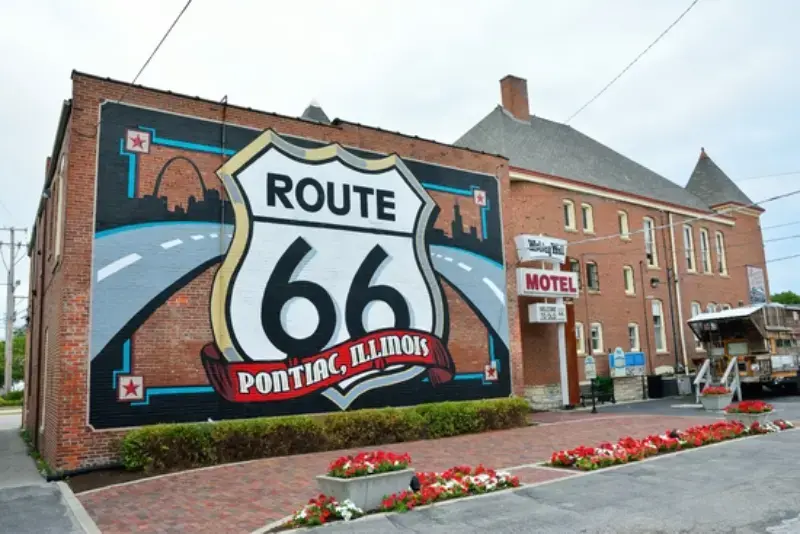
Pontiac is one of the strongest Route 66 museum stops in the state. It focuses on the people, businesses and preservation culture of the Illinois road and connects naturally with the Bob Waldmire material nearby. Travelers who only choose one dedicated Route 66 museum outside Chicago should put Pontiac high on the list.
Planning time: Allow 60–90 minutes, longer if you read exhibits closely.
Pontiac-Oakland Automobile Museum
This museum complements the Route 66 Hall of Fame rather than duplicating it. The focus shifts to the automobiles that made road travel possible and desirable. That makes Pontiac unusually efficient for enthusiasts: you can move from highway history to vehicle history without driving across town.
Planning time: Allow 45–90 minutes depending on car interest.
Springfield sign, road and social-history exhibits
Springfield has multiple places that interpret Route 66 through signs, roadside objects and community history. The city’s newer interpretation also expands the story beyond nostalgia, including Black travel and the social realities of the highway era. This broader approach is important if you want to understand Route 66 as lived history rather than only chrome and neon.
Planning time: Choose one or two specialized stops rather than trying to see everything in one afternoon.
Litchfield Museum & Route 66 Welcome Center
Litchfield’s museum is valuable near the southern end of the Illinois trip because it reconnects the highway to a specific community. Exhibits include local history and Route 66 material, and the location makes a natural orientation stop before the Ariston, Sky View and the town’s multiple alignments.
Planning time: Allow 45–75 minutes; check seasonal hours.
Driving, timing and logistics
Museum hours are the most common reason Route 66 itineraries fail. Save current opening days in your phone and look at the schedule the night before. A museum that closes at 4 p.m. must come before a giant statue, mural or preserved road segment that can still be seen later in daylight.
Children often do better with alternating formats. Pair a museum with a giant, river walk or ice-cream stop rather than visiting three indoor exhibits in a row. The same applies to adults who are not deeply interested in road history. A mixed day produces better attention when you return to the next museum.
Do not assume “free admission” means the stop has no cost. Donations, parking, gift-shop purchases and the time required to reach the museum all matter. Supporting small museums is part of preserving Route 66, but you should still prioritize the places that genuinely interest your group.
| Stop | Time | Why it earns a place |
|---|---|---|
| Joliet Area Historical Museum and Route 66 Welcome Center | Allow 60–90 minutes. | Joliet is a practical early-trip museum because it explains the local corridor just as you leave the Chicago metropolitan area |
| Illinois Route 66 Hall of Fame and Museum in Pontiac | Allow 60–90 minutes, longer if you read exhibits closely. | Pontiac is one of the strongest Route 66 museum stops in the state |
| Pontiac-Oakland Automobile Museum | Allow 45–90 minutes depending on car interest. | This museum complements the Route 66 Hall of Fame rather than duplicating it |
| Springfield sign, road and social-history exhibits | Choose one or two specialized stops rather than trying to see everything in one afternoon. | Springfield has multiple places that interpret Route 66 through signs, roadside objects and community history |
| Litchfield Museum & Route 66 Welcome Center | Allow 45–75 minutes; check seasonal hours. | Litchfield’s museum is valuable near the southern end of the Illinois trip because it reconnects the highway to a specific community |
Keep a small amount of unscheduled time every day. Route 66 rewards the unplanned ten-minute conversation, an unexpectedly good local museum, a restored sign you did not know existed or a meal that takes longer because the place is busy. A timetable with no slack removes the quality that makes a heritage road trip different from ordinary point-to-point driving.
Where to stay and how to book the road trip
For this article, a practical accommodation search is Pontiac, Illinois. Compare the location against tomorrow morning’s first stop before you compare the last few dollars of room price. On a driving itinerary, location can save an hour of backtracking and protect museum opening times.
Book the most constrained nights first: Chicago weekends, Springfield during major events, and any stay tied to a specific evening activity. Keep ordinary mid-route nights more flexible when cancellation terms allow it. That gives you room to stop early after a long day or continue farther when the weather and energy are good.
Check location first, then compare the full nightly price. On Route 66, a slightly better base can save more time than a cheaper room that creates backtracking.
🏨 Check stays on Booking.comA car is essential for the Route 66 portion beyond Chicago, but it does not have to be part of the Chicago stay itself. Compare city and airport pickup prices, parking costs and one-way fees. The lowest rental quote is not the cheapest trip if it creates two days of downtown parking charges.
A rental car makes sense once you leave central Chicago. Compare pick-up locations as well as price: avoiding downtown parking for the first city nights can be a bigger saving than chasing the lowest daily rate.
🚗 Compare rental carsCommon mistakes that make this stop less enjoyable
- Saving museums for late afternoon because outdoor photo stops feel easier in the morning.
- Visiting too many similar exhibits in one day and remembering none of them clearly.
- Skipping Pontiac because it looks like a small town on the map.
- Relying on old guidebook hours during seasonal or centennial programming.
The larger mistake is treating Route 66 as a test that can be failed if you miss a famous stop. The road is too rich for that. Choose the places that fit your interests, preserve enough daylight for the sections you most want to see and let the rest remain a reason to return.
- Route 66 Illinois Road Trip: Chicago to the Mississippi with the Best Stops and Practical Tips
- Springfield Route 66 Guide: Cozy Dog, Historic Alignments and Lincoln-Era Detours
- Litchfield Route 66 Guide: Ariston Cafe, Sky View Drive-In and an Easy Overnight Stop
- Best Route 66 Roadside Attractions in Illinois: Giants, Neon and Classic Photo Stops
- Best Route 66 Food Stops in Illinois: Diners, Drive-Ins, Bakeries and Local Classics
Frequently asked questions
What is the best Route 66 museum in Illinois?
Pontiac’s Illinois Route 66 Hall of Fame and Museum is one of the strongest dedicated choices. Joliet, Springfield and Litchfield add different perspectives.
How much time should I allow for Route 66 museums?
Most focused visits need 45–90 minutes. Automobile enthusiasts and travelers who read every exhibit may spend longer.
Are the museums good with children?
Many are family friendly, but younger children usually enjoy the day more when museums are alternated with outdoor stops, giants, murals and food breaks.
Can I visit several museums in one day?
Yes, but two substantial museums is a sensible limit for most road-trip days. More than that can crowd out the actual road and communities.
Before departure, recheck opening hours, seasonal access, road works and event-day traffic. Route 66 attractions are a mix of public sites, private businesses, volunteer-run museums and outdoor landmarks, so details can change faster than the historic route itself.