

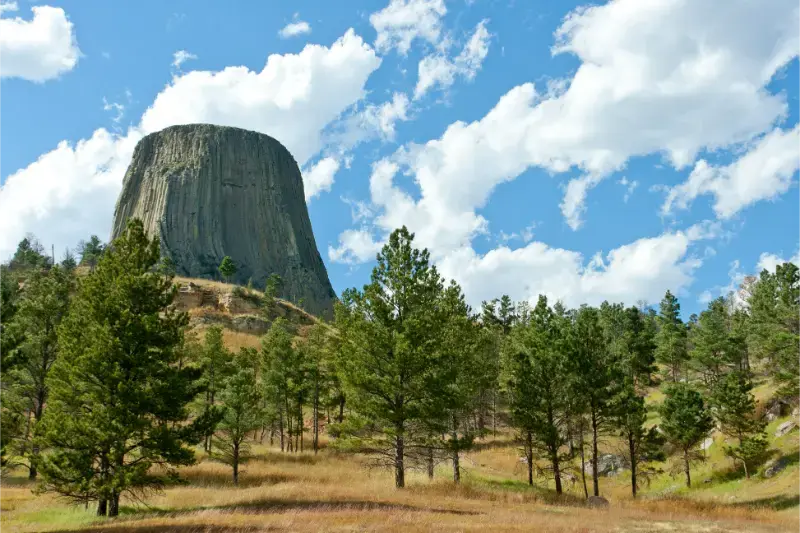
Devils Tower rises so abruptly from the plains and pine-covered hills of northeastern Wyoming that photographs rarely communicate the first impression. The monolith is visible from miles away, yet the most meaningful visit begins when you stop treating it only as a geologic oddity. Devils Tower is also a sacred place for many Indigenous peoples, a climbing destination and the center of a landscape that connects naturally with the Black Hills, Sheridan and northern Wyoming road trips.
A few hours is enough to walk the main loop and visit the visitor center, but an overnight nearby changes the experience. Early morning and evening bring softer light, cooler temperatures and fewer day trippers. If you are linking South Dakota with Wyoming, Devils Tower is one of the strongest transition stops before Sheridan and the Bighorn Mountains.
Compare available accommodation for your dates, budget and preferred location before you finalize your route.
Walk the Tower Trail before deciding you have “seen” Devils Tower
The paved Tower Trail loops around the base for roughly 1.3 miles and continuously changes the perspective. From one side the columns look tightly stacked; from another, fallen blocks dominate the foreground. The trail also passes through forest where deer, birds and smaller wildlife can shift attention away from the rock itself.
The loop is short but not flat in every section, and summer heat can make it feel longer. Bring water and walk slowly. The boulder field above the loop is not simply another scrambling area: cultural concerns and climbing-management guidance make it important to remain on designated routes unless you are participating in an appropriate activity.
Understand the cultural significance
Numerous Northern Plains tribes have cultural and spiritual connections to the Tower, and names, stories and traditions differ among communities. Prayer bundles and other ceremonial items may be visible in the landscape; do not touch or photograph sacred objects without understanding what is appropriate. Interpretive material at the monument helps explain why the place is more than a recreational landmark.
The National Park Service asks climbers to voluntarily refrain from climbing the Tower during June, a culturally significant period when ceremonies often occur. The request is part of a long-standing climbing management plan developed with tribal and climbing representatives. Respecting that closure is one concrete way visitors can acknowledge the living cultural importance of the site.
Climbing: world-class routes with specific responsibilities
Devils Tower is famous for crack climbing, with long vertical columns and routes spanning a wide difficulty range. Technical climbing requires appropriate experience, gear and registration. Commercial guides operate under permits; if you need instruction, confirm that the service is authorized.
In addition to the voluntary June closure, the park can close specific routes during spring and summer to protect nesting peregrine and prairie falcons. These closures are enforced. Check the official current climbing closures immediately before any climbing day.
Visitor center and 2026 hours
The historic visitor center near the base provides exhibits, ranger contact and a bookstore. The National Park Service lists 2026 daily hours of 9 a.m.–5 p.m., with extended 9 a.m.–6 p.m. summer hours from May 31 through September 6. Holiday exceptions apply, so verify hours if your visit falls around a major holiday.
The self-service passport stamp outside the building is available beyond visitor-center hours. Arriving before the center opens can still be worthwhile for the trail, but returning once rangers are available adds useful context to the visit.
Prairie dog town and the lower landscape
Near the entrance, prairie dog colonies offer a completely different wildlife experience. Use pullouts and observe without feeding. Prairie dogs are part of a complex grassland ecosystem and can carry disease; they are not pets despite their familiarity with visitors.
The combination of prairie, pine forest and exposed rock is part of what makes the monument visually distinctive. Spend a little time below the Tower rather than driving directly to the upper parking lot and leaving immediately after the loop.
Crowds and parking
Summer parking near the visitor center can fill quickly, especially late morning through afternoon. Arriving early or later in the day is the simplest strategy. If traffic is backed up, do not create unofficial parking spaces along sensitive shoulders. Follow ranger direction and be prepared to wait.
The monument is relatively small, so a crowded parking lot changes the atmosphere more than it does in a huge park. An overnight in the region lets you choose quieter hours and gives you time for a second short walk or photography session.
Where to stay near Devils Tower
The tiny community near the monument has limited lodging and camping. Hulett is the closest small-town base with more services. Sundance, farther south, works well when you are approaching from Interstate 90, while Spearfish or other Black Hills towns can make sense if Devils Tower is a day trip from South Dakota. Sheridan is too far for a casual round trip but fits naturally as the next overnight on a westbound road trip.
Affiliate disclosure: we may earn a commission from qualifying bookings at no extra cost to you. Compare stays near Devils Tower on Booking.com, paying particular attention to location and cancellation terms when road or weather conditions may change.
How Devils Tower fits a Black Hills to Yellowstone route
A classic westbound route starts in the Black Hills, visits Devils Tower, continues to Sheridan or Buffalo, crosses the Bighorn Mountains and reaches Cody before Yellowstone. This sequence gives the monument a logical place in the itinerary rather than treating it as a long out-and-back detour.
The drive looks straightforward, but northern Wyoming roads cross mountain ranges and open country where weather can change quickly. The Wyoming road-trip guide explains how to space the overnight stops.
Best time to visit
Late spring through early fall provides the easiest hiking conditions and the fullest visitor services. Summer is busiest and can be hot on exposed sections of trail. September often offers comfortable daytime temperatures and fewer families traveling, while nights become noticeably cooler.
Winter visits can be beautiful but require a different mindset. Snow and ice may affect trails and regional highways, services are reduced, and daylight is short. Check WYDOT road conditions and NPS alerts before crossing the region.
Photography and light
Morning light can illuminate one side of the Tower while evening creates a different silhouette, so there is no single correct photo hour. Walk the loop and use trees and boulders for scale. A wide lens captures the landscape; a telephoto lens reveals the column structure.
Night-sky photography can be excellent because the region is relatively dark, but respect campground quiet hours and avoid shining bright lights toward other visitors or cultural sites. Plan your return route before dark rather than improvising on rural roads.
Families and accessibility
Devils Tower is a manageable stop for families because the primary trail is short and the landmark stays visible throughout much of the visit. Break the walk with wildlife and geology observations rather than presenting it as a hike that must be completed quickly. Keep children away from steep boulder areas and wildlife.
Visitors with limited mobility can still experience strong views from developed areas near the visitor center. Surface conditions and temporary closures can change, so check accessibility information with the park before travel if a specific facility is essential.
Leave room for the landscape around the monument
The mistake is to drive in, photograph the Tower from the parking lot and leave. Walk, read the cultural interpretation, watch the prairie dogs and let the landmark change as you move around it. Two or three hours is enough for that slower experience; half a day is even better if you enjoy photography or nature.
If you have more time, combine the monument with Belle Fourche, Sundance or the Black Hills on one side and Sheridan or the Bighorns on the other. The value of Devils Tower is partly geographic: it connects several distinct Western landscapes.
Continue planning Wyoming
Next, use the Sheridan & Bighorn Mountains guide, Cody guide and Wyoming destination hub. For official monument alerts, hours and climbing guidance, use the National Park Service Devils Tower website.
A few final planning details that save time on the road
Build the Devils Tower Wyoming guide portion of the trip around daylight, weather and the next overnight rather than around an arbitrary list of attractions. In Wyoming, a late start can change a mountain day more than a missing minor stop. Keep water, a warm layer, offline directions and a full fuel tank available whenever the route leaves a major town.
If a road, trail or attraction closes, replace it with something in the same geographic area instead of driving across the state to recover the checklist. This keeps the day enjoyable and prevents one disruption from creating a second problem with hotel arrival times.
Planning note 1: keep the itinerary flexible
Devils Tower Wyoming Guide works best when you leave margin between the main experience and the next long drive. Wyoming distances, wildlife, mountain weather and seasonal construction can turn a nominally simple transfer into a slower day. Use that uncertainty as a reason to choose fewer, better stops rather than trying to collect every viewpoint.
Reserve the parts that are difficult to replace, keep ordinary meal and photo stops flexible, and recheck official conditions shortly before departure. A road trip feels much less stressful when the plan has one clear priority each day and several optional extras instead of a fixed sequence that depends on perfect conditions.