

The French Quarter is small enough to cross quickly but layered enough to reward an entire day. New Orleans & Company describes the Vieux Carré as roughly 85 square blocks bounded by Canal Street, Esplanade Avenue, Rampart Street and the Mississippi River. For a first visit, the best strategy is not to zigzag between famous addresses. Start at Jackson Square, follow Royal and Chartres through the historic core, reach the French Market and riverfront, then return later for music and evening atmosphere. The route below keeps the walking logical and separates the neighborhood’s history, food and nightlife instead of treating everything as Bourbon Street.
Begin at Jackson Square before the crowds build
Jackson Square provides the cleanest orientation: St. Louis Cathedral, the Pontalba buildings, artists, the Cabildo and the Presbytère all sit within a compact space. Arrive early enough to see the architecture before the sidewalks are packed. From the levee side, walk up toward the river for a quick view of the Mississippi before returning to Chartres Street. This first hour establishes the geography and lets you decide whether a museum stop belongs in the morning or later in the heat of the afternoon.
Use Royal Street as the daytime spine
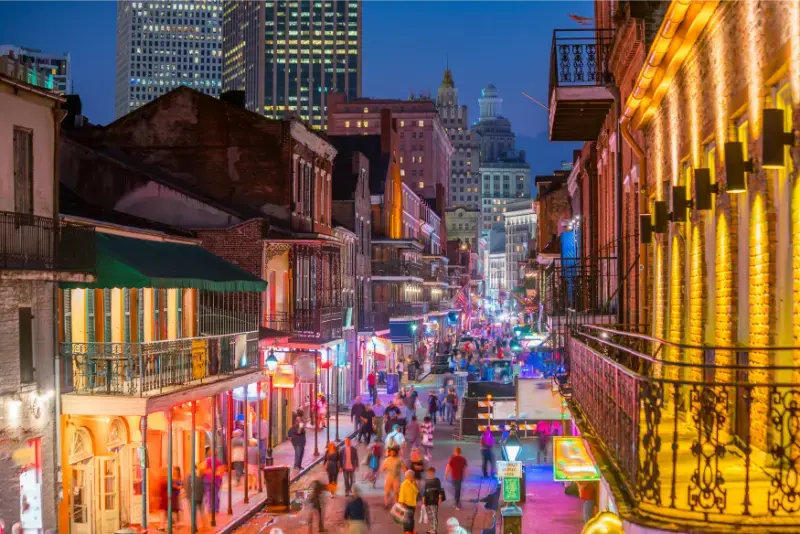
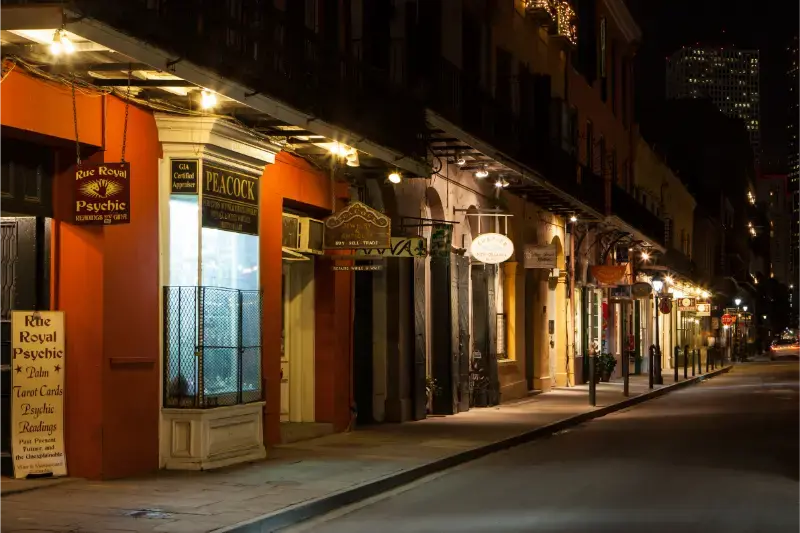
Royal Street is the best street for a slow daytime walk through the Quarter. Galleries, antique shops, cast-iron balconies and street musicians create a different atmosphere from Bourbon Street, especially before evening. Walk several blocks, then cut toward Chartres for churches, courtyards and quieter architecture. Many residences and courtyards are private, so appreciate them from public space rather than treating every photogenic doorway as an invitation. The Quarter’s appeal comes from the streetscape as much as from individual attractions.
Visit the French Quarter Visitor Center for context
Jean Lafitte National Historical Park and Preserve operates a French Quarter Visitor Center that helps explain the city’s history and cultural landscape. It is especially useful near the beginning of a trip because ranger information can make later walks more meaningful. National Park Service programs change by date, so check the official calendar shortly before visiting. The center also connects the Quarter to the wider story of Louisiana’s Acadian, Creole and wetland regions, which is useful if New Orleans is one stop on a longer Louisiana route.
Walk from Jackson Square to the French Market
The French Market District extends for several blocks along the river side of the Quarter and is easy to combine with Jackson Square. The market currently operates daily, with the farmers and flea market areas generally opening around 10 a.m.; individual shops and eateries can keep different hours. Treat the market as a place to browse, snack and continue walking rather than a single must-buy destination. The Old U.S. Mint and the edge of Marigny are nearby, making this a logical end point for a daytime Quarter route.
Do a separate food loop instead of eating randomly
The Quarter contains famous beignet cafés, old Creole dining rooms, muffuletta stops and newer restaurants, but the best meal plan depends on time of day. Use breakfast or a late snack for beignets, save lunch for a casual sandwich or gumbo, and reserve dinner only if a particular historic restaurant matters to you. The point is not to eat every famous dish within the Quarter. Mid-City, Tremé and Uptown have equally important food traditions, so leave part of your culinary list for the rest of New Orleans.
Bourbon Street is one short chapter
Bourbon Street is worth seeing once because it is an internationally recognized part of the Quarter, but it should not dictate the entire visit. In daylight, the architecture is easier to notice; after dark, the central blocks become much louder and more crowded. Travelers who dislike that atmosphere can walk a small section and move on. Royal Street, Frenchmen Street just beyond the Quarter, and smaller venues elsewhere provide alternative nightlife. A useful rule is to choose Bourbon Street deliberately, not drift into spending every evening there because it is convenient.
Look for music beyond doorway noise
Street music is part of the Quarter, but a proper performance gives more context. Check the New Orleans Jazz National Historical Park schedule and the calendars of reputable music venues before the trip. Some National Park Service programs are free. For evening music, Marigny and Frenchmen Street are a short walk from the lower Quarter, which makes them easy to pair after dinner. If you are returning late, use a rideshare when the route back to your hotel is unfamiliar rather than relying on a long walk simply because the map distance looks short.
Plan around heat, rain and uneven sidewalks
The Quarter is walkable but not effortless. Summer humidity is draining, heavy rain can flood low spots quickly, and older sidewalks require attention. Carry water, wear shoes that handle slick pavement and use museums or long lunches as midday breaks. In warm months, a two-hour morning walk and a second walk after sunset are often more comfortable than a single five-hour circuit. That schedule also gives the neighborhood two different moods without requiring extra transportation.
A one-day French Quarter route
Start at Jackson Square around 8:30 or 9:00, visit one museum or visitor center, then follow Royal and Chartres toward the French Market. Have lunch near the lower Quarter, rest during the hottest part of the afternoon, and return in late afternoon for the riverfront and an early dinner. Spend the evening with a planned music venue or continue into Marigny. This route minimizes repeated walking and still leaves room for spontaneous stops, which is essential in a neighborhood where music and street life change from hour to hour.
Best time to visit
Early morning is the best time of day for architecture and photography; evening is best for atmosphere. On a seasonal level, late winter, spring and autumn are more comfortable for walking than midsummer, but festival weekends can be crowded and expensive. During Atlantic hurricane season, keep an eye on official forecasts and avoid inflexible plans when a storm threatens the Gulf Coast.
How long to stay
Allow one full day for a first visit to the Quarter, then return for dinner or music on another evening. Travelers interested in museums, architecture or food can easily spend two separate half-days without repeating the same experience.
Where to stay
Compare available accommodation for your dates, budget and preferred location before you finalize your route.
Staying inside or immediately beside the French Quarter maximizes convenience, but it can also mean more street noise. The CBD offers easy walking access with a more business-district feel, while Marigny can suit travelers focused on live music. Compare places to stay in French Quarter on Booking.com
Getting around and driving
Do not drive around the Quarter for sightseeing. Streets are narrow, parking is costly and walking is simpler. Use streetcars or buses to reach the edge of the district and walk from there. A car becomes useful only when you leave New Orleans for the wider Louisiana road trip.
Food and local culture
Use the Quarter for one classic Creole meal, beignets and perhaps a muffuletta, then explore other neighborhoods for po-boys, fried seafood and modern Louisiana cooking. This keeps the trip varied and prevents every meal from being built around the most tourist-heavy streets.
Traveling with children
The Quarter is manageable with children in daylight: Jackson Square, the riverfront, market browsing and short museum visits work well. Keep walking loops short, take frequent shade breaks and avoid the loudest Bourbon Street blocks at night if that is not the atmosphere you want.
Safety and practical details
The Quarter is busy and heavily visited, but petty theft and distraction are possible in crowds. Keep valuables controlled, ignore aggressive street scams and use marked transportation late at night. After heavy rain, watch for slippery pavement and standing water.
A realistic itinerary
Morning at Jackson Square and a museum; late morning along Royal and Chartres; lunch near the French Market; afternoon rest; sunset riverfront walk; dinner; then music in the Quarter or Marigny. It is a simple plan, but it fits the geography and leaves enough unscheduled time for the neighborhood to surprise you.
Common planning mistakes
Do not spend the entire day on Bourbon Street, assume every balcony is public, or treat the French Market as if it were the only place to find local food. Another mistake is entering the Quarter with no break planned in hot weather. A long lunch or hotel rest can make the evening far more enjoyable.
Official resources
- Official French Quarter neighborhood guide
- French Market District
- Jean Lafitte National Historical Park and Preserve
- New Orleans RTA
Related Louisiana guides
- New Orleans travel guide
- Garden District guide
- New Orleans food guide
- Best time to visit Louisiana
Frequently asked questions
How long does it take to walk the French Quarter?
You can cross the district quickly, but a meaningful visit takes several hours. Allow a full day if you want museums, food stops and time to wander.
Is the French Quarter only for nightlife?
No. The best architecture, museums, markets and riverfront walking are daytime experiences. Nightlife is only one layer.
Do I need a guided tour?
No, but a well-run history, architecture or music tour can add context. Choose a focused subject rather than a generic tour simply because it starts near your hotel.
The French Quarter works best as a neighborhood rather than an attraction. Walk it slowly, look beyond Bourbon Street, build in one or two meaningful cultural stops, and return at a different time of day to see how much the atmosphere changes.