

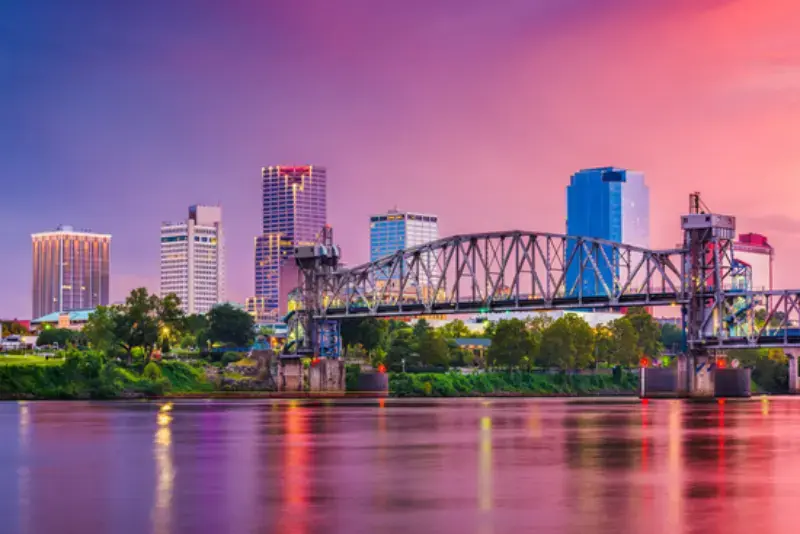
Little Rock Arkansas Travel Guide. Little Rock is a compact capital with enough history, culture and riverfront space to justify more than a quick overnight. The Arkansas River divides Little Rock from North Little Rock, while downtown brings together the River Market, museums, public art and the Clinton Presidential Center. The city is also an essential stop for understanding the history of school desegregation in the United States. A strong visit balances those serious historical sites with neighborhoods, food, green space and time along the river.
Why this deserves a place in your Arkansas itinerary
Little Rock works especially well at the start or end of a statewide road trip. It has the broadest mix of urban services in Arkansas, straightforward interstate connections and enough indoor attractions to absorb a rainy or very hot day. It is also a useful transition between the Delta and mountain regions: drive west to Hot Springs and the Ouachitas, north toward Petit Jean and the Ozarks, or east toward the Mississippi River. Staying two nights gives the city room to feel like a destination rather than an airport or highway stop.
Best things to see and do
River Market District and the Arkansas River
The River Market is the easiest place to understand downtown Little Rock. Restaurants, public spaces, sculptures and the riverfront trail system are close together, and many downtown hotels are within a practical walk or short ride. Use the district as a base rather than a single attraction: walk toward the river, cross a pedestrian bridge if the weather is comfortable, and leave time for a meal rather than rushing directly from one museum to another.
Little Rock Central High School National Historic Site
Central High is one of the most important civil-rights landmarks in the country. The story of the Little Rock Nine is best approached through the National Park Service visitor center and ranger interpretation rather than a quick photograph of the school. Remember that the building continues to function as a school. Check current tour or program information before your visit and treat the surrounding area respectfully.
William J. Clinton Presidential Center
The presidential center sits close to the river and River Market, making it easy to pair with downtown. Exhibits cover the Clinton presidency and broader political context, while the setting itself helps connect the eastern edge of downtown with the river trail. Opening hours, security requirements and special exhibitions can change, so verify details before planning a fixed museum morning.
Arkansas Museum of Fine Arts
The Arkansas Museum of Fine Arts adds a contemporary cultural stop to an itinerary otherwise dominated by history. It is in MacArthur Park, away from the riverfront core but still close enough for a short drive or ride. Check current exhibitions and performance schedules; even travelers who do not usually build trips around art museums may appreciate it as a lower-intensity afternoon after a history-heavy morning.
SoMa and local neighborhoods
South Main, usually shortened to SoMa, offers restaurants, shops and a more neighborhood-scale version of Little Rock. It is useful when you want to step away from the large downtown institutions and spend time in a district that feels lived-in. Combine it with MacArthur Park or an evening meal instead of treating it as a separate sightseeing expedition.
North Little Rock and the river crossing
Crossing the Arkansas River changes the perspective on the city. North Little Rock has its own riverfront, entertainment venues and access to trails. If you enjoy cycling or long walks, the river corridor can be more memorable than another hour indoors. In hot weather, schedule exposed sections early or near sunset and carry more water than you think you need.

How many days do you need?
For a first visit, one day works only if you are selective and already staying nearby. Two days gives you enough time to combine the headline experiences with a slower neighborhood, trail or food stop. Three days is better when the destination includes outdoor activities whose timing depends on weather, river levels, museum reservations or seasonal operating hours. Arkansas rewards unhurried travel: mountain roads are slower than interstate mileage suggests, and the best stops are often the ones that tempt you to stay longer than planned.
Where to stay
Compare available accommodation for your dates, budget and preferred location before you finalize your route.
Downtown is the most convenient first-time base if you want the River Market, museums and riverfront without repeated drives. SoMa works well for restaurants and a neighborhood feel. West Little Rock has more highway-oriented hotels and can be practical for travelers arriving by car who value parking over walkability. North Little Rock can also work if your plans emphasize the river, arena events or quick interstate access.
You can compare accommodation in Little Rock on Booking.com. For an Arkansas road trip, pay particular attention to parking, cancellation terms and the true driving time to the places you plan to visit; a slightly cheaper room can become poor value if it adds an hour of backtracking each day.
Getting around
A car is helpful for a complete visit even though the downtown core is walkable. Some key sights are separated enough that relying only on walking can waste time, particularly in heat or rain. If you are passing through on a road trip, park once for the River Market and riverfront cluster, then drive for Central High, SoMa or other neighborhoods. Avoid moving the car for every downtown stop.
Best time to visit
Spring and fall are the most comfortable seasons for combining museums with riverfront walking. Summer can be hot and humid, so schedule outdoor time early and use museums during the hottest hours. Winter is quieter and often workable for a city trip, but occasional ice can disrupt driving. Major events, sports weekends and conventions can affect hotel prices even outside peak tourist months.
Food and local character
Little Rock has a broad Southern and modern regional food scene: barbecue, catfish, biscuits, burgers and comfort food sit beside chef-driven restaurants and international options. The River Market is convenient, but do not eat every meal there. SoMa and other neighborhoods reward travelers willing to drive ten minutes for dinner. If barbecue is a priority, check opening days because some well-known local spots keep limited schedules.
Visiting with kids
Families can mix the Museum of Discovery, riverfront spaces, zoo time and short museum visits. Central High can be meaningful for older children when adults provide context and allow time for questions. Build in a playground, river walk or relaxed meal between historical sites rather than trying to keep children indoors all day.
How to combine this with the rest of Arkansas
Hot Springs is roughly the natural next base to the west, while Petit Jean State Park fits well when driving north toward the Ozarks. Travelers heading northwest can continue to Fayetteville or Bentonville, but breaking the drive with Petit Jean makes the route more scenic. If you are heading east, Little Rock also connects naturally with Arkansas Delta destinations that can be explored in a later cluster.
A smarter way to plan the visit
Do not measure this stop only by the number of attractions you can fit into a day. Arkansas trips improve when you protect one anchor experience and leave room around it. That might mean one museum plus a neighborhood walk in a city, one major trail plus two overlooks in a park, or one river activity followed by an unhurried meal. The extra margin absorbs parking delays, weather and the temptation to stop at an unexpected viewpoint without turning the rest of the day into a race.
Budgeting time is just as important as budgeting money. Many Arkansas experiences are inexpensive or free, but they can require driving, early starts or advance reservations. A cheaper hotel far outside the area you actually want to explore may cost more in fuel and lost time. When comparing accommodation, look at the first activity of the morning and the final activity of the evening; staying near one of those usually makes the trip feel much easier.
For photographers and travelers who care about atmosphere, the best hours are often early morning and late afternoon. Midday is useful for museums, lunch, scenic transfers or a rest during hot months. This rhythm is especially valuable in mountain and river areas, where parking is easier early and wildlife is more active around the edges of the day. In cities, it also lets you enjoy popular districts before restaurant and event crowds build.
If this is part of a larger United States road trip, resist the urge to add Arkansas as a single overnight between two distant states. The state makes more sense when at least one region receives two nights. Even a short trip becomes more memorable when you can repeat a favorite neighborhood, see a landscape in different light or change plans after a storm without feeling that the entire itinerary has failed.
Practical planning tips
Keep some flexibility in the schedule. Thunderstorms, summer heat, winter ice, high or low river levels and trail maintenance can change the best plan for a given day. Download offline maps before mountain or river days, keep water and a basic layer in the car, and avoid assuming that every rural attraction has long daily hours. When a museum, tour, bathhouse, park program or rental is central to your trip, confirm the current schedule directly before driving a long distance.
Driving is the easiest way to connect Arkansas destinations, but road-trip quality depends more on pacing than mileage. Try to group places by region: Northwest Arkansas for Bentonville and Fayetteville, the northern Ozarks for Eureka Springs and the Buffalo, central Arkansas for Little Rock and Petit Jean, and the Ouachitas for Hot Springs. This prevents the trip from becoming a string of late arrivals and hotel changes.
Official resources
Frequently asked questions
Is Little Rock worth two nights?
Yes. Two nights give you one full day for the River Market, a museum and Central High without turning the city into a checklist.
Can I visit without a car?
You can see much of downtown without one, but a car or occasional ride-hailing makes Central High, SoMa and other districts much easier.
Is downtown Little Rock safe to walk?
Use normal city awareness, especially late at night, and ask your hotel about current block-by-block conditions. During the day the principal visitor areas are straightforward to navigate.
Continue planning Arkansas
- Little Rock travel guide
- Hot Springs travel guide
- Buffalo National River guide
- 7-day Arkansas road trip
- Arkansas travel guide