

14-Day Louisiana Road Trip: New Orleans, Cajun Country, Great River Road & North Louisiana is designed for travelers who want to understand the state beyond a New Orleans weekend. Two weeks is enough to connect the Mississippi River corridor, Cajun Country, wetlands, southwest Louisiana and the less-visited center and north without changing hotels every single night. The route below is intentionally flexible: weather, festivals and your arrival airport should determine the final order.
- 1Day 1: can focus on the Quarter and riverfront
- 2Days 1–4: New Orleans without rushing → New Orleans neighborhoods, museums, food and music
- 3Day 2: on the Garden District and museums
- 4Day 3: on Tremé, City Park or African American history
- 5Day 4: on food, Marigny and live music
- 6Day 5: Great River Road and Whitney Plantation → Whitney Plantation and one additional Great River Road site, overnight Baton Rouge
- 7Day 6: Baton Rouge
- 8Days 7–9: Lafayette and Acadiana → Lafayette, Atchafalaya, Breaux Bridge, St
- 9Day 10: Lake Charles and southwest Louisiana → Lake Charles and the Creole Nature Trail
- 10Day 11: Alexandria-Pineville
- 11Day 12: Natchitoches
- 12Day 13: Shreveport-Bossier City
- 13Day 14: Monroe-West Monroe and Poverty Point → Monroe-West Monroe and/or Poverty Point, with an open-jaw departure if practical → returning south and save Monroe/Poverty Point for a future North Louisiana trip
The route at a glance
A strong two-week progression is New Orleans → Great River Road/Baton Rouge → Lafayette/Acadiana → Lake Charles → Alexandria → Natchitoches → Shreveport-Bossier → Monroe/Poverty Point. This is best as an open-jaw trip if flights and rental-car fees make sense, because North Louisiana is a long return drive from New Orleans.
If you must return the car in New Orleans, either add a final long driving day from Monroe or cut one northern stop and create a tighter loop. Do not pretend Louisiana is small simply because it is one state; meaningful north-south travel takes time.
Days 1-4: New Orleans without rushing

Use four days to separate the city into themes instead of repeating the French Quarter. Day one can focus on the Quarter and riverfront; day two on the Garden District and museums; day three on Tremé, City Park or African American history; day four on food, Marigny and live music.
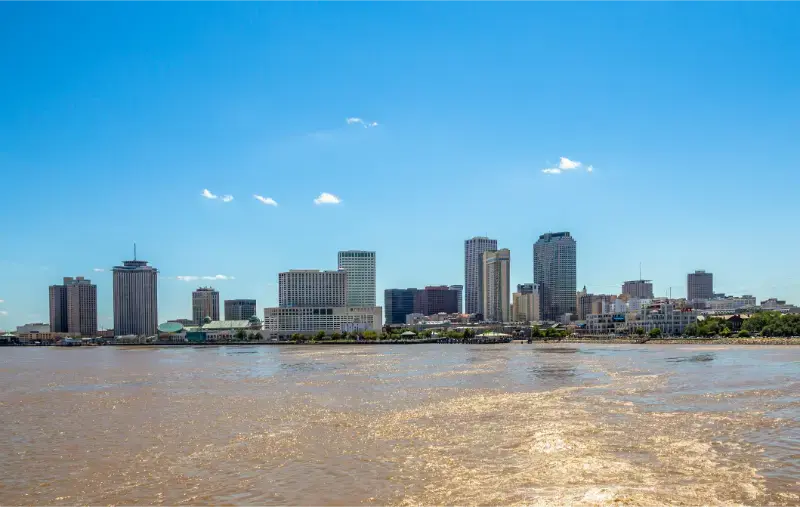
Four nights also give you a weather buffer. If one afternoon is lost to storms or extreme heat, you can move an indoor museum rather than sacrificing the only day assigned to an entire neighborhood.
Day 5: Great River Road and Whitney Plantation
Pick up the rental car if you did not need it in central New Orleans and drive toward the Great River Road. Make Whitney Plantation the historical anchor, allowing at least two to three hours, then add Laura or Oak Alley only if the schedule remains comfortable.
Continue to Baton Rouge rather than returning to New Orleans. This turns a day trip into forward progress and creates a much more efficient statewide route.
Day 6: Baton Rouge
Spend a full day in the capital with the Louisiana State Capitol area, riverfront museums and a local meal. Families can substitute the Knock Knock Children’s Museum or another hands-on attraction. Check the LSU calendar because football weekends can transform traffic and hotel prices.
One night is enough for most first-time visitors, but history and museum travelers can easily justify two.
Days 7-9: Lafayette and Acadiana
Base in Lafayette for three nights. Use one day for the city and Cajun/Creole cultural interpretation, a second for Breaux Bridge, Henderson and the Atchafalaya Basin, and a third for St. Martinville, New Iberia and Avery Island. This is much better than sleeping in a different small town every night.
Leave evenings flexible for live music or a dancehall when schedules align. Do not promise yourself music every night; venues and jam sessions vary by day.
Day 10: Lake Charles and southwest Louisiana
Drive west toward Lake Charles and use the Creole Nature Trail for a controlled introduction to prairie, marsh and Gulf-influenced landscapes. Check current trail and refuge conditions before committing to remote roads, especially after storms, smoke events or flooding.
Stay in Lake Charles rather than pushing toward Central Louisiana after sunset. Southwest Louisiana deserves more than a fuel stop.
Day 11: Alexandria-Pineville
Drive to Central Louisiana and choose two or three attractions: Alexandria Zoo for families, Kent Plantation House for early regional history, downtown arts, or Forts Randolph and Buhlow for Civil War and Red River context.
Alexandria works as a hinge in the route. The goal is not to collect every attraction but to break the long drive north with a meaningful regional stop.
Day 12: Natchitoches
Continue to Natchitoches for the Cane River historic district, architecture and regional food. Walk rather than driving repeatedly through the center. If you are visiting during the Christmas season, accommodation and traffic require much more advance planning.
The surrounding Cane River region can justify extra time for travelers interested in Creole history, but on a 14-day statewide route one night keeps the itinerary balanced.
Day 13: Shreveport-Bossier City

Head northwest for Shreveport-Bossier and choose your interests: aquarium and Sci-Port for families, museums and galleries for culture, wildlife refuge time for outdoors, or riverfront entertainment in the evening.
Avoid making the city only about casinos. North Louisiana’s museums, food and regional history give you a much broader ending to the trip.
Day 14: Monroe-West Monroe and Poverty Point
For an open-jaw itinerary, continue east toward Monroe-West Monroe and Poverty Point. Depending on flight logistics, visit Poverty Point in the morning and Monroe museums later, or reverse the sequence if museum opening days matter.
If your flight departs New Orleans, this final northern section may be too ambitious without an extra night. In that case, spend day 14 returning south and save Monroe/Poverty Point for a future North Louisiana trip.
How to adapt the route
Food-focused travelers should add another Acadiana night. Families may want fewer historic sites and more City Park, Sci-Port, zoos or state parks. Outdoor travelers can trade an urban night for Grand Isle, the Northshore or an additional Creole Nature Trail day.
The best itinerary is not the one with the most pins on a map. It is the one that preserves enough time to hear live music, sit through a full museum, eat without rushing and change plans when Louisiana weather refuses to cooperate.
How much time to allow
For most first-time visitors, fourteen days gives Louisiana road trip enough room to feel like a place rather than a photo stop. The useful question is not how many attractions can fit into a day, but which experiences need time to make sense. In Louisiana, a museum, historic site, wildlife stop or meal often becomes more rewarding when you leave space for interpretation, conversation and weather delays.
If Louisiana road trip is part of a statewide trip, avoid scheduling a long drive immediately after the final timed tour of the day. Build in at least thirty to sixty minutes of margin, especially around the Mississippi River, two-lane rural roads, festival weekends and coastal areas. The 14-day Louisiana road trip shows one way to connect the state without turning every day into a race.
Getting there and getting around
A rental car is unnecessary for many central New Orleans days but becomes essential for the Great River Road, Acadiana and North Louisiana. Consider picking it up only when leaving New Orleans. Compare one-way rental fees against the time cost of returning to your starting city.
Download offline maps before leaving major urban areas and recheck road conditions after heavy rain or tropical weather. Louisiana travel times can be deceptive because bridges, river crossings, freight traffic and small-town speed limits matter. If you have a reservation or timed tour, aim to arrive early rather than treating the estimated drive time as a guarantee.
Where to stay
Compare available accommodation for your dates, budget and preferred location before you finalize your route.
Use multi-night bases: four nights New Orleans, three nights Lafayette and single-night stops elsewhere. This reduces packing and leaves enough evening energy to enjoy food and music. Compare accommodation for Louisiana road trip on Booking.com.
For a road trip, free or simple parking, easy morning departures and flexible cancellation can be more valuable than staying in the most photogenic block. During Mardi Gras, university football weekends, major festivals and holiday events, rooms can sell out well in advance. Always check the exact cancellation policy before booking during hurricane season.
Best time to visit
October through April is easiest for a long driving itinerary. Spring adds festivals and crawfish season, while summer requires more indoor midday time and greater flexibility around tropical weather.
The Atlantic hurricane season runs from June 1 through November 30, but that does not mean every day in that period is unsuitable. It means plans should remain flexible and forecasts should be checked close to departure. The best time to visit Louisiana guide compares the trade-offs between festival season, crawfish season, summer heat, hurricane risk and winter cold fronts.
Practical planning and respectful travel
Never plan a long drive immediately after a late music night or an exhausting outdoor day. Louisiana road travel includes bridges, rural darkness, wildlife and sudden storms. Share driving when possible and stop before fatigue becomes a problem.
Louisiana culture is lived culture, not a visitor attraction created on demand. Historic Black communities, churches, cemeteries, Indigenous heritage, working fishing towns and residential neighborhoods deserve the same respect you would expect at home. Ask before photographing people closely, do not enter private property, keep noise reasonable in residential areas and follow local instructions around wildlife, water and historic structures.
Food, weather and backup plans
Do not build a Louisiana itinerary that allows twenty minutes for lunch. Food is part of the destination, and locally owned restaurants may have limited opening days, long waits or menus that change with seafood availability. Check same-day hours and keep one backup restaurant in mind. If a regional specialty matters to you, ask what is local and seasonal instead of assuming every menu item is sourced nearby.
Heat and humidity change how far most travelers comfortably walk. In warm months, start outdoor activities early, drink more water than you think you need and use museums, cafés or hotel breaks during the hottest part of the afternoon. Thunderstorms can be intense but localized. A strong itinerary always has an indoor alternative rather than forcing a beach, swamp, trail or outdoor historic site in unsafe weather.
A practical itinerary
- Days 1-4: New Orleans neighborhoods, museums, food and music.
- Day 5: Whitney Plantation and one additional Great River Road site, overnight Baton Rouge.
- Day 6: Baton Rouge.
- Days 7-9: Lafayette, Atchafalaya, Breaux Bridge, St. Martinville and Avery Island.
- Day 10: Lake Charles and the Creole Nature Trail.
- Day 11: Alexandria-Pineville.
- Day 12: Natchitoches.
- Day 13: Shreveport-Bossier City.
- Day 14: Monroe-West Monroe and/or Poverty Point, with an open-jaw departure if practical.
Official resources
Hours, admission prices, tour formats, road access and temporary closures can change. Recheck first-party sources shortly before your visit:
Related Louisiana guides
- 7-day Louisiana road trip
- New Orleans travel guide
- Lafayette and Cajun Country guide
- Shreveport-Bossier City guide
- Monroe-West Monroe guide
Frequently asked questions
Is 14 days enough for Louisiana?
Yes for a broad first trip, but not for every region in depth. Two weeks lets you connect South and North Louisiana while still spending several nights in New Orleans and Acadiana.
Should you rent a car in New Orleans?
Not necessarily for the central city. Many travelers save parking costs by picking up a rental car only when leaving for the Great River Road.
Can this route start in Shreveport?
Yes. Reversing the order can work well, especially with an open-jaw flight into Shreveport and out of New Orleans. Check rental-car one-way pricing before committing.