

A seven-day Missouri road trip can connect St. Louis, spring-fed Ozarks scenery and Kansas City without feeling like a race, but only if you accept that you cannot also do every cave, lake, historic town and Route 66 attraction in the state. The strongest itinerary uses three major bases and lets each day have one clear purpose.
This route is designed for a first-time visitor with a rental car or personal vehicle. It emphasizes St. Louis, Ozark National Scenic Riverways and Kansas City, with flexible choices for Jefferson City, Hermann, Springfield or Route 66 depending on interests. The goal is not to collect counties; it is to experience Missouri’s major contrasts with manageable driving.
- Time to allow: 7 full days plus arrival/departure logistics
- Best direction: St. Louis to Kansas City or reverse, ideally with open-jaw flights if practical
- Car: Essential once you leave the major cities
- Best fit: first-time visitors, couples, families and travelers who want cities plus Ozarks nature
- Biggest planning mistake: trying to add Branson, Lake of the Ozarks, Hannibal and every Route 66 stop to the same seven-day route
- 1Day 1: is orientation, not exhausting the attraction list → By mid-afternoon, decide whether to sleep one more night in the city or move toward He…
- 2Day 3: Central Missouri to the Ozarks
- 3Day 4: Ozark National Scenic Riverways
- 4Day 5: Ozarks to Springfield or Route 66
- 5Day 6: Springfield to Kansas City
- 6Day 7: Kansas City
Why this destination deserves space in a Missouri itinerary
Missouri is bigger in travel time than it looks on a national map. St. Louis and Kansas City sit on opposite sides of the state, while the most distinctive Ozarks springs and rivers are south of the fastest east-west corridor. A route that zigzags among all three regions can waste hours.
The solution is a directional itinerary: spend meaningful time in one city, drop south into the Ozarks, then move west/northwest toward the second city. Add only the intermediate stop that best matches your interests.
What to do — and how to plan it better than a checklist
Day 1 — St. Louis: Gateway Arch and a neighborhood evening
Start with the Gateway Arch area, museum and riverfront while your energy is highest. If you plan to ride the tram, secure a timed ticket and allow time for security. Then choose one additional major experience — Forest Park museum, City Museum or another priority — rather than trying to cross the metro repeatedly.
Use the evening for a neighborhood meal and short walk. The point of Day 1 is orientation, not exhausting the attraction list. Stay in a location that makes the next morning efficient.
Day 2 — St. Louis depth, then position for the road
Use the second morning for the major St. Louis attraction you skipped on Day 1. By mid-afternoon, decide whether to sleep one more night in the city or move toward Hermann/Jefferson City depending on Day 3.

If wine country interests you, drive toward Augusta or Hermann and spend the night there. If history and a direct central route matter more, Jefferson City creates a stronger bridge. Do not attempt both in one evening.
Day 3 — Central Missouri to the Ozarks
Choose one central stop: Hermann for wine and river-town character, or Jefferson City for Capitol and penitentiary history. Keep it to a focused half-day, then drive toward Eminence or Van Buren before dark.
This positioning is important. Arriving in the Ozarks after dark makes rural navigation harder and wastes the next morning. Buy fuel and basic supplies before the final rural stretch.
Day 4 — Ozark National Scenic Riverways
Make the Riverways the entire day. If conditions are good and you want to float, book a manageable Current or Jacks Fork section with a reputable outfitter. If you prefer land, combine Alley Spring or Big Spring with one additional spring and a short trail.
Do not drive between Eminence and Van Buren repeatedly simply to check off every named spring. Choose the district closest to your lodging and let weather determine the water activity.
Day 5 — Ozarks to Springfield or Route 66
Leave the Riverways after an early spring or trail stop and head toward Springfield. Depending on your interests, visit Route 66 sites, Wonders of Wildlife or Wilson’s Creek National Battlefield.
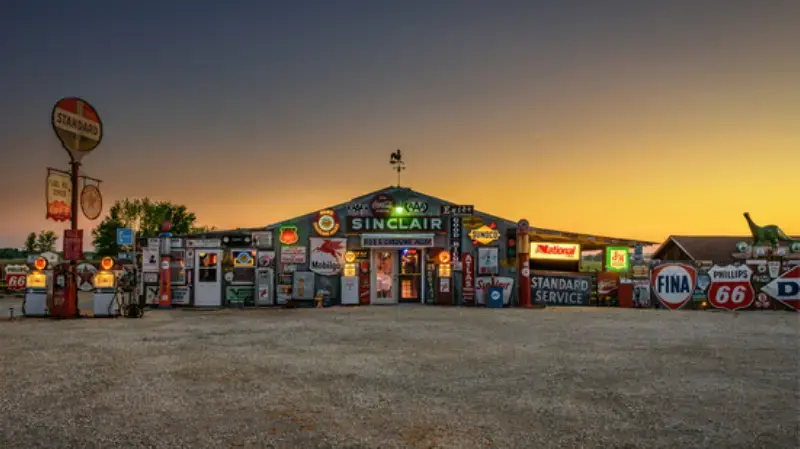
Sleep in Springfield. This breaks the journey to Kansas City and prevents the road trip from becoming a six-hour transfer immediately after a full outdoor day.
Day 6 — Springfield to Kansas City
Use the morning for one Springfield-area priority, then drive to Kansas City. Arrive with enough time for a museum, barbecue dinner or jazz evening rather than reaching the city after dark exhausted from unnecessary detours.
If you are more interested in the Lake of the Ozarks than Springfield, you can reroute north, but that changes the trip substantially. Make that substitution rather than adding the lake on top of everything else.
Day 7 — Kansas City
Give Kansas City a full final day. Choose one major museum or historic site, build barbecue around geography rather than driving across the metro for every famous name, and leave room for the Crossroads, Country Club Plaza or another neighborhood depending on your interests.
If your flight leaves late, protect transfer time to the airport. If you have another night, the trip becomes much more relaxed because Kansas City deserves more than a closing half-day.
How much time to allow
A useful rule is to protect the main experience first and build secondary stops around it. The time estimates below are deliberately conservative because parking, rural roads, weather and seasonal operations can consume more of the day than a map suggests.
Best three-base version
St. Louis 2 nights; Eminence or Van Buren 2 nights; Springfield 1 night; Kansas City 2 nights, adjusting for flight times.
History-heavy alternative
Replace one Ozarks float day with Jefferson City and Wilson’s Creek. Keep the same number of overnight moves instead of adding additional one-night stops.

What to cut if you are short on time
If flights reduce the trip to six usable days, remove Springfield as a sightseeing day and use it only as an overnight, or shorten St. Louis/Kansas City by half a day. Do not remove the Ozarks overnight and attempt a giant day trip from a city.
Weather, closure or crowd backup plan
Build weather flexibility into the Ozarks section. If storms make floating unsafe, switch to springs, mills and a shorter trail. City museums in St. Louis, Springfield and Kansas City make useful weather buffers, so place outdoor-heavy days where forecasts look strongest.
Where to stay and how to choose the right base
Compare available accommodation for your dates, budget and preferred location before you finalize your route.
Pay for location in St. Louis and Kansas City if it reduces daily driving. In the Ozarks, choose the river district first and lodging second. In Springfield, prioritize easy highway access unless nightlife is a goal.
Best time to visit
Late spring and fall offer the best balance of city walking and Ozarks conditions. Summer is excellent for floating but hotter and busier. Winter works for the cities but changes the character of the Riverways and limits some seasonal services.
Opening hours, tour schedules, road conditions, river or lake levels, trail closures, fishing regulations and seasonal services can change. Use this guide to choose the shape of the trip, then verify operational details on the official websites shortly before departure.
What to book ahead — and what can stay flexible
Book Gateway Arch tram tickets, popular city hotels, Ozarks cabins/campsites and summer float shuttles in advance. Keep small museums, scenic stops and most trail choices flexible. If your trip includes a major event or holiday weekend, reserve much earlier.
Is it worth the detour?
Seven days is enough for a meaningful Missouri sampler if you limit the route to a few regions. It is not enough for a comprehensive state tour. Travelers who strongly prioritize Branson, Hannibal or the Lake of the Ozarks should substitute them for another region rather than extend every day.
How to combine it with the rest of Missouri
This itinerary naturally connects with a longer Route 66 trip west into Kansas/Oklahoma or east into Illinois. With 10–14 days, you can add Hannibal, Branson, Lake of the Ozarks or a deeper Katy Trail/wine-country segment without destroying the pacing.
Useful related guides
- St. Louis Missouri Travel Guide
- Ozark National Scenic Riverways Guide
- Springfield Missouri Travel Guide
- Kansas City Missouri Travel Guide
- Missouri Scenic Drives Guide
Official resources to check before you go
Frequently asked questions
Is seven days enough for Missouri?
Yes for a focused first trip covering two cities and one major Ozarks region. It is not enough to include every headline destination.
Should you rent a car for a Missouri road trip?
Yes. A car is essential for the Ozarks and makes intercity travel much more flexible.
Can you add Branson to this seven-day route?
You can substitute Branson for part of Springfield/Kansas City or shorten another region, but simply adding it creates too much driving and too little time on the ground.
A practical decision rule
Use three rules: no more than one major driving transfer per day, no more than one headline outdoor activity per Ozarks day, and no one-night stop unless it clearly shortens the next day. Those constraints protect the trip from turning into a schedule of parking lots.
Final planning advice
The best Missouri trips are built around geography and realistic time, not a statewide attraction count. Protect the experience that made you choose this stop, keep one backup plan for changing conditions, and leave enough margin to enjoy the roads, river towns and small surprises between major destinations.
For the wider trip, group destinations by geography instead of popularity. Missouri looks compact on a national map, but Ozarks backroads, trailheads, river corridors and city traffic can turn short straight-line distances into substantial blocks of the day. Fewer bases and better sequencing usually deliver more than a longer list of rushed stops.