

Traveling through Montana? For park logistics, use our Glacier guide, West Yellowstone guide and Gardiner guide. The Makoshika guide is especially useful for dinosaur-loving children.
Montana can be an outstanding family destination, but only if adults resist planning it like an adult road trip with children in the back seat. The state is vast, national-park mornings start early, weather changes quickly and many of the best places have limited food or shade. Families usually have the best experience when they choose fewer bases, alternate big landscapes with hands-on stops, and protect sleep. A child who enjoyed two hours by a lake may remember Montana more fondly than one who was driven through six famous viewpoints in a single day.
Choose two or three bases, not seven
Changing hotels every night magnifies every family travel problem: unpacking, lost items, late dinners and tired mornings. For a first trip, consider one Glacier base, one Yellowstone-area base and one city or valley stop such as Bozeman, Missoula or Livingston. If you have only a week, choose one national-park region rather than crossing the whole state. Montana distances make “just one more stop” expensive in time.
Glacier with children
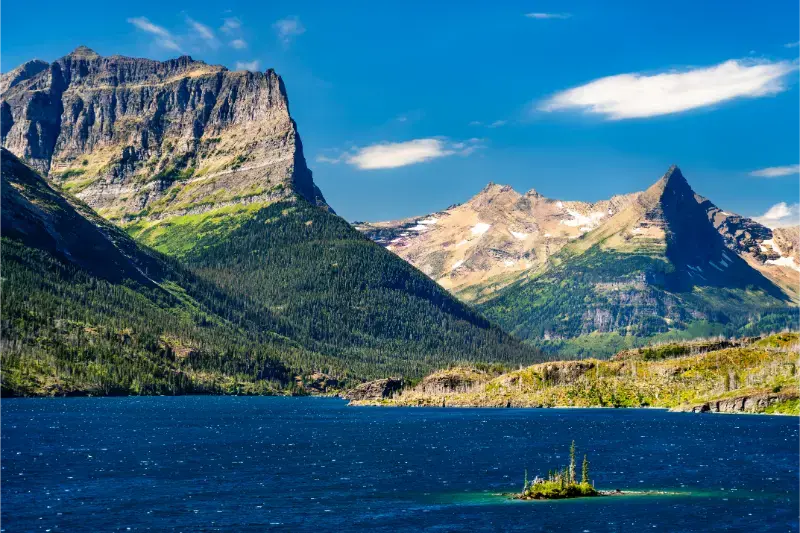
Glacier can work brilliantly for families when you match the day to age and stamina. Short lake walks, boat rides, accessible viewpoints and selected sections of Going-to-the-Sun Road provide big scenery without requiring a ten-mile hike. Parking and shuttle systems can complicate the day, so prepare the night before. In 2026 Glacier did not use vehicle reservations for entry, but parking and shuttle logistics still required planning. Carry bear spray, keep children close on trails and never let wildlife proximity become entertainment.
Yellowstone with children
Yellowstone’s geysers often hold children’s attention better than a long scenic drive, but the park is enormous. From West Yellowstone, focus on the western thermal areas one day; from Gardiner, focus on Mammoth and the northern park. Boardwalks are not playgrounds: thermal ground is fragile and dangerous, so hand-holding and clear boundaries matter with young children. Wildlife should be viewed from legal distances, ideally with binoculars.
Add dinosaurs at Makoshika
Makoshika State Park near Glendive gives families a completely different Montana. Badlands, dinosaur interpretation and fossil stories provide a strong contrast to mountain parks. The visitor center is a useful educational anchor, and short hikes can be chosen according to heat. Do not let children collect rocks or fossils; turn the challenge into spotting layers and shapes instead.
Use lakes as recovery days
Flathead Lake, Seeley Lake and other accessible waters can reset the family after early national-park mornings. A lake day still requires life jackets, sun protection and respect for cold water, but the schedule can be much looser. Pick one lake rather than driving between several. A picnic and a short paddle often do more for family morale than another full day in the car.
Choose history that children can touch and see
Lewis & Clark Caverns, mining towns, railway museums and preserved Old West places work better for many children than abstract history panels. At Lewis & Clark Caverns, guided cave tours are seasonal and have physical requirements, so choose the correct tour and reserve ahead when required. At ghost towns such as Bannack, set a simple scavenger hunt — schoolhouse, hotel, jail — rather than expecting children to read every sign.
Build wildlife expectations before the trip
Children may arrive expecting bears beside the road every day. Explain beforehand that wildlife is not guaranteed and that safe distance is part of seeing animals responsibly. Bring binoculars for each child if possible so sharing does not create arguments. Never use food to attract animals or stop in unsafe traffic. A guided wildlife outing can be worthwhile when animals are a major family priority.
Plan the car like an expedition
Keep water, snacks, layers, wipes, simple medicine, sun protection and an offline map accessible without unpacking the trunk. Download entertainment for the longest highway segments but also create road games around geography, license plates and wildlife. Fuel earlier than you would at home. A half tank is a good trigger in remote parts of Montana, especially when a planned gas station could close early.
Do not overschedule mornings and evenings
Early starts help in Glacier and Yellowstone, but they become self-defeating if dinner ends at 9:30 p.m. Protect bedtime on the nights before park days. On transfer days, let children swim at the hotel or play in a park instead of adding a sunset attraction. Family travel quality is often determined by recovery time, not by the number of famous places visited.
How much time to allow
For families, ten to fourteen days is far more comfortable than trying to cross Montana in a week. If you have seven days, choose Glacier plus the Flathead region or Yellowstone plus southwest Montana rather than both national parks. A rushed stop can still be worthwhile, but the experience improves when you leave enough margin for weather, wildlife, roadwork and the simple fact that Montana distances are larger than they first appear on a map. Build one anchor activity into each half-day rather than stacking every viewpoint, museum and trail into a rigid schedule. That approach gives you room to linger when a place is better than expected and to change plans if smoke, thunderstorms, snow or wind alters the day.
Best time to visit
June through September is easiest for a first family trip because most roads, visitor services and campgrounds are operating. July and August are busiest. September can be excellent with school-age children if schedules allow. Winter is rewarding but is a specialized trip requiring cold-weather gear and safer margins. Montana’s shoulder seasons deserve serious consideration, but services can change quickly outside summer. Campgrounds, visitor centers, scenic roads and guided activities may operate on reduced schedules even when the highway itself is open. Always check the official source for the specific park, forest or attraction a few days before departure, then check road and fire information again on the morning you travel.
Driving and getting around
Long transfers are unavoidable, so keep driving days realistic. A three-hour map estimate may become five with food, toilets, construction and wildlife. Avoid late-night arrivals at remote cabins where groceries and reception may be limited. Keep the fuel tank above half when you leave the main corridors, download offline maps, and do not assume that mobile coverage will follow you into valleys, badlands or national forest. Montana driving is part of the trip, not dead time between attractions: use pullouts when they are safe, avoid stopping in traffic for wildlife, and give faster local traffic space to pass on narrow two-lane roads.
Visiting with children
For a manageable family day, alternate a big attraction with free play, choose short hikes with easy turnarounds, and let children help choose one activity each day. Families usually have a better trip when they alternate interpretation with something physical: a riverside walk after a museum, a picnic after a scenic drive, or a short trail before a long transfer. Carry layers, snacks and more water than you expect to need. Distances between toilets, food and shade can be surprisingly long once you leave town.
Where to stay
Compare available accommodation for your dates, budget and preferred location before you finalize your route.
Suites, cabins and hotels with breakfast can reduce family friction. In national-park gateway towns, location can be more valuable than room size if it saves an hour of driving every morning.
Check current accommodation options and prices in Bozeman, Montana. Book early for summer weekends, holiday periods and any dates tied to festivals or major park travel. In smaller Montana towns, the practical difference between staying in town and staying twenty or thirty minutes outside it can be significant when you want dinner after a full outdoor day.
How to combine this stop with a larger Montana trip
A practical first family route is Glacier/Whitefish → Seeley-Swan or Missoula → Bozeman/Livingston → Yellowstone, but only with enough days. With less time, split the state into separate trips. The best Montana itineraries connect places by landscape and driving logic rather than by trying to collect as many towns as possible. Use this stop as a bridge between nearby valleys, parks and historic routes, and avoid unnecessary backtracking. If two destinations require the same highway twice, consider changing the overnight order so that the road itself becomes part of the route.
Common planning mistakes
The most damaging mistake is trying to “get your money’s worth” by staying out from dawn to dark. Other errors include skipping meals to beat traffic, bringing no warm layers in summer, and relying on cell service for every decision. Another common mistake is planning every outdoor day around ideal weather. Build one indoor or lower-elevation alternative into the itinerary before you arrive. Also remember that sunrise, heat, wind and afternoon storms can change the character of the same place dramatically; when an attraction matters a lot, schedule it at the time of day that gives you the best chance of enjoying it rather than simply fitting it into the nearest empty slot.
Check current conditions before you go
For changing hours, seasonal closures, permits and alerts, use the official information rather than relying on an old itinerary or social-media post. Check the current official visitor information here. This is especially important in 2026 because several Montana roads, park facilities and recreation sites continue to use seasonal operating windows that can shift with weather, fire conditions or maintenance.
A final practical note
Montana is at its best when the itinerary has a little empty space. The memorable part of a day may be a storm clearing over a range, a quiet hour beside a river, a local café you did not plan, or wildlife seen from a legal roadside pullout. Treat drive times as estimates, respect private property and tribal regulations, carry bear spray where appropriate and know how to use it, and leave room to change direction. That flexibility produces a better trip than forcing every saved pin into the schedule.