

Monument Valley is a place to give a little time to the horizon. From the main overlook, the Mitten Buttes and Merrick Butte stand apart across an enormous open space. Shadows make their shapes feel sharper or softer as the light changes. You may know the outline already, but the distance between the formations is much harder to imagine until you are there.
This is a Navajo cultural landscape and a tribal park spanning the Arizona–Utah border. A visit works best when you understand the distinction between the public viewpoint, the designated scenic drive, and routes requiring a Navajo guide. Choose the experience that suits your vehicle, interests, and time, then leave enough space to enjoy it without immediately beginning another long transfer.
Compare available accommodation for your dates, budget and preferred location before you finalize your route.
Know which Monument Valley visit you are booking
The familiar broad view is associated with Monument Valley Navajo Tribal Park. Nearby highway scenery, accommodation outside the park, and guided excursions into restricted areas have different access arrangements. A hotel name containing Monument Valley does not mean the room overlooks the Mittens or that every park charge is included in the stay.
Start with the Navajo Nation's current park page and the exact address of your lodging or tour. The regional roads cross a large landscape, so apparently nearby places can have a meaningful drive between them. If you want to see evening or early light, measure the journey from your actual property and verify the viewing area’s opening arrangements for the date.
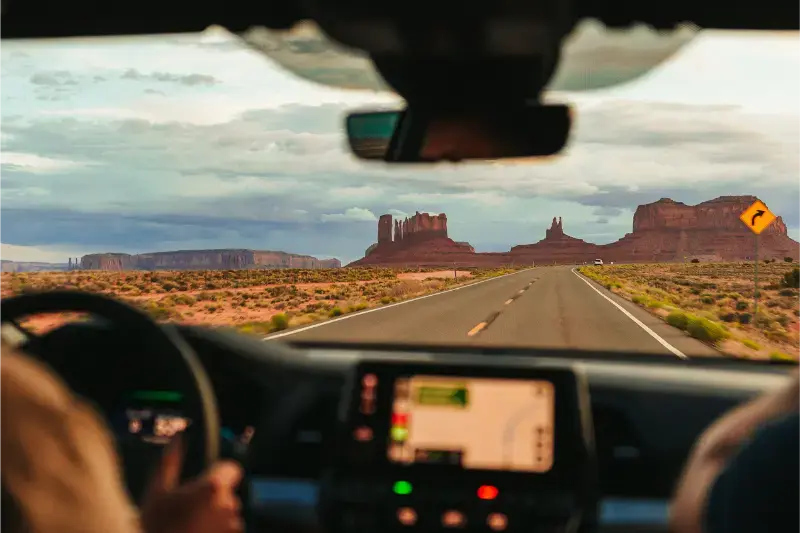
Avoid building the visit around a photograph taken from an unsafe position on a live highway. Use legal pullouts and remain considerate of traffic, residents, and other visitors. The park itself offers established places to enjoy the landscape. A scenic image does not justify stopping where a road is not designed to accommodate you.
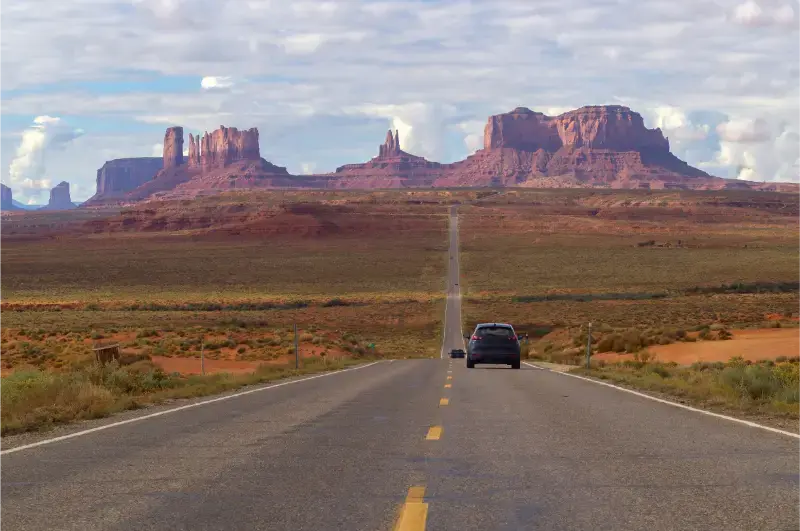
Current hours and fees: use the newest dated notice
Official pages do not currently agree on every detail. At the October 18, 2026 check, the main park page lists winter hours beginning October 17, with the scenic drive open 8 a.m.–5 p.m. and last vehicle entry at 2:30 p.m. It lists entry at $10 per person per day plus a $15 vehicle fee. Another official entry-fee page still displays older $8 wording.
For budgeting, use the newer dated park notice and confirm directly before traveling. Do not combine fragments from the conflicting pages into an assumed discount or claim a guaranteed price. Ask what applies to your group, vehicle, ages, and whether a guided booking includes admission. The national parks annual pass does not replace Navajo Tribal Park fees.
Holiday closures and weather can also affect the visit. Read the exact calendar before booking a Thanksgiving, Christmas, or New Year trip. A hotel may operate while a park or specific tour does not. Keep written confirmation of any essential access arrangement, particularly if you are driving a long way specifically for a guided outing or a certain time of light.
The main overlook is a worthwhile experience
Allow time at the visitor center viewpoint before deciding you need to move farther into the valley. From here, the formations have a clear relationship to one another, and you can begin to understand the scale. Look beyond the famous silhouettes to the smaller ridges, tracks, and changes in color across the floor.
The overlook can suit visitors who do not want rough-road travel, but check the exact parking, surfaces, and facilities for mobility needs. The viewpoint, museum, shops, and other services can keep different hours. If a particular indoor exhibit or meal is important, verify it independently rather than treating the published park closing time as the schedule for every business.
Take photographs, then put the camera down for a while. A short period of looking can make the place feel more substantial than a series of hurried pictures. If your time is limited, a considered overlook visit may be preferable to beginning a drive you will have to rush. You can plan a fuller return instead of trying to compress it into the remaining daylight.
Driving the scenic loop yourself
The designated seventeen-mile scenic loop is an unpaved road, with conditions that can change after weather and through ordinary use. Before entering, assess the current surface, your driving confidence, the vehicle’s suitability, and the rental agreement. A vehicle having four-wheel drive does not automatically authorize travel on every unpaved road under the rental contract.
Read the park’s current vehicle restrictions and ask staff if uncertain. The tribal park does not accept motorcycles on the loop, and other large or low-clearance vehicles need particular attention. Do not take a vehicle onto the route merely because another traveler did so in different conditions. Repair costs and the practical difficulty of assistance can be much larger than the apparent saving over a guided visit.
If you choose to drive, travel slowly, remain on the designated route, and stop only where permitted. Allow a substantial part of the day rather than estimating the loop by highway speed. Getting in before last entry is not the same as having time to stop comfortably. If the surface or weather looks unsuitable, stay with the overlook or choose an appropriate guided alternative.
What a Navajo-guided tour can add
A guided outing can give you more than relief from driving. Depending on the permitted itinerary, it may include areas beyond the self-drive loop and interpretation of the landscape from a local perspective. Ask about the route, the guide, group size, vehicle, and how much time is spent at stops. A longer duration is useful only if the content interests you.
Use the tribal park's authorized operator information to verify the business. Tell the operator about mobility limitations, children, or concerns about rough rides before paying. Some vehicles are open or exposed to wind and dust; the comfort of the outing can depend on clothing and seating. Confirm what assistance is available for getting in and out.
A sunrise or sunset label also needs a precise explanation. Where will you be at the relevant time, and how do the tour’s permissions relate to general park hours? Will the meeting point be at your hotel, the visitor area, or somewhere else? Keep the confirmation with your booking so you do not arrive at a closed entrance expecting an ordinary ticket to provide special access.
Respect the living landscape
Monument Valley is not an empty film set. People live and work here, and places can carry cultural or personal significance beyond what a visitor sees. Stay on authorized routes, follow your guide’s instructions, and ask before photographing individuals, homes, livestock, or an artisan’s work. A public view does not make every nearby road or doorway public.
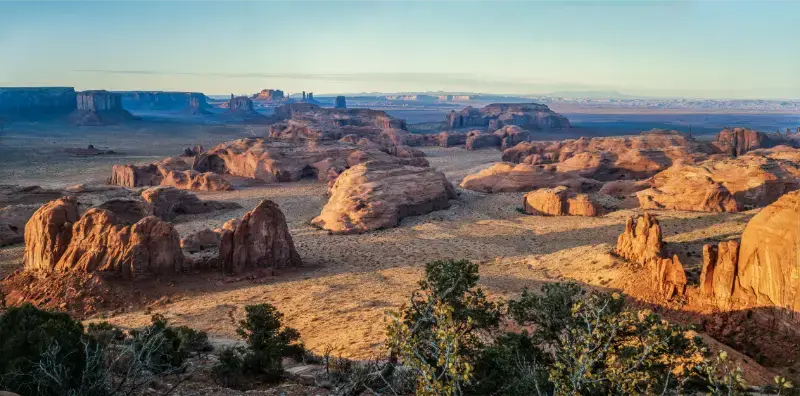
When buying from a vendor, take an interest in the maker and the piece if conversation is welcome. Ask about materials and care, and understand the complete price. Buying directly from Navajo artisans can be a meaningful part of the visit, but it should be an ordinary respectful exchange rather than a staged encounter for photographs.
Do not collect objects, scratch rock, leave markings, or fly a drone without the specific permission and legal authority required. If you want to conduct professional filming, photography, or another special use, consult the tribal permit process first. A sightseeing reservation is not a blanket permit for commercial activity or independent access to restricted locations.
Walking options need a current check of their own
Wildcat Trail often appears in descriptions of Monument Valley, but a hiking plan requires current confirmation of access, route, distance, sign-in arrangements, and weather. Ask the visitor center before starting. Do not use an ambiguous short distance on a general web page as the full length of the walk you intend to complete.
Any walk here can involve exposure to sun, sand, wind, and limited services. Carry suitable supplies and choose a turnaround that leaves time and energy to finish. A trip devoted mainly to viewpoints does not prepare you automatically for an unshaded hike. In unsuitable heat or weather, keep the visit to a safer scope rather than trying to complete a route because it was on the original list.
Independent wandering off the scenic road is not a substitute for a verified trail. Guided areas and residential land require permission. If walking is central to your visit, resolve the specific route before booking your stay and keep an alternative that does not depend on entering a restricted part of the valley.
Where to stay for the visit you want
The View offers hotel and cabin-style accommodation associated with the park setting, while Goulding’s provides another established lodging complex in the area. Use The View's own descriptions and Goulding's property information to compare the precise room or unit, view, amenities, and location. Do not assume every unit delivers the same outlook or level of convenience.
Nearby communities such as Kayenta or Mexican Hat may work for a particular road trip, but compare the actual drive to your park or tour meeting point. A lower room price can mean an early departure and a longer return after dark. If evening light is the main reason to stay, proximity may be more useful than an extra facility at a farther property.
Confirm meals as well as the room. In a remote area, the availability and hours of a restaurant, breakfast service, or grocery stop can shape the day. Ask whether park fees are included, payable separately, or required again under the current arrangements. A room confirmation should make those details clearer rather than leaving them to be discovered at the gate.
Fit Monument Valley into the larger journey
Page and Monument Valley can be part of the same longer northern route, but they are distinct bases. A Page morning tour followed by the drive can work if you leave adequate time and have confirmed the afternoon’s access. Avoid scheduling a late scenic-loop entry that depends on the tour, roads, and stops all taking the shortest possible time.
The Grand Canyon South Rim requires another deliberate transfer. Do not estimate it by the apparent gap between familiar symbols on a small map. If your Arizona week already contains Phoenix, Sedona, the canyon, and Page, Monument Valley usually calls for an added night and a revised route. Removing another destination can be more comfortable than adding more driving to the same days.
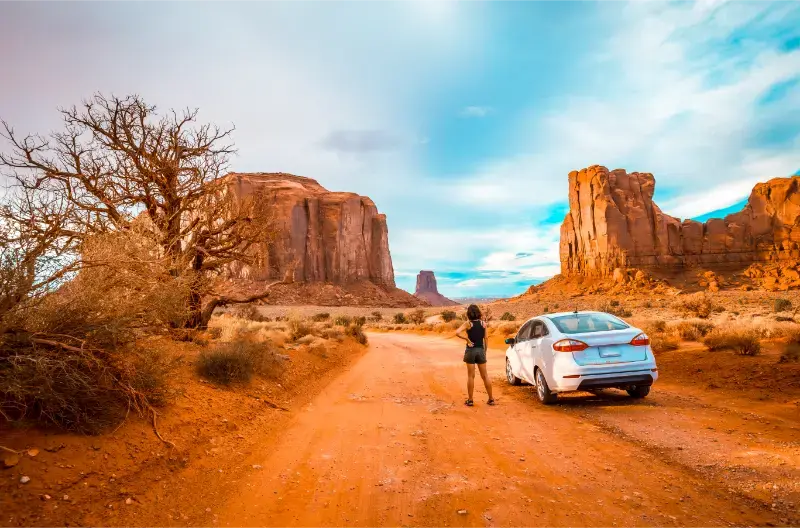
Confirm the time used by your tour operator and accommodation, especially when traveling between Page and the Navajo Nation during daylight-saving months. Save maps, fill the car where fuel is dependable, and carry food and water for the transfer. Arriving prepared allows you to slow down when you reach the valley instead of immediately searching for basic supplies.
Choose a pace that leaves something beyond the photograph
An afternoon arrival, a local overnight, and an unhurried departure can give the valley a satisfying place in the trip. You might spend the first interval at the overlook and reserve a guided outing for the next suitable slot. If you have only a shorter visit, choose its central experience clearly and respect the closing times.
The aim is to leave with a sense of the place as well as its silhouette. That might come from a guide’s explanation, a conversation about a crafted object, or a few quiet minutes watching the light move across a butte. With the practical arrangements settled, Monument Valley has room to become more than a famous image reached after a long drive.
Compare the options
| Choice | What it offers | Planning detail |
|---|---|---|
| Main overlook | Broad view and time to understand the scale | Check viewpoint and facility hours |
| Scenic loop | Seventeen miles of unpaved road | Verify vehicle, rental terms and conditions |
| Guided outing | Authorized route and local interpretation | Ask about vehicle and actual stops |
| Overnight | Compare exact room, view and location | Confirm fees and meals separately |
Find your bearings
Open the map in a new tab · Orientation map; use the official local map for trail access and closures.
Estimate the road cost of adding Monument Valley
Use the extra distance your actual itinerary would add, not a straight-line distance. Enter your own fuel quote and other costs, such as additional lodging, admission or parking. The estimate does not judge road suitability or retrieve conditions.
Formula: driving miles ÷ miles per U.S. gallon × price per U.S. gallon + other quoted road costs. Use U.S. units consistently. Driving time, rental permissions and road conditions need separate checks.
Frequently asked questions
Is Monument Valley a U.S. national park?
No. It is a Navajo Tribal Park with its own fees, rules and permissions.
Are all official fee pages consistent?
Not at this check. The newest dated main park notice lists different charges from an older official fee page. Confirm directly for your visit.
Does four-wheel drive make a rental suitable for the loop?
No. Current road conditions, vehicle clearance, rental permissions and driving ability all require consideration.
Plan the next part of your trip
- Page Arizona Travel Guide: Antelope Canyon, Horseshoe Bend & Lake Powell
- Antelope Canyon Guide: Upper vs Lower, Tours & Photography Tips
- Best Places to Visit in Arizona: 15 Destinations Worth the Trip
Arrange your stay and activities
Some booking links below are affiliate links. We may earn a commission if you book through them.
Compare stays: Monument ValleyBrowse tours and experiencesCompare rental cars
Match the location, meeting point and cancellation terms to your itinerary before booking.
Official sources and visitor information
- Monument Valley: dated autumn 2026 hours and entry notice
- Navajo Nation: Monument Valley authorized tour operators
- The View: hotel, cabins and property information
- Goulding's: lodging and visitor services
Last updated: October 18, 2026.