

Nebraska is almost 430 miles wide, so a good statewide road trip cannot be built like a city break. The biggest planning mistake is to schedule one famous attraction every few hours and assume the driving between them is neutral. In Nebraska, the distances, open landscapes and scenic highways are part of the trip. Ten days gives enough time to connect Omaha and Lincoln with the Platte Valley, the Panhandle and the Sandhills without changing hotels every single night.
This itinerary is designed as a westbound loop with a slower return through northern Nebraska. It prioritizes the state’s strongest contrasts: urban museums and food in the east, migration and pioneer corridors in central Nebraska, badlands and Oregon Trail landmarks in the west, then the Pine Ridge and Sandhills on the return. You can reverse it, but the logic remains the same: minimize backtracking and protect a few slower days.
- Ideal length: 10 days / 9 nights
- Best season: late spring through early fall; mid-March for cranes with weather trade-offs
- Core bases: Omaha, Lincoln, Kearney, Scottsbluff/Gering, Chadron, Valentine
- Rental car: useful for almost every version of this route
- Biggest mistake: trying to include every state park and museum
- 1Day 1: Omaha: start with Nebraska’s strongest city day
- 2Day 2: Omaha to Lincoln: short drive, full city experience → into a long transfer and creates a relaxed start before the central Nebraska drive
- 3Day 3: Lincoln to Kearney through the Platte Valley
- 4Day 4: Kearney to North Platte and Ogallala
- 5Day 5: Oregon Trail landmarks to Scottsbluff/Gering
- 6Day 6: Scotts Bluff, Wildcat Hills and the road to Chadron
- 7Day 7: Fort Robinson and fossil country
- 8Day 8: Bridges to Buttes toward Valentine
- 9Day 9: Niobrara River and Smith Falls
- 10Day 10: Sandhills return toward central/eastern Nebraska
Day 1 — Omaha: start with Nebraska’s strongest city day

Use the first day to settle into Omaha rather than immediately driving west. Choose either the Henry Doorly Zoo and Aquarium for a major family day or a downtown combination of Old Market, RiverFront and museums. Trying to do both at full scale can make the first day exhausting.
Stay in Omaha. A second morning can be useful if the zoo is a priority, but this ten-day route assumes you want a statewide trip rather than a city vacation.
Day 2 — Omaha to Lincoln: short drive, full city experience
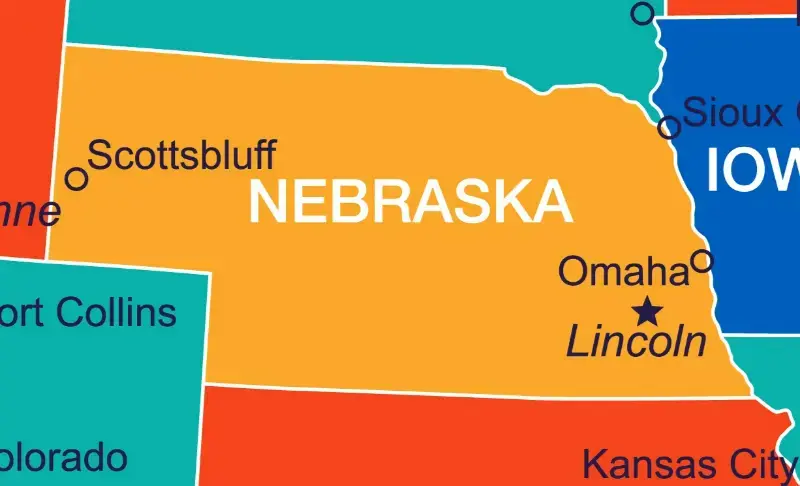
Drive to Lincoln after breakfast. The distance is modest, which gives you time for the State Capitol, Haymarket and one museum or garden without rushing. If you want an outdoor detour, Mahoney State Park or Platte River State Park can fit between the two cities, but choose one rather than both.
Stay in Lincoln. This protects you from turning day two into a long transfer and creates a relaxed start before the central Nebraska drive.

Day 3 — Lincoln to Kearney through the Platte Valley
Head west on I-80 and use Kearney as the central base. Visit the Archway or Fort Kearny, then leave time for a walk along the Platte. During sandhill crane season, the day should revolve around a booked dusk session rather than around museums.
Stay in Kearney. Grand Island is a reasonable substitute when lodging or crane-viewing reservations make the eastern side of the valley more convenient.
Day 4 — Kearney to North Platte and Ogallala
Continue west with a slower morning in Kearney, then drive to North Platte for Bailey Yard viewpoints or Buffalo Bill history. Finish near Ogallala or Lake McConaughy. This is a transfer day, but the stops are directly on the corridor and therefore do not create inefficient detours.
In summer, an evening at Lake McConaughy can be excellent. Check water levels and access rather than planning around old shoreline photographs. Stay in Ogallala or near the lake.
Day 5 — Oregon Trail landmarks to Scottsbluff/Gering
Leave I-80 and follow the North Platte Valley toward Chimney Rock and Scotts Bluff National Monument. These sites work best together because they explain the same migration corridor from different perspectives. Spend the night in Scottsbluff or Gering rather than continuing north after sunset.
If time remains, Lake Minatare is a good sunset option. Do not add it if Scotts Bluff trails or visitor-center time already filled the afternoon.
Day 6 — Scotts Bluff, Wildcat Hills and the road to Chadron
Use the morning for anything you missed around Gering, then hike or visit the Nature Center at Wildcat Hills. Drive north toward Chadron through the Panhandle. This is a day when landscape matters as much as attractions, so stop for photographs but keep an eye on daylight.
Stay in Chadron. If Fort Robinson is a major priority, staying closer to Crawford can shorten the next morning.
Day 7 — Fort Robinson and fossil country
Give Fort Robinson several hours for history, trails and the Pine Ridge setting. Add either Toadstool Geologic Park or Agate Fossil Beds depending on road conditions, season and interest. Trying to do both plus Fort Robinson in depth is too much for most travelers.
Stay a second night in Chadron/Crawford or reposition toward Valentine if you prefer a longer evening drive. The slower option is better for families.
Day 8 — Bridges to Buttes toward Valentine
Drive east on U.S. 20 through northern Nebraska toward Valentine. This route connects small towns and open landscapes without forcing a return to I-80. Reach Valentine with enough time for a short Cowboy Trail stop or an early dinner.
Stay in Valentine. Prepare for the next day’s river activities and confirm any outfitter or shuttle arrangements before evening.
Day 9 — Niobrara River and Smith Falls
Use the day for the Niobrara National Scenic River. A float trip is the signature experience, but it requires more logistics than a scenic drive. Book equipment and shuttle services in advance in peak summer. Smith Falls is a natural pairing, especially when incorporated into a river day.
Stay a second night in Valentine. Two nights here prevent one of the most common Nebraska road-trip mistakes: turning the Sandhills and Niobrara into a drive-through.
Day 10 — Sandhills return toward central/eastern Nebraska
Use Highway 2 or another route aligned with your departure point to experience the Sandhills rather than immediately dropping south to I-80. If your flight leaves Omaha the same evening, this is too ambitious; add an eleventh night near Grand Island or Lincoln. For a road trip continuing into another state, adjust the final direction accordingly.
The key is not to force a loop simply because the itinerary is called a loop. Nebraska is large. If your onward destination is Denver, the Black Hills or Kansas City, finish in the direction that reduces the next day’s drive.
How to modify the itinerary for crane season
In mid to late March, add at least one extra night in Kearney or Grand Island and remove a western stop. Dawn and dusk viewing plus unpredictable weather require flexibility. The migration is important enough to shape the trip rather than be squeezed between long drives.
Cold weather can also reduce the appeal of water-based Sandhills activities. Shift those hours toward museums, prairie history and scenic drives.
Where to cut if you have only seven days
With seven days, do not attempt the full loop. Choose either eastern/central Nebraska plus the Sandhills, or Omaha-to-Panhandle along I-80 and U.S. 26. The strongest seven-day first trip is Omaha, Lincoln, Kearney, North Platte/Ogallala, Scottsbluff/Gering and one Panhandle day before departing west or returning quickly.
Cut geography, not sleep. Saving a hotel night by driving four extra hours after sightseeing usually makes the trip worse.
Rental car, fuel and rural-road strategy
A normal car is sufficient for the core paved route, but some parks and backroads can involve gravel. Do not take an ordinary rental onto roads prohibited by your contract, and reconsider unpaved detours after heavy rain. Fuel before long Sandhills or Panhandle segments instead of waiting for the gauge to become urgent.
Download offline maps and keep water in the vehicle. Cell service is not a substitute for basic road-trip preparation.
Why this route works
The itinerary alternates city days, history, geology and outdoor experiences instead of repeating the same type of attraction. It also uses multi-night stays in Omaha, Valentine or another selected base to reduce packing fatigue. Most importantly, major stops lie along a logical westbound and northern-return arc.
Treat the schedule as a framework, not a contract. Nebraska rewards travelers who can stay longer at a good place and remove a minor stop rather than rushing because a spreadsheet says they are behind.
How to avoid wasting time on the road
Nebraska distances can look deceptively simple on a map because many roads are straight. The real travel day still includes fuel, food, construction, photographs and slower rural segments. Put the most important activity before the longest optional detour, and avoid building a day that requires perfect traffic and perfect weather to succeed.
A useful rule is to protect one flexible hour for every half-day of rural sightseeing. If you do not need it, you gain a relaxed meal or an extra trail. If something changes, that hour prevents the rest of the itinerary from collapsing.
Accessibility and mixed-ability groups
Not every traveler in a group needs to complete the same trail or museum circuit. Identify viewpoints, visitor centers, picnic areas and short walks that provide a meaningful version of the destination for people with limited mobility or young children. Then let stronger hikers add distance rather than making the entire group wait in a parking lot.
Accessibility details can change with construction, weather and seasonal staffing, so confirm current information directly with the managing agency when a specific accommodation is essential.
What to check the evening before
Review the weather, official alerts, opening hours and your first fuel stop. Rural attractions can change hours seasonally, and a closed visitor center may not mean the landscape itself is closed. Knowing the difference allows you to re-order the day instead of abandoning it.
Also download the map, save reservation confirmations and take screenshots of any meeting instructions. These small steps matter more in places where mobile coverage is intermittent.
Where to stay and how to handle the driving
Compare available accommodation for your dates, budget and preferred location before you finalize your route.
Choose accommodation around the first important activity of the next morning, not around the geographic center of a map. In Nebraska, saving a few dollars can create an extra hour of driving at dawn. Compare cancellation terms as carefully as price when weather or seasonal access could change the plan.
Compare lodging close to the part of Nebraska you will actually use, then check rental-car terms before locking in the route.
Check accommodation optionsCompare rental cars
Official information to check before you go
Use Visit Nebraska — Road Trips for current hours, closures, permits, trail notices, construction and seasonal changes. Official conditions should take priority over old reviews, saved maps or social posts, especially for rural roads, water access and weather-sensitive activities.
Continue planning Nebraska
Useful next reads: Nebraska travel guide, Omaha travel guide, Lincoln travel guide, Kearney travel guide, North Platte travel guide, Lake McConaughy guide, Scotts Bluff guide, Wildcat Hills guide, Chadron travel guide.