

New Orleans Live Music & Jazz Guide: Best Areas, Venues, Etiquette & How to Plan a Night is designed for visitors who want to hear the city rather than merely photograph famous music venues. New Orleans supports live jazz, brass band music, funk, blues, R&B, bounce and many hybrids across multiple neighborhoods. The best night rarely comes from a universal “top ten” list; it comes from matching the day’s actual calendar to the kind of room and music you enjoy.
Understand the geography of a music night
Frenchmen Street in the Marigny offers the easiest concentration of clubs for first-time visitors, with multiple rooms within a few blocks. The French Quarter includes Preservation Hall and other long-established venues. Uptown has institutions such as the Maple Leaf and Tipitina’s area, while Mid-City, Tremé and the Bywater support different scenes and neighborhood audiences.
Do not assume you can walk comfortably between all of these in one night. Choose one district as your base and one optional second stop. New Orleans music is better experienced through full sets than through ten-minute samples collected like attractions.
Jazz first-timers: where to begin
If your mental image of New Orleans is traditional jazz, begin with a venue that presents seated or listening-oriented sets, then explore a looser club afterward. Preservation Hall is famous for traditional New Orleans jazz, while Snug Harbor on Frenchmen often offers a more concert-like setting. The New Orleans Jazz Museum and the National Park Service’s jazz programming add daytime context.
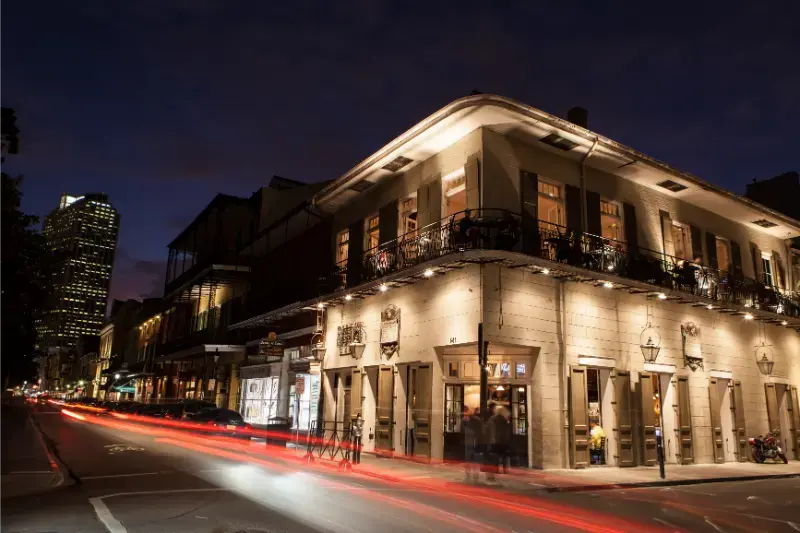
Jazz in New Orleans is not frozen in one historic style. Contemporary musicians move between traditional jazz, modern jazz, brass bands, funk and other genres. Read artist descriptions instead of choosing a club only because the word “jazz” appears on the sign.
Frenchmen Street: excellent, but not the whole story
Frenchmen is popular because it makes discovery easy. New Orleans & Company lists rooms such as Snug Harbor, d.b.a., The Spotted Cat, Blue Nile and Café Negril among its well-known venues. Walk the core blocks early, compare lineups and cover charges, then commit to a set.
On weekends the street can become busy enough that spontaneity has limits. If a specific act is important, buy tickets or arrive early. If music matters more than any one venue, keep the plan flexible and let the strongest lineup win.
How to read a New Orleans music calendar
Check artist names, start times, whether the event is ticketed, age restrictions and whether the listing represents a full band or a casual residency. Some clubs run multiple sets with separate admissions. A 7 p.m. show can be more comfortable for travelers who want good listening and an early dinner; late sets often feel more spontaneous but make transportation and next-day sightseeing harder.
Official tourism calendars are useful for discovery, but confirm with the venue itself on the day of the show. Touring schedules, weather and private events can change plans.
Music etiquette, tipping and recordings
If a band is playing to a listening room, treat it like a concert: keep conversations low, avoid using flash, and do not hold a phone above other guests for an entire song. Tip musicians when a tip jar or basket is part of the venue culture. Buy a recording or merchandise directly from artists when available.
Street musicians are also working musicians. If you stop to listen or record, contribute. A respectful traveler leaves more money with artists than with novelty souvenir shops.
Music history beyond nightlife
The New Orleans Jazz Museum, Tremé, Congo Square and the National Park Service jazz site help connect the sound to history. Adding one of these during daylight makes the evening more meaningful because you begin to recognize how neighborhood, migration, African diasporic traditions, brass bands and social institutions shaped the music.
Our separate Tremé guide is particularly useful if you want to understand Black cultural traditions rather than treating jazz as background entertainment.
How much time to allow
at least two evenings if music is a major reason for your trip is the most useful amount of time for New Orleans live music if you want to do more than photograph one landmark and leave. Build the day around two or three anchors rather than trying to collect every possible stop. South Louisiana rewards slow travel: heat, humidity, meals, live music schedules and conversations with local guides often stretch a day in the best possible way.
If New Orleans live music is part of a larger Louisiana road trip, protect at least one unhurried meal and one flexible block. That leaves room for weather changes, a museum that takes longer than expected, or a live performance you discover after arrival. The broader 7-day Louisiana road trip shows how to connect these stops without turning every day into a long drive.
Getting there and getting around
A car is unnecessary for most music-focused trips and often becomes inconvenient once alcohol, late sets and parking are involved. Use walking, public transportation and rideshares, and group venues by neighborhood. Download offline maps before leaving a city and never assume mobile service will be perfect in wetland or rural areas. After heavy rain, tropical systems or local flooding, recheck road and attraction conditions the same day you travel.
Driving distances in Louisiana can look short on a map yet take longer once you add bridges, two-lane roads, festivals, freight traffic or scenic stops. Avoid scheduling a fixed-time tour immediately after a long drive. A thirty- to sixty-minute buffer is often more useful than adding another attraction.
Where to stay
Compare available accommodation for your dates, budget and preferred location before you finalize your route.
Stay in the Marigny for the simplest access to Frenchmen Street, in the French Quarter for central sightseeing plus music, or Uptown if neighborhood venues and restaurants matter more than being near the main visitor core. Compare accommodation for New Orleans live music on Booking.com.
For a road trip, parking and morning departure convenience can matter as much as room price. For a city-focused stay, prioritize walkability to the experiences you expect to use after dark. Check cancellation terms during festival weekends and hurricane season because plans can change.
Best time to visit
October through April generally brings the most comfortable temperatures for walking, although individual cold fronts can be surprisingly cool. Spring is especially rewarding for festivals, crawfish and gardens, but major event weekends can raise hotel prices sharply. Summer is quieter in some places but requires a slower pace, shade, hydration and realistic expectations about afternoon heat.
The Atlantic hurricane season runs from June 1 through November 30. That does not mean avoiding Louisiana for six months; it means using flexible reservations and checking forecasts. Our best time to visit Louisiana guide explains seasonal trade-offs in more detail.
Travel responsibly
Much of Louisiana culture is not a performance created for visitors. Churches, cemeteries, second lines, Indigenous communities, Black masking traditions, fishing docks and residential streets deserve the same respect you would expect at home. Ask before photographing people at close range, do not enter private property, and follow local guidance around wildlife and wetlands.
Choose local guides and independent businesses when they add real expertise. On the water, never feed alligators or other wildlife. In neighborhoods, keep noise reasonable when leaving clubs late at night. These small choices make a trip more enjoyable while reducing the pressure tourism can place on places where people live and work.
A practical itinerary
- Use the afternoon for the Jazz Museum, Tremé or another music-history stop.
- Eat an early dinner so the meal does not conflict with the first set.
- Check the same-day calendar and choose one primary venue in a single neighborhood.
- Stay for a complete set before deciding whether to move elsewhere.
- Use a rideshare or taxi after the final set if the walk back is quiet or unfamiliar.
Planning details that make the visit better
For New Orleans live music, the most useful preparation is to verify the few details that can derail an otherwise simple day: current opening hours, parking or tour departure location, weather, and whether a festival or private event changes normal access. Save the official pages listed below to your phone rather than relying on screenshots taken months earlier. Louisiana weather and small-institution schedules can change quickly, especially after storms or during major event weekends.
Carry water even when the itinerary looks urban. Humidity changes how far most travelers comfortably walk, and air-conditioned museum breaks are part of a sensible summer plan. In cooler months, bring a light layer because cold fronts can arrive quickly. Comfortable shoes with good traction are more useful than dress shoes on uneven sidewalks, wet boardwalks and historic streets.
Food and timing strategy
Louisiana meals are part of the itinerary, not something to squeeze into a twenty-minute gap. Popular restaurants can develop long waits, while some small-town kitchens close between lunch and dinner or on particular weekdays. Check hours on the same day and have one backup. When seafood is a priority, ask what is genuinely local and in season rather than ordering from a preconceived checklist.
A useful rhythm is an early start, a substantial lunch before the hottest part of the afternoon, a slower cultural or indoor stop, and then an evening meal or music session. This schedule also creates recovery time if a morning boat tour runs long or if you discover an attraction worth more time than expected.
Photography, weather and backup plans
Morning and late-afternoon light generally works best for streets, wetlands and historic architecture. In summer, those hours are also more comfortable. Protect camera equipment from sudden rain and humidity, and never step into traffic, private yards or wetland edges for a photograph. If thunderstorms or smoke make an outdoor plan unsuitable, switch to museums, food, music or a shorter drive rather than forcing the original schedule.
Finally, leave at least one unplanned hour. The most memorable parts of Louisiana travel are often a conversation with a guide, an unexpected band, a plate lunch recommended at the visitor center or a quiet walk that was not in the itinerary. A good plan creates room for those discoveries rather than eliminating them.
Official resources
Hours, prices, event schedules and temporary closures can change. Recheck these first-party sources shortly before your visit:
- New Orleans & Company music guide
- Official guide to iconic music venues
- New Orleans Jazz National Historical Park
Related Louisiana guides
- Marigny and Frenchmen Street guide
- Tremé guide
- New Orleans travel guide
Frequently asked questions
Where is the best live music area in New Orleans?
Frenchmen Street is the easiest high-density area for visitors, but important venues are spread across Tremé, Uptown, Mid-City, the French Quarter and the Bywater.
Do you need tickets for live music in New Orleans?
It depends on the venue and artist. Some clubs have covers at the door, while popular performances require advance tickets. Always check the day’s listing.
Is New Orleans live music only jazz?
No. Jazz is foundational, but the city’s live scene also includes brass bands, funk, blues, R&B, bounce, rock, roots music and cross-genre performances.