

A seven-day North Dakota road trip works best when it accepts the state’s shape instead of fighting it. Fargo and the Red River Valley anchor the east, Bismarck-Mandan and the Missouri River provide a natural middle base, and Medora plus Theodore Roosevelt National Park deliver the strongest western finish. I-94 links those regions efficiently, with Valley City and Jamestown giving useful breaks rather than forced detours.
The itinerary below is intentionally selective. It does not attempt Devils Lake, Minot, the International Peace Garden, Lake Sakakawea and both units of Theodore Roosevelt National Park in the same week. Those places are worthwhile, but adding all of them creates a zigzag. This route gives first-time visitors enough context to understand North Dakota and enough time in the Badlands to benefit from changing light, wildlife and weather.
- Best base: a one-way east-to-west route with overnights in Fargo, Bismarck-Mandan and Medora rather than changing hotels every night
- Alternative base: reverse the itinerary from Medora to Fargo when flight or rental-car logistics are better west-to-east
- Realistic time: 7 days / 6–7 nights, with two nights in Medora strongly preferred
- Best for: first-time visitors who want cities, prairie history, Missouri River context and the Badlands without a frantic state-wide checklist
- Main planning risk: adding too many northern detours—Devils Lake, Minot, Turtle Mountains or International Peace Garden—into a route that already spans the state
- 1Day 1: Fargo: arrive and keep the first day compact → , in Bismarck-Mandan for two nights, and in Medora for the western park segment
- 2Day 2: Fargo to Bismarck via Valley City and Jamestown → and 4, but keep → stop rather than compressing the entire week
- 3Day 3: Bismarck-Mandan: state history and Fort Abraham Lincoln → , 5 and 6 much more localized
- 4Day 4: Missouri River history, then west to Medora
- 5Days 5–6: Medora and Theodore Roosevelt National Park
- 6Day 7: flexible western morning and departure/extension
What makes this stop worth your time?
Choose this route if you have one week and want a balanced first trip. It combines an eastern city, prairie/settlement history, Missouri River stories and the state’s signature national park without requiring back-to-back six-hour sightseeing days.
Choose a different route if your main goal is fishing, northern lakes, the Turtle Mountains or extended hiking. Seven days can support those themes, but not at the same time as a relaxed Fargo-to-Medora traverse.
Best things to do — and how to prioritize them
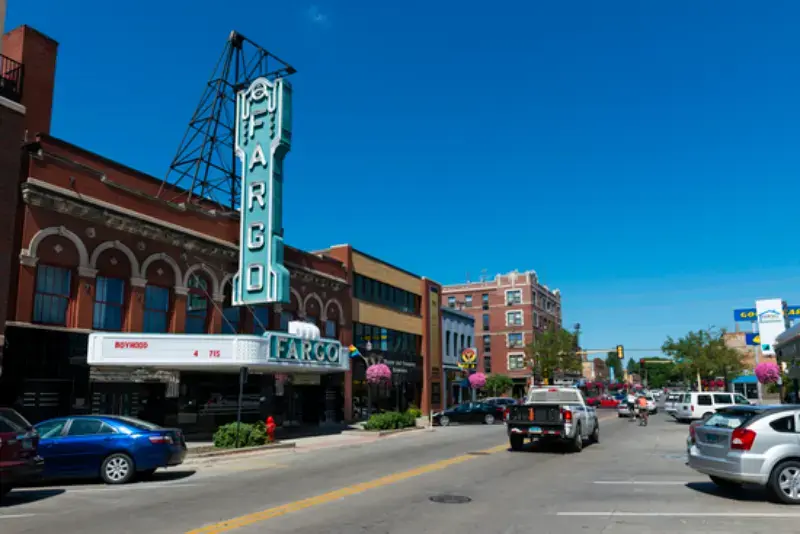
Day 1 — Fargo: arrive and keep the first day compact
Use downtown Fargo, a museum that matches your interests and the Red River/urban trail system as the opening. Do not drive west immediately after a long flight unless the schedule is unusually favorable. One Fargo night gives the trip a calm start and protects against arrival delays.
Day 2 — Fargo to Bismarck via Valley City and Jamestown
Leave Fargo in the morning, pause in Valley City for the Sheyenne River/Hi-Line Bridge context, then use Jamestown for bison and frontier-history stops. Continue to Bismarck-Mandan for the night. This is a transfer day with meaningful breaks, not three full destination visits.
Day 3 — Bismarck-Mandan: state history and Fort Abraham Lincoln
Use the North Dakota Heritage Center or Capitol area for statewide context, then cross to Fort Abraham Lincoln State Park for On-A-Slant Village, military history and a short trail. A second night in the same hotel prevents packing from consuming part of the day.
Day 4 — Missouri River history, then west to Medora
Drive north only as far as your chosen history anchor—Fort Mandan near Washburn is a strong option—then turn west. If you prefer a shorter transfer, skip the northern detour and visit Bismarck in the morning instead. Reach Medora before evening rather than chasing another roadside attraction.
Days 5–6 — Medora and Theodore Roosevelt National Park
Give the South Unit at least one full day and use the second for another hike, wildlife viewing, Medora history or a condition-dependent specialist stop. Two nights let you see the Badlands in different light and protect the trip from one windy or stormy period.
Day 7 — flexible western morning and departure/extension
Use the final morning for a short South Unit trail, Painted Canyon, the Chateau de Mores when operating, or a relaxed Medora breakfast. Depart east toward Dickinson/Bismarck, continue into Montana, or add another night if your travel home requires a long drive.
How to build a realistic visit
The route is designed around three principal bases: Fargo, Bismarck-Mandan and Medora. That structure matters more than the exact order of small stops. Fewer hotel changes make early departures easier and allow weather to move activities between mornings and afternoons.
If you have only six nights, keep Fargo to one night, Bismarck-Mandan to two and Medora to at least two, using the final night according to your departure airport or onward route. If you have seven nights, add the extra night where your interests are strongest rather than automatically adding another city.
How much time do you really need?
Seven days is enough for an east-west first look, not for comprehensive coverage. Expect several hours of driving on Days 2 and 4, but keep Days 3, 5 and 6 much more localized. The useful planning rule is to count driving, parking, orientation and meal stops as part of the visit rather than treating them as invisible time. North Dakota distances are forgiving when a route is simple, but a day can still become rushed when several small detours are stacked together.
The fastest way to ruin the week is to use every “free” two-hour block for another attraction. Preserve unscheduled time for wildlife, meals, road construction and the simple fact that Badlands viewpoints often deserve longer than planned. If this stop is not one of the main reasons for the trip, protect the larger route first. A shorter visit that includes the strongest experience is usually better than trying to “complete” every minor stop and arriving late at the next overnight base.
Where to stay
Compare available accommodation for your dates, budget and preferred location before you finalize your route.
Stay in Fargo near the district or attractions you plan to use on Day 1, in Bismarck-Mandan for two nights, and in Medora for the western park segment. Those bases minimize luggage movement and backtracking. When choosing accommodation, prioritize the next morning’s route as much as the current evening. That one decision often saves more time than selecting a hotel simply because it appears closest on a map.
If Medora lodging is limited or expensive, Dickinson can be a fallback, but daily commuting reduces sunrise/sunset flexibility. For a national-park-focused trip, paying for location often creates more usable time than saving on a room farther away. For a road trip, avoid changing hotels merely to reduce a modest daytime drive. North Dakota rewards stable bases when they let you start early, keep luggage out of the car during stops and preserve flexibility for wind, storms or seasonal closures.
Best time to go
Late spring through early fall offers the easiest version of this route. Long summer daylight helps, but heat and thunderstorms affect park hiking. Fall can be excellent for cooler temperatures and prairie color.
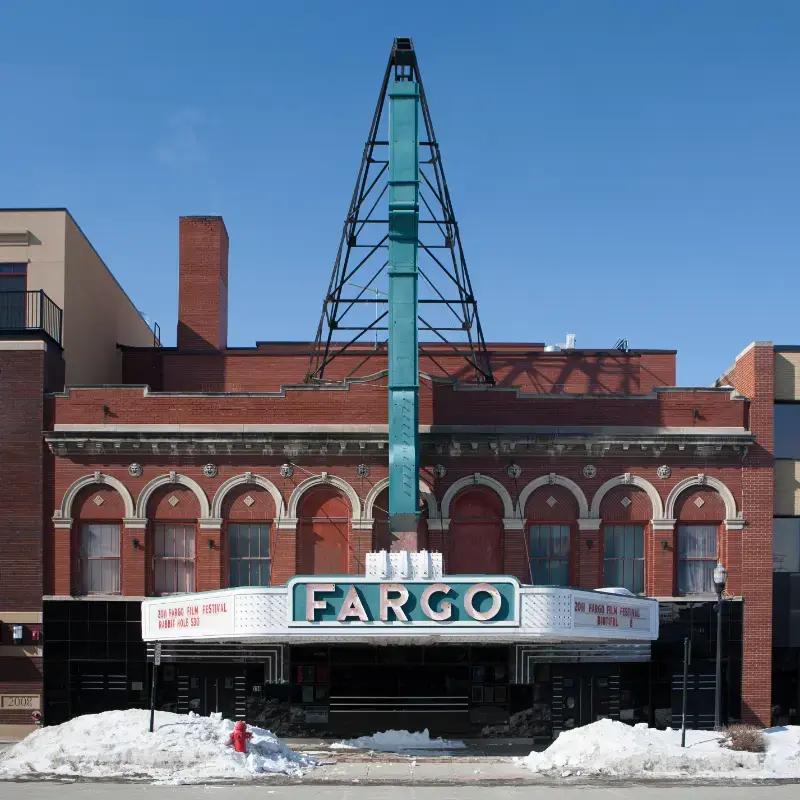
Winter requires a different itinerary rather than a simple seasonal swap. NPS road sections can close, smaller attractions may reduce hours and cross-state driving needs larger buffers. Use the dedicated winter guide instead of assuming this seven-day schedule transfers unchanged.
Driving, parking and access strategy
A rental car is the practical default. Fuel is easy along I-94, but fill up before remote park/backroad excursions. Download offline maps for western North Dakota and do not let the fuel tank run low merely because the next town looks close on a map.
Check road construction, Theodore Roosevelt National Park alerts and each historic site’s operating schedule shortly before the relevant day. Build the route so a closed museum does not force a major detour.
Families, accessibility and different travel styles
Families should protect hotel stability and shorten museum time rather than cutting every outdoor stop. Fargo, Jamestown, Fort Abraham Lincoln and the Badlands offer enough variety that children do not need a new city every night to keep the trip interesting. Travelers with limited mobility should check the official site shortly before departure because historic buildings, unpaved trails, snow, mud or seasonal operations can change what is practical. Families generally do better when the day includes one clear anchor rather than a sequence of small stops that require repeated loading and unloading.
Is this worth the detour for your itinerary?
This route is worth following almost as written for a first visit because it uses I-94 efficiently and saves the state’s most dramatic landscape for the end.
Do not add the International Peace Garden, Minot and Devils Lake “because they are in North Dakota.” They form a northern route of their own. Add them only by extending the trip or replacing part of this itinerary.
Weather backup and low-energy plan
If bad weather affects Theodore Roosevelt National Park, shift Medora historical sites and indoor stops into that period and use the next clear window for the park. If an eastern storm disrupts arrival, drop a minor Day 2 stop rather than compressing the entire week. Build the day so the indoor or low-effort component can move forward or backward rather than being locked to a single hour. In North Dakota, wind can matter as much as rain: an exposed prairie walk that feels easy on paper may be unpleasant in strong wind, while a museum or interpretive center can become the better use of the same afternoon.
What to skip if you are short on time
When the schedule slips, first remove small roadside additions, then one Valley City/Jamestown secondary stop. Protect the two-night Medora segment and the Bismarck-Mandan context because those are the structural pieces of the journey. A strong itinerary is selective. Do not add a minor stop merely because it is nearby if it creates another parking cycle, another check-in deadline or a long return drive after dark. Keep the part that explains the place best and leave optional extras for travelers with a slower schedule.
How to combine it with the rest of North Dakota
Use the detailed guides for Fargo, Valley City, Jamestown and Bismarck-Mandan to choose individual stops without adding extra cities.
In the west, build around Medora, the Theodore Roosevelt National Park guide and the Chateau de Mores. Add the Elkhorn Ranch Unit only if road conditions, vehicle and historical interest justify the remote half-day.
Why the itinerary gets better when you leave northern North Dakota for another trip
North Dakota is wide enough that thematic routes work better than statewide collection. The Fargo-to-Medora axis already includes Red River Valley culture, prairie towns, the Missouri River and Badlands. A northward loop to Devils Lake, Minot or the Turtle Mountains adds good destinations but weakens the shape of the week.
Separating the northern region creates a future trip with its own logic: Grand Forks, Devils Lake, Minot, Bottineau, Lake Metigoshe and the International Peace Garden. That second route will feel intentional instead of like leftover pins. Good travel planning is often about deciding what not to include.
A decision framework that prevents overplanning
Before adding this seven-day North Dakota road trip to a route, ask three questions: does it explain something you cannot understand as well elsewhere, does it fit the direction you are already driving, and will you have enough energy to experience it rather than simply photograph it? This framework is especially useful in North Dakota because many worthwhile places are separated by long, easy drives. The roads can make an itinerary look deceptively simple, but each stop still requires attention and context.
If the answer to only one of those questions is yes, treat the stop as optional. If two or three are yes, it probably deserves protected time. This approach also makes cancellations easier: when weather, road conditions or seasonal hours change, you know which element is central and which one can disappear without weakening the whole trip.
Practical details to verify shortly before travel
Check current North Dakota road conditions, Theodore Roosevelt National Park alerts, historic-site schedules and any timed or guided tour requirements before each travel day. Check opening schedules, road or trail conditions, weather alerts and any reservation requirements on the official website rather than relying on an old screenshot or a third-party blog. Fees and seasonal services are intentionally not treated here as permanent facts because they can change before a future trip.
Official source: North Dakota Tourism — Road Trips.
Useful booking links
Final planning advice
For one week, keep the line simple: Fargo, useful I-94 stops, two nights around Bismarck-Mandan, then a protected Medora/Badlands finish. The route succeeds because it leaves room to experience places instead of proving how many North Dakota pins can fit into seven days.