

Destinations › Northeast › New York › New York City › NYC Transportation Tips & Tricks
Knowing the subway map is useful; knowing how New Yorkers choose between subway, bus, ferry, walking and taxi is even more valuable. New York travel becomes dramatically easier when you stop searching for one “best” transportation mode and instead use a simple decision system. The subway handles distance, buses solve awkward crosstown gaps, walking reveals neighborhoods, ferries add scenery and taxis handle luggage or low-energy moments.
For most visitors: walk under 15–20 minutes, subway for longer trips, bus for direct crosstown/local gaps, ferry when the route itself is part of the experience, taxi/rideshare for luggage or awkward door-to-door trips. Then adjust for weather, mobility and time pressure.
Trick 1: the closest station is not always the fastest station
A local station two blocks away can be slower than an express station six blocks away if you are traveling a long distance. Before automatically walking to the nearest entrance, compare the route. This matters especially in Manhattan, where express lines can skip many stops. The extra avenue walk sometimes saves far more time than it costs.
Trick 2: group sightseeing by geography, not category
Do not schedule “museum morning, bridge afternoon, observation deck evening” if each sits in a different part of the city. Put Lower Manhattan attractions together, Midtown together, Central Park with its adjacent museums, DUMBO with Brooklyn Heights and so on. This reduces subway transfers and makes spontaneous discoveries possible. Our 5-Day NYC Itinerary follows this logic.
Trick 3: OMNY works best when you are boringly consistent
Use the same contactless card, phone or wearable every time. Switching between your physical card and the same card stored in a mobile wallet can prevent the system from linking taps for fare-cap purposes. In 2026 the subway/local-bus fare is $3 and the rolling weekly full-fare cap is $35, so consistency has a real financial benefit.
Trick 4: buses can beat the subway across town
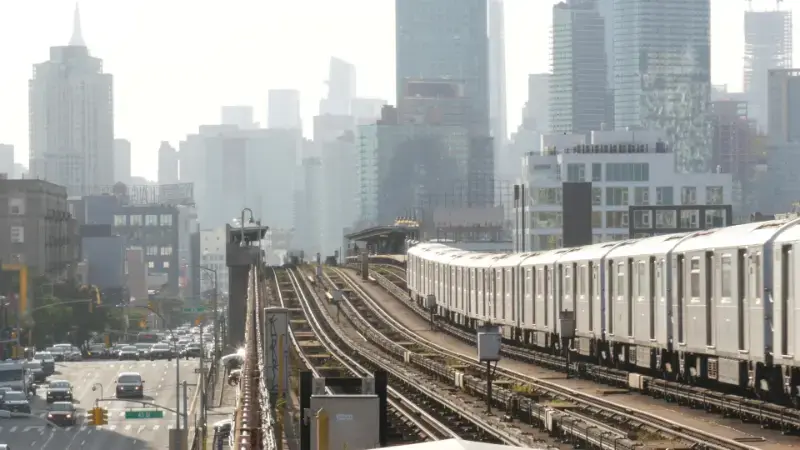
If the subway route requires going downtown just to come back uptown, look for a direct bus. This is especially useful across Central Park and on Manhattan crosstown corridors. The bus may be slower in raw speed but faster door to door because it avoids stairs and transfers. See the NYC Bus Guide.
Trick 5: use ferries strategically, not automatically
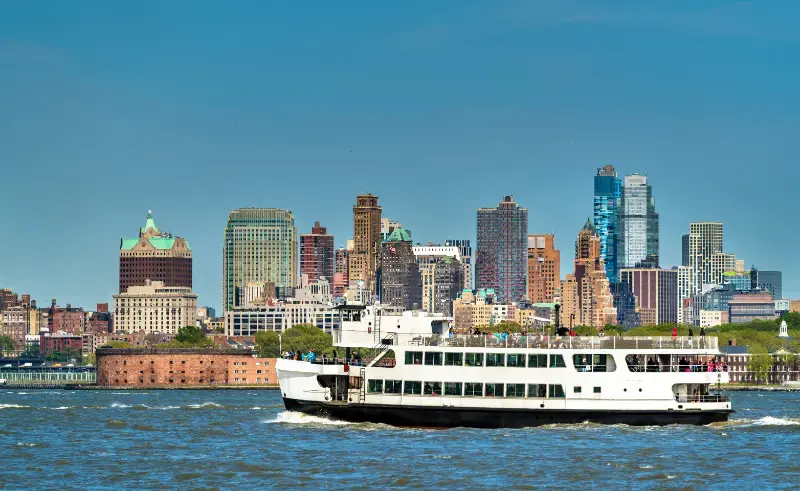
The free Staten Island Ferry is excellent for harbor views. NYC Ferry is a separate paid network; in 2026 an adult one-way ride is $4.50 and transfers within its system follow the current ticket rules. Ferry routes can be scenic and convenient for waterfront neighborhoods, but they are not always faster than the subway and do not use the same OMNY fare as MTA subway/bus.
Trick 6: airport math changes with group size
A solo traveler often saves heavily using AirTrain + subway/rail. A family with four fares and several bags may find a yellow taxi financially competitive, especially for JFK–Manhattan where the regulated flat fare is $70 before surcharges/tolls/tip. Always compare total group cost and physical effort, not just the cheapest individual ticket.
Trick 7: screenshots are still useful in a connected city
Cell service can be inconsistent in underground passages and stations. Screenshot the address, reservation time and nearest station before a time-sensitive trip. If a service change forces you off the planned route, having the destination visible makes re-routing easier. Offline maps are also useful for walking out of large stations with multiple exits.
Trick 8: learn your hotel’s two best stations
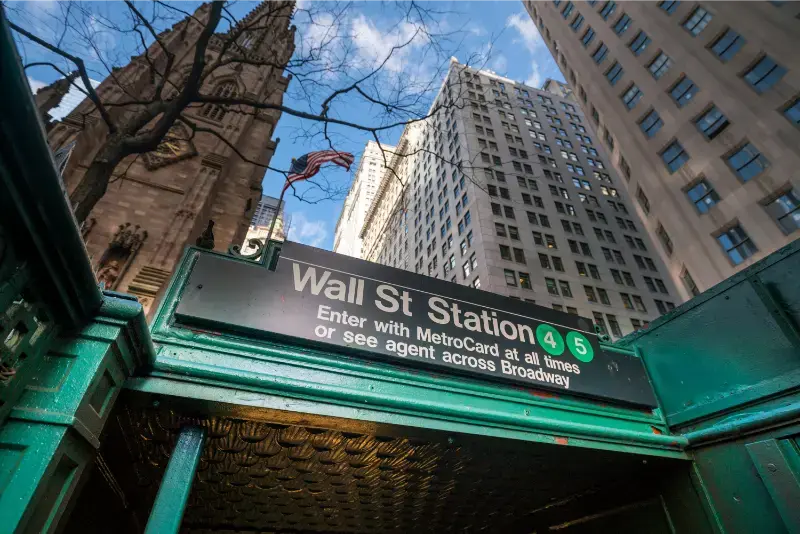
On the first day, identify the station you normally use and a second nearby station served by different lines. During weekend construction or a disruption, the backup station can save a complicated detour. Also learn which station exit is closest to the hotel; after a long day, exiting on the correct avenue matters more than it sounds.
Trick 9: do not take a taxi because it is raining without checking traffic
Rain increases taxi/rideshare demand and can worsen traffic. A subway ride may still be faster and much cheaper if the station entrances are nearby. Conversely, heavy rain plus luggage or children can justify the car. The right decision is situational, not ideological.
Trick 10: build time buffers around bridges, airports and shows
A Broadway curtain, airport departure or timed Statue of Liberty ferry is not forgiving. Add buffer when crossing boroughs, using buses through congested streets or relying on weekend subway service. For a normal museum visit, 10–15 minutes may be enough; for an airport, think in much larger margins.
Trick 11: walking is transportation, but it has a daily budget
A 20-minute walk can be pleasant at 10 a.m. and miserable after 22,000 steps. Track energy, not only distance. When your feet are tired, a $3 bus ride can preserve an evening you would otherwise abandon. Families and older travelers should plan fewer “short” walks because ten short walks can quietly become several miles.
Trick 12: use the right ferry
Three systems are commonly confused: the free Staten Island Ferry; NYC Ferry, a paid citywide network; and private sightseeing/Statue of Liberty operators. Only the authorized Statue City Cruises ferry lands on Liberty and Ellis Islands for NPS visitation. The Staten Island Ferry passes the harbor but does not stop there.
Trick 13: late-night routes are different routes
The subway runs 24 hours, but service frequency and stopping patterns can change overnight. A train that is express during the day may run local, or construction may alter service. After a late show, check the live MTA route rather than assuming the morning trip home still applies. A taxi can be sensible if the alternative requires a long wait and multiple transfers.
Trick 14: avoid rental cars
Most NYC visitors do not need a car. Parking is expensive, traffic is slow, street rules are complex and congestion pricing affects entering parts of Manhattan. Rent a car only when leaving the city for a road trip, and ideally collect it on the departure edge of the city rather than storing it during a Manhattan stay.
Trick 15: know when a commuter railroad is the shortcut
LIRR and Metro-North can be useful even for city-area trips because they connect hubs such as Jamaica, Flushing, Grand Central Madison and Penn Station quickly. Airport travel is the most common visitor use, but some borough itineraries can also benefit. These systems have separate fares from the subway, so compare time savings against cost.
A simple decision table
| Situation | Usually choose | Why |
|---|---|---|
| 10–15 blocks in good weather | Walk | Fastest door-to-door, you see the city |
| Long Manhattan north-south trip | Subway | Avoids traffic |
| Direct crosstown corridor | Bus | May avoid awkward subway transfer |
| Waterfront sightseeing | Ferry | Transport + view |
| Heavy luggage / family airport trip | Taxi or rail depending group | Convenience may justify cost |
| Late night with complex service changes | Subway or taxi | Choose based on live route and comfort |
| Leaving NYC for road trip | Rental car at departure | Avoid parking it during city stay |
The five apps/tools worth having
The official MTA app or website should be your source for subway/bus status. OMNY information explains fares and payment. Google/Apple Maps are useful for walking and basic transit planning, but verify disruptions with MTA. NYC Ferry’s app is needed for ferry tickets and schedules. Your airline/airport site is the best last-minute source for terminal and ground-transport advisories.
Frequently asked questions
What is the best way to get around NYC overall?
Walk plus subway is the default combination. Add buses for crosstown/local gaps, ferries for waterfront routes and taxis for luggage or awkward trips.
Should tourists use buses in NYC?
Yes. They are especially helpful crosstown, in outer boroughs and for travelers who want to avoid subway stairs.
Are ferries included with OMNY?
NYC Ferry uses a separate ticketing system. The Staten Island Ferry is free. MTA subway/bus OMNY does not automatically cover NYC Ferry fares.
Should I buy a rental car?
Not for a normal NYC stay. Rent only when leaving the city for destinations that genuinely require driving.
Official planning sources
For the detailed versions, continue with NYC Subway Guide, NYC Bus Guide, Taxi & Rideshare Guide and NYC Airports Guide.
The deeper trick is to protect your attention. Constantly checking routes, prices and alternatives can consume the mental energy you came to use on the city itself. Make a default plan each morning, know one backup, then stop optimizing every five minutes. A route that is three minutes slower but simple is often the better tourist route. Efficient travel is not about winning every transfer; it is about arriving with enough energy to enjoy the destination.
Practical planning note: New York rewards a little preparation but punishes overplanning. Check official opening hours and live transit conditions shortly before leaving, group stops geographically, and leave room for meals, weather and unexpected discoveries. A realistic itinerary usually includes one major anchor in the morning and one in the afternoon, with neighborhood walking around them. If a delay appears, remove the optional stop rather than compressing everything else. This approach is especially useful in a city where subway stairs, crowds, security lines and long blocks can add more time than a map suggests.
Looking for the right place to stay? Compare hotels and accommodation on Booking.com.