

Palm Springs is often described as a desert resort town, but the best trips combine several identities at once: midcentury-modern architecture, pools and spas, mountain views, Indigenous history, design, restaurants and access to an enormous desert region that includes Joshua Tree and the Coachella Valley. It is a place where doing less can be part of the plan—but only after you choose the right season.
For a first visit, two or three nights works well. Add more if you are using Palm Springs as a base for Joshua Tree, golf, spa time or a winter escape. Summer can be extremely hot, so seasonal planning is not a minor detail: it changes what time you can hike, whether outdoor dining is comfortable and how much of the day should be spent indoors.
Palm Springs at a glance
| Question | Best answer |
|---|---|
| How long? | 2–3 nights; 4–5 if combining resort time with Joshua Tree and desert excursions. |
| Best season? | Late fall through spring for outdoor exploration; summer for pool/resort value if you respect extreme heat. |
| Car needed? | Helpful for the valley, architecture routes and Joshua Tree; downtown itself is walkable in parts. |
| Top experiences? | Aerial Tramway, midcentury design, pool time, art, canyon/desert landscapes and food. |
| Where to stay? | Downtown for walkability; south Palm Springs for design/resort feel; other Coachella Valley cities for golf or quieter resorts. |
Palm Springs Aerial Tramway: the dramatic temperature change
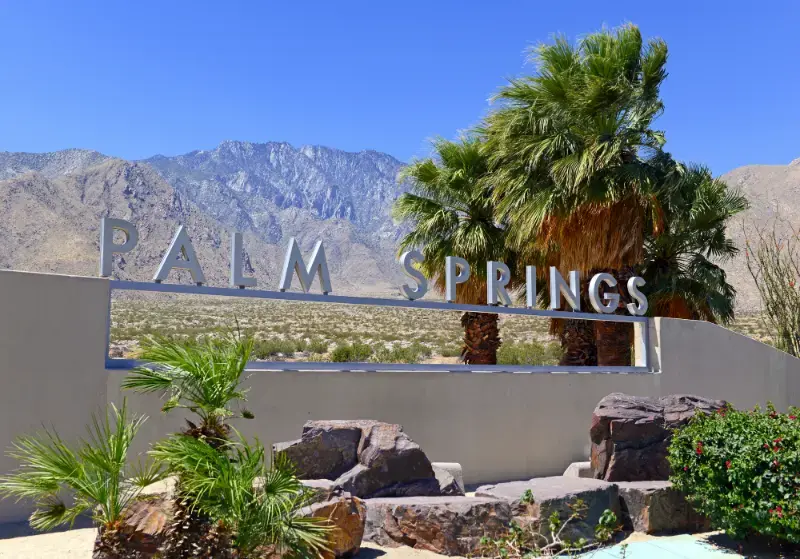
The Palm Springs Aerial Tramway climbs from Chino Canyon to the Mount San Jacinto high country in roughly ten minutes, trading desert heat for mountain forest and much cooler air. The official tourism site notes that temperatures at the top can be 30–40°F cooler than the valley floor, so carry layers even when Palm Springs feels hot.
Current 2026 note: the tramway is closed for annual preventative maintenance from September 8 through October 4, 2026, with a tentative reopening October 5. Maintenance closures occur regularly, so always check the official tram site before making it the centerpiece of a short visit.
Midcentury-modern architecture: more than a photo backdrop
Palm Springs has one of the strongest concentrations of midcentury-modern architecture in the United States. The style is not limited to celebrity homes: civic buildings, hotels, banks, residential neighborhoods and commercial structures tell the story of how desert climate, indoor-outdoor living and postwar design intersected.
Self-guided driving is possible, but a knowledgeable architecture tour adds context and reduces the temptation to stop illegally or intrude on private homes. Respect residential neighborhoods; admire from public streets without blocking driveways or entering property.
Downtown Palm Springs
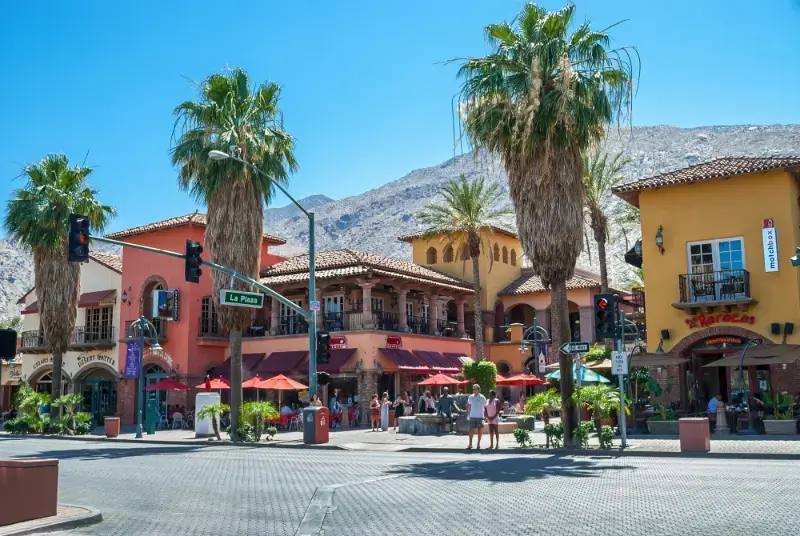
Palm Canyon Drive and the surrounding downtown area combine restaurants, shops, galleries, public art and historic architecture. It is most pleasant in the cooler hours, especially from late spring through early fall. Staying nearby can reduce driving for dinner and evening events.
Art and museums
The Palm Springs Art Museum provides an excellent indoor anchor for hot afternoons and adds depth beyond the resort image. Design-focused travelers should also watch local exhibition schedules and architecture events. The city’s cultural appeal is strongest when you combine museum time with architecture in the streets.
Indian Canyons and Tahquitz Canyon
Canyon landscapes near Palm Springs provide access to palm oases, desert trails and important cultural context connected to the Agua Caliente Band of Cahuilla Indians. Entry rules, hours and heat closures can differ by season. Start early, carry far more water than you think you need and respect all closures.
These are not interchangeable with Joshua Tree. The canyons show a different relationship between water, palms, rock and Indigenous history.
Joshua Tree as a day trip—or separate destination
Palm Springs can be used as a base for Joshua Tree National Park, but the drive and park loop create a full day. If sunrise, sunset or stargazing is a priority, staying closer to the park for at least one night is often better.
Do not hike desert trails at midday in extreme heat simply because a day-trip schedule says you should. Temperature should control the plan.
Pool, spa and resort time: schedule it deliberately
One of Palm Springs’ great pleasures is not sightseeing. If you book a hotel for its pool, design or spa, protect time to use it. A common mistake is paying resort prices and then leaving at 7 a.m. every day for excursions. Alternate active mornings with slower afternoons.
Greater Palm Springs beyond the city
The wider destination includes nine cities, including Rancho Mirage, Palm Desert, Indian Wells, La Quinta and Indio. The Living Desert in Palm Desert is a strong family attraction, while La Quinta and Indian Wells emphasize resort and golf travel. Coachella and Indio become globally famous during festival periods, when lodging prices and traffic patterns can change dramatically.
Best time to visit Palm Springs
Winter is the classic high season, with mild daytime temperatures and busy events. Spring remains attractive but grows warmer; major festivals can create intense demand. Summer is extremely hot and best suited to travelers who intentionally want resort life, air-conditioned museums and early-morning activities. Fall cools gradually, with October and November becoming increasingly comfortable.
A 3-day Palm Springs itinerary
| Day | Plan |
|---|---|
| 1 | Downtown orientation, art museum, architecture and pool time. |
| 2 | Early canyon walk; Aerial Tramway if operating; relaxed dinner. |
| 3 | Joshua Tree day trip or Greater Palm Springs attractions/resort day. |
Palm Springs with kids
Families can combine resort pools, the tramway, The Living Desert and short nature walks, but summer heat makes outdoor scheduling critical. Choose a hotel where midday downtime feels like part of the vacation. Joshua Tree with young children works best as a scenic-drive-and-short-walk day rather than an ambitious hiking program.
Where to stay
Compare available accommodation for your dates, budget and preferred location before you finalize your route.
Downtown/uptown Palm Springs works best for restaurants and walkability. South Palm Springs has many design-focused hotels and easy access toward Indian Canyons. Palm Desert/Rancho Mirage offer larger resorts and central Coachella Valley positioning. For a romantic getaway, choose the property first; for a sightseeing-heavy trip, choose the location first.
Compare accommodation: compare hotels and other stays on Booking.com.
How Palm Springs fits into a California road trip
Palm Springs combines naturally with Los Angeles, San Diego and Joshua Tree. From Los Angeles, it can create a two- or three-night desert break before continuing to San Diego. It is less logical to force into a fast coast-only itinerary.
Official planning resources
- Visit Greater Palm Springs — official destination information and current 2026 updates.
- Palm Springs Aerial Tramway — current operating status, maintenance closures and tickets.
- Visit Palm Springs — city visitor information, architecture and events.
Heat safety is the trip plan, not a footnote
In hot months, desert heat can become dangerous quickly. Schedule outdoor walking near sunrise, retreat indoors or to the pool during the hottest hours and carry water even for short errands. Never leave children or pets in a parked vehicle, even briefly.
Heat also affects cars. Keep fuel adequate before desert drives, watch tire condition and bring water beyond what you expect to drink. If Joshua Tree or remote desert roads are included, download maps and do not rely on continuous mobile coverage.
Common planning mistakes to avoid
The most common mistake is trying to combine too many distant California experiences because they appear on the same state map. Leave buffer time for traffic, weather, parking and spontaneous stops. Reserve only the activities that truly require a fixed time, then protect some unscheduled hours around them.
A second mistake is treating conditions as static. Coastal roads, mountain routes, wildfire restrictions, beach access and attraction operating hours can change. Recheck official sources shortly before travel and again on the morning of any weather-sensitive or road-dependent day.
Design events and festival periods
Palm Springs becomes especially busy during major design, music and festival periods in the Coachella Valley. Hotel rates, restaurant availability and traffic can change dramatically even if your own trip has nothing to do with the event. Check the regional calendar before assuming a normal weekend price.
Architecture-focused travelers should also look for guided tours and special access events. The city’s best design experiences are often interpretive rather than simply photographic: understanding architects, climate adaptation and postwar history makes the streets more meaningful.
Day trips beyond Joshua Tree
The Coachella Valley can support additional excursions to date farms, the Salton Sea region, mountain communities and desert preserves. Some are exposed and remote, so treat them as separate day plans rather than adding them after a long morning at Joshua Tree.
A short Palm Springs trip is usually stronger with one major desert excursion and one resort/cultural day than with three consecutive days of long driving.
How to make a short visit feel longer
The easiest way to improve a short stay is to reduce the number of reservations. Choose one anchor experience each day, keep the rest geographically close and leave at least one unscheduled block. California destinations often reward a slower street, beach or meal more than another cross-town transfer.
When you do reserve, group experiences by area and confirm cancellation rules. This gives you room to adapt to weather, traffic or energy without losing the most important part of the trip.