

Route 66 Illinois with Kids: Family-Friendly Stops, Short Drives and Practical Planning. A family-focused Illinois Route 66 plan with kid-friendly giants, museums, short walking stops, realistic driving days, meal strategy, safety, hotel choices and ways to keep the Mother Road fun.
The useful way to plan this part of the Mother Road is to decide what deserves real time, what can remain a quick roadside stop and what can be skipped without regret. The Illinois corridor is dense enough that good selection matters more than raw mileage.
- Best family pace: 2–4 hours of actual driving per day plus frequent stops
- Kid-friendly hits: giants, murals, drive-ins, interactive museums and short walks
- Best overnight rhythm: Chicago → central Illinois → Springfield → Litchfield/St. Louis area
- Avoid: stacking multiple quiet museums back-to-back
- Key rule: alternate history with something visual, active or food-related
Plan this part of Illinois Route 66 before you drive
Illinois is one of the better Route 66 states for families because attractions are frequent and driving distances between towns are manageable. You do not need children to sit in the car for six uninterrupted hours to reach the next highlight. The challenge is the opposite: there are so many small stops that adults can turn the day into constant car-seat buckling and unbuckling.
Build each half day around one anchor and two short stops. An anchor might be Old Joliet Prison, the Pontiac museum complex or a Springfield attraction. Short stops can be the Gemini Giant, murals, ice cream, a covered wagon or a park. This pattern gives children something new often enough without making parents manage 14 separate parking stops.
Age matters. Younger children usually respond to giant roadside figures, trains, cars, snacks and open space. Older children can engage more with road history, Lincoln sites, social history and photography challenges. Do not force every child to appreciate the same nostalgia adults feel; give them their own reasons to look forward to the next town.
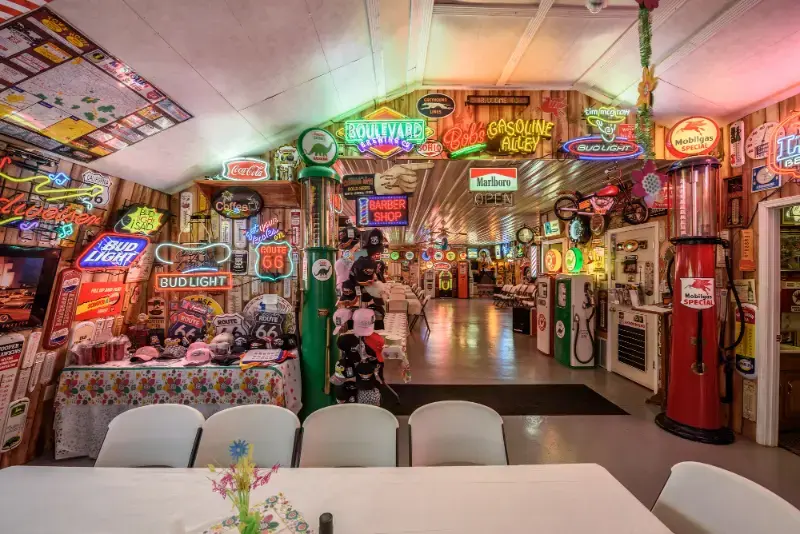
For the statewide framework, use our Illinois Route 66 road trip guide. It explains how this stop fits between Chicago and the Mississippi and helps you decide when I-55 is useful as a time-saving backup rather than the main experience.
What is actually worth your time
Gemini Giant and other oversized roadside icons
Large roadside figures are perfect family stops because the visual payoff is immediate and the visit can be short. Turn the route into a “giant hunt” and let children keep a simple photo checklist. This creates continuity across the day without requiring long explanations at every stop.
Planning time: Usually 15–30 minutes each.
Pontiac murals and museum mix
Pontiac works especially well because you can combine a museum with an outdoor mural walk and a river-area break. If one parent wants more time with automobile exhibits, the other can take younger children outside. The compact layout reduces the need for repeated driving and parking.
Planning time: Plan 2–4 hours depending on age and museum interest.
Springfield’s combination of Route 66 and Lincoln
Springfield gives families a useful mix: Route 66 food and giants, major presidential history, museums and parks. The key is not to schedule two serious historical museums consecutively. Put a casual lunch or outdoor stop between them. One night is possible, but two nights create a much calmer family pace.
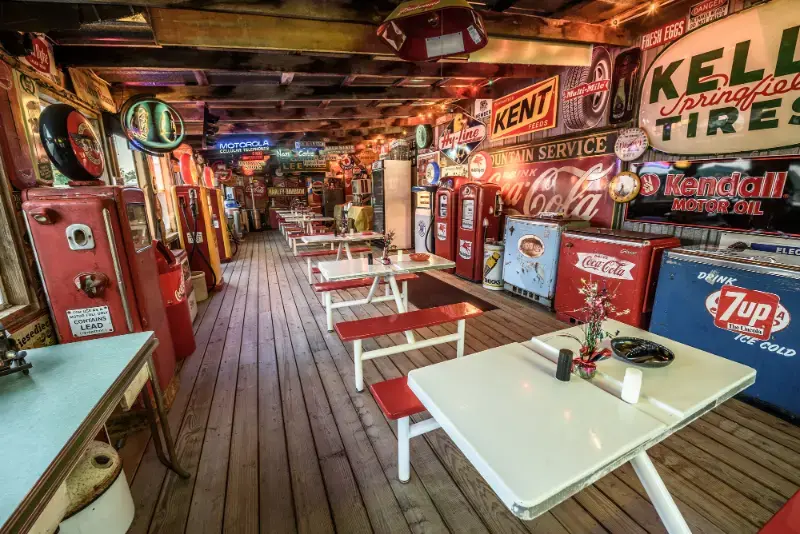
Planning time: Best family base for the middle of the Illinois route.
Drive-in movie night
A drive-in can become the reward at the end of a travel day. Litchfield’s Route 66 drive-in is particularly appealing when the seasonal schedule matches your trip. Children get an experience that feels different from another hotel evening, while adults keep the Route 66 theme going without adding more daytime sightseeing.
Planning time: Check season, show time and weather before promising it to children.
Parks, lakes and non-Route-66 breaks
A family road trip does not need every stop to be “on theme.” A playground, lake or short river walk can prevent overload and improve the next historical visit. Pontiac’s river area, Springfield parks and Litchfield’s lake options are examples of useful resets.
Planning time: Add 30–90 minutes whenever energy is dropping.
Driving, timing and logistics
Keep actual driving shorter than your navigation app suggests is possible. A three-hour route with six stops can easily become a full day. Start earlier rather than driving later, because children usually handle a morning museum better than an evening rush to reach a hotel after dinner.
Choose hotels for practical features: easy parking, breakfast, enough beds, laundry on longer trips and a location that avoids morning backtracking. A “historic Route 66” motel can be fun when reviews and current conditions are good, but family comfort matters more than authenticity for its own sake.
Pack water, simple snacks, wipes and a small bag that stays accessible in the car. Route 66 has plenty of food, but a famous restaurant may be closed or busy. Snacks prevent a 25-minute wait from becoming the crisis that determines the rest of the afternoon.
| Stop | Time | Why it earns a place |
|---|---|---|
| Gemini Giant and other oversized roadside icons | Usually 15–30 minutes each. | Large roadside figures are perfect family stops because the visual payoff is immediate and the visit can be short |
| Pontiac murals and museum mix | Plan 2–4 hours depending on age and museum interest. | Pontiac works especially well because you can combine a museum with an outdoor mural walk and a river-area break |
| Springfield’s combination of Route 66 and Lincoln | Best family base for the middle of the Illinois route. | Springfield gives families a useful mix: Route 66 food and giants, major presidential history, museums and parks |
| Drive-in movie night | Check season, show time and weather before promising it to children. | A drive-in can become the reward at the end of a travel day |
| Parks, lakes and non-Route-66 breaks | Add 30–90 minutes whenever energy is dropping. | A family road trip does not need every stop to be “on theme |
Keep a small amount of unscheduled time every day. Route 66 rewards the unplanned ten-minute conversation, an unexpectedly good local museum, a restored sign you did not know existed or a meal that takes longer because the place is busy. A timetable with no slack removes the quality that makes a heritage road trip different from ordinary point-to-point driving.
Where to stay and how to book the road trip
For this article, a practical accommodation search is Springfield, Illinois. Compare the location against tomorrow morning’s first stop before you compare the last few dollars of room price. On a driving itinerary, location can save an hour of backtracking and protect museum opening times.
Book the most constrained nights first: Chicago weekends, Springfield during major events, and any stay tied to a specific evening activity. Keep ordinary mid-route nights more flexible when cancellation terms allow it. That gives you room to stop early after a long day or continue farther when the weather and energy are good.
Check location first, then compare the full nightly price. On Route 66, a slightly better base can save more time than a cheaper room that creates backtracking.
🏨 Check stays on Booking.comA car is essential for the Route 66 portion beyond Chicago, but it does not have to be part of the Chicago stay itself. Compare city and airport pickup prices, parking costs and one-way fees. The lowest rental quote is not the cheapest trip if it creates two days of downtown parking charges.
A rental car makes sense once you leave central Chicago. Compare pick-up locations as well as price: avoiding downtown parking for the first city nights can be a bigger saving than chasing the lowest daily rate.
🚗 Compare rental carsCommon mistakes that make this stop less enjoyable
- Planning adult museum days and expecting children to stay enthusiastic from morning to evening.
- Making every roadside attraction mandatory instead of allowing quick skips when someone is tired.
- Promising a drive-in or seasonal attraction before checking the current schedule.
- Choosing a cheap hotel far from the next morning’s route and starting the day with unnecessary driving.
The larger mistake is treating Route 66 as a test that can be failed if you miss a famous stop. The road is too rich for that. Choose the places that fit your interests, preserve enough daylight for the sections you most want to see and let the rest remain a reason to return.
- Route 66 Illinois Road Trip: Chicago to the Mississippi with the Best Stops and Practical Tips
- Litchfield Route 66 Guide: Ariston Cafe, Sky View Drive-In and an Easy Overnight Stop
- Best Route 66 Roadside Attractions in Illinois: Giants, Neon and Classic Photo Stops
- Best Route 66 Food Stops in Illinois: Diners, Drive-Ins, Bakeries and Local Classics
- Best Route 66 Museums in Illinois: Where the Mother Road Story Comes Alive
Frequently asked questions
Is Illinois Route 66 good for young children?
Yes. Short distances between communities, giant roadside attractions, casual food stops and a mix of indoor and outdoor activities make the state relatively family friendly.
How many hours should we drive per day?
For families, two to four hours of actual moving time is often enough once sightseeing stops are added. A navigation estimate does not include museum visits, meals or photo stops.
What are the best family stops?
The Gemini Giant, Pontiac’s murals and museums, Springfield’s mix of Route 66 and Lincoln attractions, and a seasonal drive-in night are strong choices.
Do we need a rental car?
Yes for a genuine Illinois Route 66 road trip beyond Chicago. In Chicago itself, families may find transit easier than parking, so collecting the car on departure day can work well.
Before departure, recheck opening hours, seasonal access, road works and event-day traffic. Route 66 attractions are a mix of public sites, private businesses, volunteer-run museums and outdoor landmarks, so details can change faster than the historic route itself.