

Destinations › Southwest USA › Texas travel guide › Where to Stay in Austin: Best Neighborhoods & Hotels
The best Austin neighborhood is the one that reduces the trips you will actually make. Downtown can justify a higher rate when Capitol, convention or music plans dominate; South Congress creates atmosphere; East Austin suits food and nightlife; outer districts trade walkability for space and parking.
Compare available accommodation for your dates, budget and preferred location before you finalize your route.
Do not book a property merely because “Austin” appears in the name. Confirm the exact map position, final fees, parking and nighttime environment.
At a glance
| Best for first visit | Downtown |
| Best atmosphere | South Congress |
| Best food/nightlife | East Austin |
| Best for conventions | Downtown near the venue |
| Best with car/value focus | Outer central or north Austin |
Austin neighborhoods compared
Downtown Austin
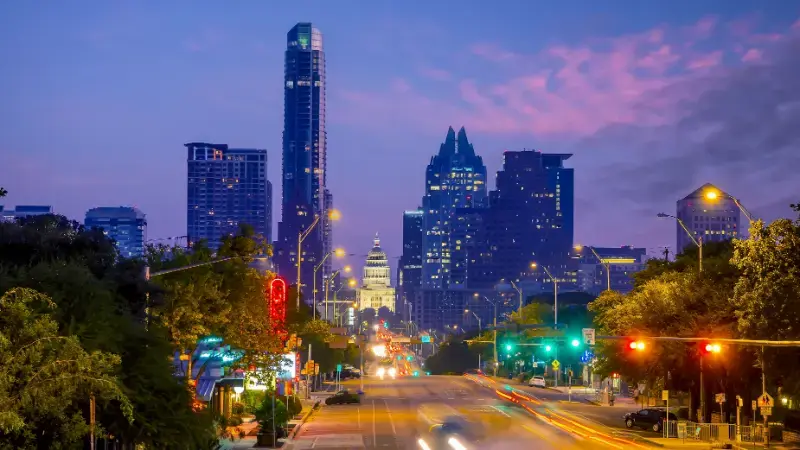
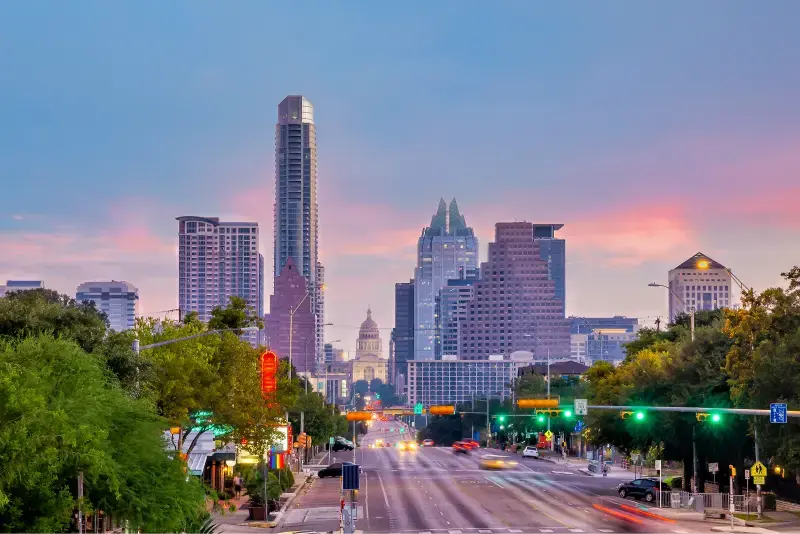
Downtown provides direct access to the Capitol side, convention facilities, entertainment and the lake. It can be expensive, busy and noisy during events, but reduces many rides.

South Congress
The corridor offers restaurants, shops, music and strong visitor atmosphere south of the river. Properties vary from boutique hotels to nearby residential rentals; parking can be limited.
East Austin
Choose East Austin for independent restaurants, bars and creative spaces. Block-by-block character changes, so inspect the precise route home and respect residential streets.
Rainey Street area
High-rise lodging and nightlife access can suit short, energetic visits. Construction and late-night noise make recent reviews and room orientation important.
West Sixth and Market District
This central zone can balance Downtown access with restaurants and shopping. It has a different nightlife feel from historic Sixth Street.
University and North Campus
University-oriented areas suit campus visits, museums and some lower-key streets. Football and academic events can transform rates and traffic.
Zilker and Barton Hills
These areas prioritize park, pool and trail access with a more residential atmosphere. Downtown transport and limited hotel inventory are tradeoffs.
Mueller
A newer mixed-use district with parks, family amenities and food can work for longer stays. It is not walkable to classic Downtown attractions.
The Domain and North Austin
Shopping, offices and modern hotels create a separate northern center. Choose it for work or north-side plans, not as a bargain Downtown substitute without calculating rides.
Airport area
Useful for a late arrival, early flight or brief road-trip stop. It lacks the atmosphere and walkability most first-time visitors expect.
Hill Country resort edge
Resorts west of the city can provide pools and scenery but are not Austin sightseeing bases. Treat them as a retreat or regional phase.
Short-term rentals
Verify legality, total fees, parking and neighborhood rules. A large group may gain space, but hotel services and predictable check-in can be more valuable.
Practical planning advice
Match the hotel to nighttime
Stay near the area where evenings end. This reduces surge pricing, impaired driving and complicated late transfers.
Check event dates
SXSW, Austin City Limits, Formula 1, university games and conventions can affect the entire market.
Calculate parking
Downtown valet or garage charges can erase a low room rate. Travelers without a car may save more than expected.
Read recent noise reviews
Venue schedules, construction and nightlife evolve quickly. Search for comments about the exact room side, not only overall rating.
Compare Austin stays
Affiliate disclosure: we may earn a commission from qualifying bookings at no extra cost to you. Search Austin hotels by neighborhood and compare final price, cancellation and map location.
Frequently asked questions
Where should first-time visitors stay?
Downtown or South Congress usually provides the easiest introduction.
Is East Austin safe and convenient?
It is varied and rapidly changing; evaluate the exact block, transport and nighttime route.
Do I need a Downtown hotel?
No, but calculate daily rides and parking before moving outward for a cheaper rate.
Where should families stay?
Choose a quieter central property, Mueller or a suitable suite based on planned attractions.
Where should I stay without a car?
Downtown offers the broadest combination of walking and transit access.
Turn priorities into a daily route
Choose Downtown Austin and South Congress as the day’s anchors, then place meals, parking and flexible stops around them. Texas cities and landscapes reward geographic focus. This approach protects the main experience if traffic, heat or a long queue changes the schedule, and it prevents an apparently simple map from becoming several hours of avoidable driving.
Allow a realistic time buffer
Travel time does not include parking searches, security, walking from a garage, photographs, food or visitor-center conversations. Add a buffer before fixed reservations and avoid placing a nonrefundable evening immediately after a rural transfer. Spare time becomes a relaxed neighborhood walk; a delayed day remains recoverable.
Check reservations in the right order
Secure state-park entry, limited tours, major performances and scarce lodging before flexible museums or public spaces. Recheck confirmation emails for arrival instructions, parking, age rules and cancellation deadlines. Admission and a timed reservation are not always the same product.
Build the budget from total cost
Include accommodation taxes, parking, tolls, fuel, rental-car fees, meals and local transport. A cheaper suburban room can cost more after daily commuting, while a central hotel can remove the need for a car. Compare the entire day rather than the room rate alone.
Use weather as a decision tool
Texas weather can change quickly and varies by region. Check heat, thunderstorms, flash-flood risk, wind, air quality and coastal alerts. Move activity earlier, shorten a route or use a museum backup when conditions deteriorate. Flexibility is part of responsible planning.
Plan for different mobility levels
Choose the day around the least mobile or least heat-tolerant traveler. Provide seated breaks, accessible alternatives and a clear meeting point. Historic surfaces, river paths, large museums and festival crowds can change accessibility, so confirm details directly.
Travel responsibly
Stay on public or designated surfaces, pack out waste, respect active religious sites and never trespass for a photograph. Support local businesses, learn the history behind the attraction and follow water, wildlife and fire rules. Slower observation usually creates a better trip.
Keep one appealing backup
Select a nearby alternative for the activity most exposed to heat, storms, sold-out parking or closure. A museum, neighborhood meal or shorter official trail should preserve the day’s theme without creating another long drive.
Final check before departure
Forty-eight hours before the experience, verify official alerts, road conditions, opening hours and reservation details. Confirm the hotel address, parking instructions and realistic arrival time. Check again that morning and change the order when conditions require it.
Treat Texas distance as part of the experience
A long transfer is not empty space: it requires fuel, food, rest and attention. Identify a worthwhile legal stop and the last reliable service before departure. Avoid adding a remote detour merely because the route appears close at statewide map scale.
Plan meals before the group is hungry
Popular restaurants can sell out, close between services or require long waits. Choose one priority meal and keep a nearby alternative. On rural routes, carry food rather than assuming the next town will have an open kitchen after an evening arrival.
Check event pressure, not only attraction hours
A football game, festival, convention, rodeo or university weekend can transform hotel rates, traffic and parking across a city. Compare the local calendar with the itinerary before confirming a nonrefundable stay, even when the event itself is not part of the trip.
Use the car strategically
Keep the vehicle for regional days and outer attractions, but avoid moving it between nearby central stops when walking or local transport is easier. Photograph the parking location, remove valuables and understand toll and garage payment before leaving the car.
Protect the next day
Finish a long route early enough to eat, check in and rest. A late arrival after heat, traffic or hiking often damages the following morning more than removing one minor stop. Strong itineraries preserve energy across the whole trip rather than maximizing each individual day.
Read rules for the exact place
A national park, state park, city trail, private attraction and active church can sit close together while following different rules. Verify the responsible authority for parking, pets, drones, photography and reservations instead of applying one policy to the entire region.
Continue planning your Texas trip
Use the Texas travel guide as the state hub, then compare best things to do in Texas, best places to visit in Texas, best time to visit Texas and where to stay in Texas.
Continue planning Texas
Use the related Texas guides below to move from statewide planning to Austin and San Antonio without rebuilding the trip from zero.
- Best Things to Do in Texas: 30 Essential Experiences
- Texas Road Trip Itinerary: 14 Days Across the Lone Star State
- Best Places to Visit in Texas: Cities, Parks & Coast
- Best Time to Visit Texas: Weather, Seasons & Events
- Where to Stay in Texas: Best Cities and Bases for Every Trip
- Austin Travel Guide: How to Plan a First Visit
- Best Things to Do in Austin: 25 Essential Experiences
- San Antonio Travel Guide: How to Plan Your Trip
- Best Things to Do in San Antonio: 25 Attractions & Experiences
Compare accommodation for this itinerary
For flexible planning, compare Downtown Austin stays and East Austin accommodation. Review the final price, cancellation terms, parking and exact map position before booking.