

“Where should I stay in Florida?” is really three questions: which region should you choose, which neighborhood or island works for your travel style, and how much moving is too much. Florida is too large for one hotel base to serve multiple headline destinations. A Miami hotel is not a base for Orlando, and Orlando is not a practical base for the Gulf Coast.
This guide helps you choose bases before you compare individual hotels. Start with the Florida Travel Guide if you have not yet decided which regions belong in the trip.
Compare available accommodation for your dates, budget and preferred location before you finalize your route.
The best Florida bases at a glance
| Base | Best for | Watch for |
|---|---|---|
| South Beach | First-time Miami, beach, nightlife, Art Deco | Parking and resort fees can be high. |
| Brickell/Downtown Miami | Urban stay, dining, transit, short car-free visit | Not a classic beach-base experience. |
| Coconut Grove | Quieter tropical Miami, couples, longer stays | Less convenient for daily South Beach plans. |
| Key Largo/Islamorada | Reef, fishing, Upper Keys | Long drive to Key West for repeated visits. |
| Key West Old Town | Walkability, history, nightlife | Premium rates; car adds little once parked. |
| Lake Buena Vista | Disney-focused Orlando trips | Less ideal for Universal-heavy plans. |
| Universal/I-Drive area | Universal, SeaWorld, broader attractions | Traffic around entertainment corridors. |
| Winter Park/Downtown Orlando | Local food and neighborhoods | Longer theme-park commutes. |
| Sarasota/Siesta Key | Gulf beach + arts | Barrier-island traffic in peak season. |
| St. Petersburg | Museums, food, Gulf beach access | Beach hotel and downtown hotel are different experiences. |
| Naples | Relaxed upscale South Florida | Higher rates in winter peak. |
| St. Augustine historic district | Walkable history | Parking can be less convenient than suburban hotels. |
Miami: choose the neighborhood before the hotel
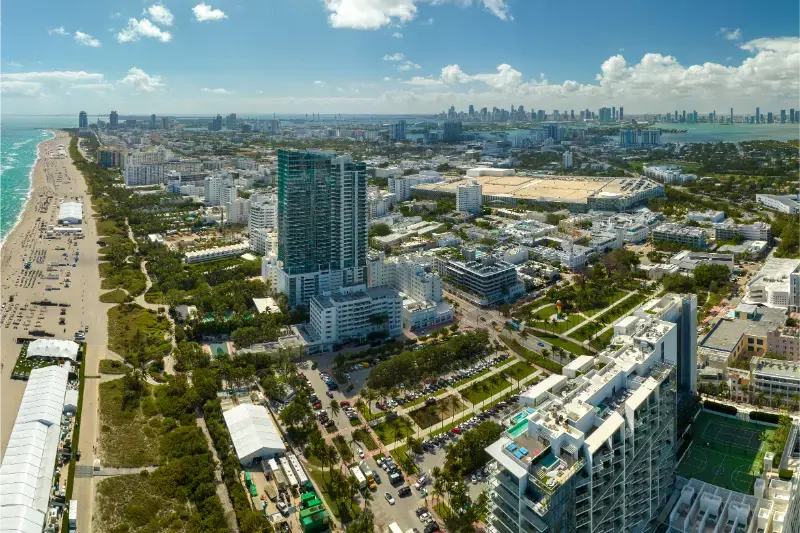
South Beach
Choose South Beach if this is your first Miami trip and you want the beach, Art Deco, restaurants and nightlife outside the door. The trade-off is price, parking and noise in some areas. South of Fifth is calmer and polished; central South Beach is busier; Mid Beach can feel more resort-oriented.
Brickell and Downtown
Brickell and Downtown work better for skyline views, restaurants, events and transit. Metromover is free and useful within the downtown/Brickell area. You will need separate transportation to Miami Beach, but travelers who prefer an urban hotel over a resort often like this base.
Coconut Grove
Coconut Grove offers greenery, waterfront parks and a more relaxed neighborhood rhythm. It suits couples, longer stays and travelers who do not need Ocean Drive outside the hotel. It also pairs naturally with Vizcaya and Coral Gables.
For a fuller comparison, see Where to Stay in Miami.
Florida Keys: do not base everything in Key West by default
If the trip is about diving, snorkeling or Upper Keys water activities, Key Largo or Islamorada can be a better first base. Marathon is useful for families and central positioning. Key West is the strongest choice for nightlife, Old Town, history and Dry Tortugas departures.
A split stay often works: two nights in the Upper/Middle Keys plus two or three in Key West. Changing hotels every night does not.
Orlando: stay near the parks you will actually visit
Lake Buena Vista / Disney area
Best for travelers whose schedule is dominated by Walt Disney World. On-site or nearby hotels can reduce transfer time and sometimes add operational benefits that change over time, so check current official rules rather than relying on old lists.
Universal / International Drive
A better match for Universal-heavy itineraries, mixed attractions and travelers who want a large choice of restaurants and hotels. International Drive is an entertainment district in its own right.
Winter Park / local Orlando
This is for travelers who want to see a more local side of Central Florida and are willing to drive to the major parks. It can be a refreshing choice on a longer trip, but not if your plan is rope-drop-to-fireworks every day.
Gulf Coast: decide whether the priority is beach or city
Sarasota gives you cultural attractions and access to Siesta/Lido; staying on the barrier islands prioritizes beach atmosphere but can add bridge traffic. St. Petersburg offers a strong downtown arts base, while St. Pete Beach or Clearwater places you directly on the sand. Naples is more polished and slow-paced, well suited to couples and winter sun seekers.
Space Coast: one night is often better than an Orlando day trip
If Kennedy Space Center matters, sleeping on the Space Coast can turn an exhausting out-and-back into a relaxed day. It also gives you flexibility if you are watching launch schedules. Cocoa Beach and other coastal bases add easy ocean time.

St. Augustine: stay inside or just outside the historic core?
Inside the historic district, you can walk to major sights and enjoy the city after day visitors leave. Hotels outside the core may offer easier parking and lower rates. For a two-night first visit, paying for walkability can be worthwhile.
Panhandle: pick one beach community and stay put
The Panhandle rewards slower vacations. Destin, Fort Walton Beach and communities along 30A are not sensible “bases” for South Florida sightseeing. Choose the coastal atmosphere you like and build most days around beach, dining and short local outings.
Resort fees, parking and the true room price
Florida hotel comparisons can be misleading if you look only at the headline nightly rate. Resort fees, valet or self-parking, destination charges and taxes can materially change the total. A downtown or beachfront hotel that includes useful amenities may cost less overall than a cheaper room with daily parking and rideshare expenses.
Before booking, price the entire stay and read the cancellation policy. This matters especially during hurricane season, when flexibility has real value.
When an apartment or vacation rental makes more sense
Families and longer stays can benefit from laundry, a kitchen and separate sleeping space. But compare cleaning fees, parking, building rules and check-in logistics with hotels. In dense areas such as Miami Beach or Key West, location can matter more than square footage.
How many hotel changes are too many?
For a two-week Florida road trip, four or five bases is usually enough. More than that creates packing fatigue and turns mornings into logistics. Aim for two-night minimum stays whenever a destination has more than one major reason to visit.
Best base by traveler type
- First-time couple: South Beach or Coconut Grove + Key West + Sarasota/Naples.
- Family with theme parks: Disney/Lake Buena Vista or Universal area, then a Gulf Coast beach base.
- Nature-focused traveler: Homestead/Everglades access + Upper Keys + springs/Nature Coast.
- Car-free short trip: South Beach or Brickell/Downtown Miami.
- Long beach vacation: Siesta Key, Naples/Marco, St. Pete Beach/Clearwater or a Panhandle community.
Questions to ask before you click “book”
- Will you use the car every day, and what does parking cost?
- Can you walk to the main reason you chose this destination?
- Are resort fees included in the price you are comparing?
- Does the hotel location require crossing a bridge or causeway at peak times?
- If weather changes, does the area still have enough indoor or non-beach activities?
- Would two nights here feel rushed once check-in and check-out are considered?
The location-first rule
Florida is one of those places where paying slightly more for the right base can improve the trip more than upgrading the room. Shorter drives, easy evening walks and the ability to return to the hotel for a midday break are not luxuries; they are time. Choose the map location first, then compare hotels inside that zone.
Useful official resources
- Greater Miami neighborhoods
- Visit Orlando planning resources
- Florida Keys & Key West official site
- VISIT FLORIDA travel guides
Airport-night strategy: sometimes the boring hotel is the smart hotel
If a long international flight lands late, the first night near the airport can protect the rest of the road trip. Collect the car in daylight, buy water and supplies, then begin the scenic part of the route rested. The same logic works before a very early departure: moving to an airport hotel can be better than waking children at 3 a.m. in a beach resort two hours away.
Florida with children: proximity is worth money
Families should price travel time as seriously as room rate. A hotel that saves forty minutes each way to a theme park, beach or major attraction can return more usable vacation than a cheaper property on the other side of the metro area. Laundry, breakfast, a refrigerator and a pool may also be more valuable than formal luxury.
For young children, two-room layouts or a balcony can transform evenings because adults do not have to sit silently in the dark after bedtime. For teenagers, walkable food and entertainment can reduce the feeling of being trapped at a remote resort.
Hurricane-season booking: read cancellation terms before amenities
During the Atlantic hurricane season, flexible cancellation and clear rebooking policies can be more valuable than a small prepaid discount. Read what happens if flights operate but local conditions deteriorate, and distinguish hotel policies from airline or travel-insurance coverage. The exact contract matters more than a generic promise of “hurricane protection.”
If a destination is under emergency guidance, follow local authorities and change the trip. Hotel availability and fuel are community resources during evacuations, not opportunities to preserve a vacation plan.
For Gulf Coast bases, compare our dedicated guides to Tampa, St. Petersburg, Sarasota and Naples.