

Choosing where to stay in San Francisco is less about finding one universally “best” neighborhood and more about matching your hotel to the way you want to move through the city. The city is compact by California standards, but hills, transit lines and evening atmosphere can make two hotels only a few miles apart feel very different.
For most first-time visitors, Union Square, the Embarcadero, Fisherman’s Wharf, Nob Hill and the Marina are the easiest starting points. Travelers who prioritize nightlife or local dining may prefer SoMa, the Mission or North Beach. This guide compares the trade-offs so you can choose a base rather than simply following the lowest nightly rate.
Compare available accommodation for your dates, budget and preferred location before you finalize your route.
In this guide
- Best areas at a glance
- Union Square
- Embarcadero
- Fisherman’s Wharf
- Nob Hill
- North Beach
- Marina & Cow Hollow
- SoMa
- Mission & Castro
- If you have a car
- Families
- Budget strategy
- How to choose
Best areas to stay in San Francisco at a glance
| Area | Best for | Main trade-off |
|---|---|---|
| Union Square | First-time visitors, shopping, transit | Less residential atmosphere |
| Embarcadero | Waterfront, ferries, views, walkability | Often expensive |
| Fisherman’s Wharf | Families, Alcatraz, classic sights | Touristy, weaker neighborhood feel |
| Nob Hill | Historic San Francisco, central position | Steep hills |
| North Beach | Food, evenings, character | Fewer large hotels |
| Marina / Cow Hollow | Golden Gate access, restaurants | Less direct BART access |
| SoMa | Museums, conventions, modern hotels | Block-to-block atmosphere varies |
| Mission / Castro | Local culture, nightlife, food | Not the classic postcard base |
Union Square: easiest all-round base for a first trip
Union Square remains one of the most practical hotel districts because it combines a large range of properties with strong transit connections. BART stations, Muni routes and cable cars place much of the city within reasonable reach, while downtown attractions and SoMa museums are walkable.
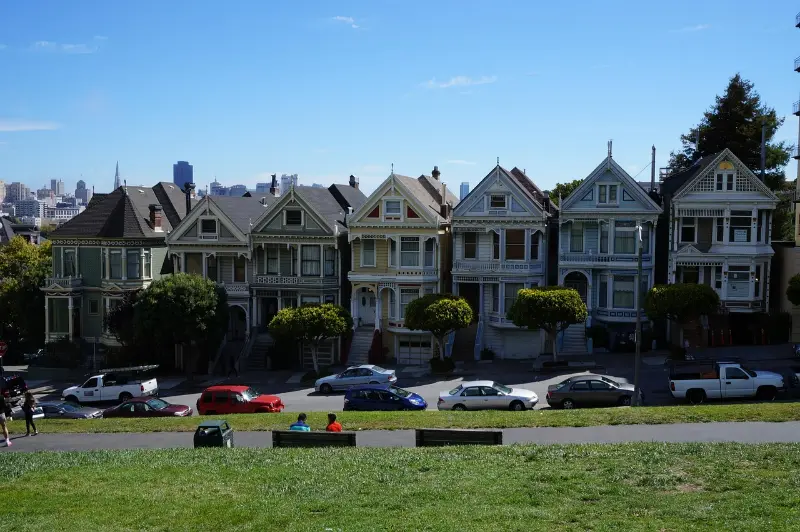
Choose it if your priority is logistics rather than a residential neighborhood atmosphere. The exact block matters: a hotel described as “Union Square” may sit several streets away from the square itself, so check the route to your preferred transit stop and read recent reviews about the immediate surroundings.
Embarcadero: best for waterfront walks and easy ferries
The Embarcadero is one of the most pleasant bases if budget allows. The Ferry Building, waterfront promenades and ferry connections are close, and the terrain is flatter than many inland neighborhoods. It also works well for travelers planning Alcatraz, a bay ferry or an early start from the waterfront.
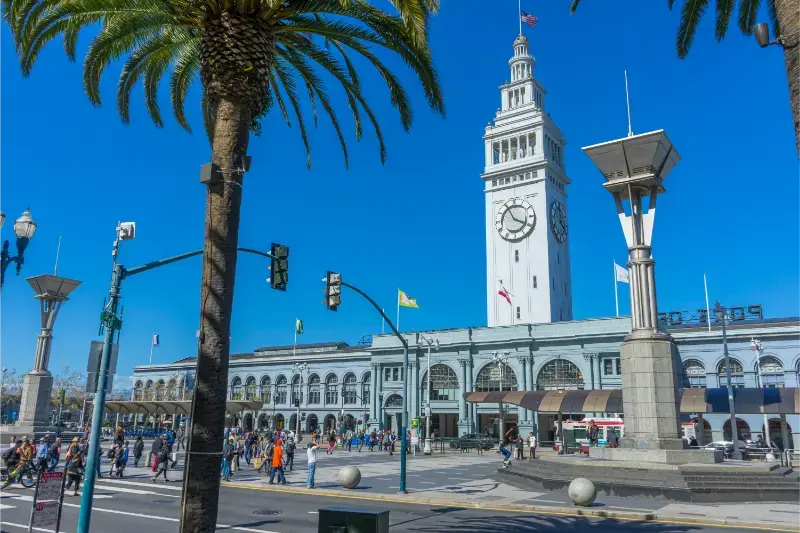
The main drawback is price. Hotels with bay or bridge views can be significantly more expensive, and the area can feel quieter after office hours than North Beach or the Mission. For a short high-comfort city stay, however, the location is hard to beat.
Fisherman’s Wharf: practical for families and first-time icons
Fisherman’s Wharf is convenient if your must-do list includes Pier 39, sea lions, maritime attractions and Alcatraz departures. Families often appreciate the density of attractions and relatively flat walking routes. It is also easy to reach North Beach and the waterfront.
The compromise is atmosphere and dining value. The Wharf is one of the city’s most tourist-oriented districts, so use it as a comfortable base but spend significant time elsewhere. If you dislike crowds and souvenir-heavy streets, another neighborhood will likely suit you better.
Nob Hill: classic San Francisco with views and history
Nob Hill delivers the version of San Francisco many visitors imagine: grand hotels, cable cars, historic architecture and steep streets with glimpses of the bay. It sits centrally between Union Square, Chinatown and Russian Hill, making it a strong base for travelers who enjoy walking and do not mind elevation.
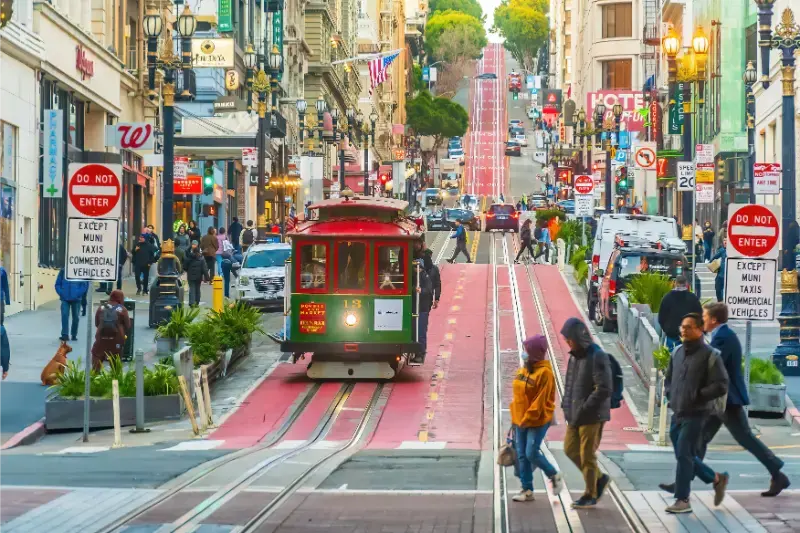
The hills are the deal-breaker. A route that looks short on a map may involve a serious climb. Travelers with mobility limitations or strollers should inspect the exact topography around the hotel before booking.
North Beach: best for character, food and evenings
North Beach is one of the best choices for travelers who want the neighborhood outside the hotel to be part of the trip. Cafés, restaurants, nightlife and Italian-American heritage give the area energy after sightseeing hours. Chinatown, Coit Tower and the waterfront are close enough to reach on foot.
There are fewer large conventional hotels than around Union Square, so inventory can be tighter. Public transport is useful but BART is not directly in the neighborhood; plan on Muni, walking and occasional rideshare.
Marina and Cow Hollow: good for the bridge, restaurants and a neighborhood feel
The Marina and Cow Hollow work well for travelers who prioritize the Golden Gate Bridge, Presidio, Crissy Field and lively restaurant streets. The terrain around much of the Marina is relatively flat, and the area feels more residential than the Wharf.
The trade-off is rail access. You will rely more on buses or rideshare for downtown and Mission-area trips. For a three- or four-night stay focused on the northern half of the city, that can be a worthwhile exchange.
SoMa: best for museums, events and modern hotels
South of Market is large and varied. Around Yerba Buena, Moscone Center and SFMOMA, travelers can find modern hotels, museums and convenient downtown access. Farther south, Oracle Park and Chase Center create event-focused micro-areas with different evening patterns.
Because SoMa changes quickly block by block, do not book based only on the district name. Check the precise location, the walk to transit and what the immediate streets feel like after dark. This advice applies in any major city, but it matters particularly in a district this broad.
Mission and Castro: best for food, nightlife and local culture
If you have already seen the classic waterfront or want a more neighborhood-centered stay, the Mission and Castro can be excellent. Restaurants, bars, murals, Dolores Park and strong transit links make them rewarding for repeat visitors and travelers who prefer local street life over hotel-district polish.
These areas are not ideal if your entire itinerary is built around Fisherman’s Wharf and the bridge, but they are excellent if food and nightlife are priorities. Choose a hotel near a useful Muni or BART connection rather than simply somewhere “in the Mission.”
Should you stay in San Francisco with a rental car?
Usually, no. A car can be useful for California road-trip days, but central San Francisco is one of the state’s least rewarding places to store one. Parking can be expensive, street rules are complicated and leaving visible belongings in a vehicle is a poor idea. If your trip combines the city with Yosemite or Highway 1, consider collecting the rental car when you leave San Francisco.
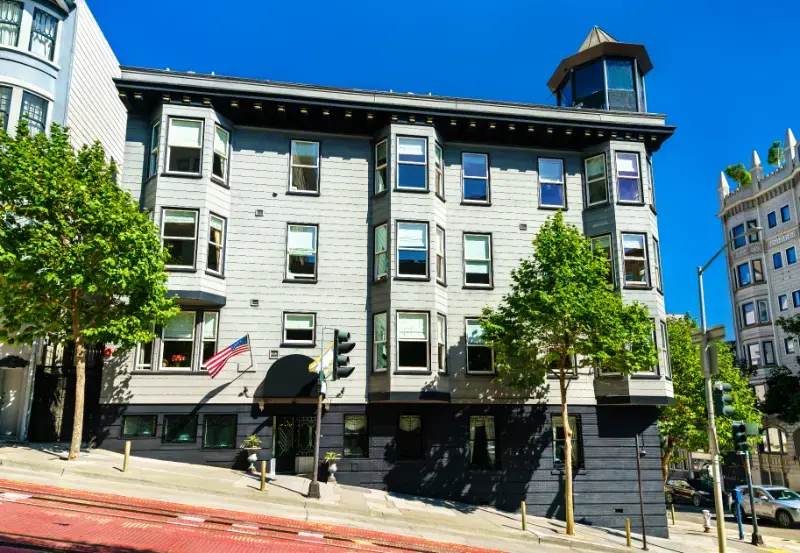
If you must keep a car, compare hotel parking fees before booking and choose a property where the vehicle can remain securely parked. Do not assume a cheaper room remains cheaper after nightly parking is added.
Best areas for families
Families often do well at Fisherman’s Wharf for attraction density, the Embarcadero for flatter walking and the Marina for open space near the Presidio. Union Square can also work if transit convenience matters more than playground access. The right answer depends on children’s ages and whether you plan to return to the hotel for afternoon breaks.
How to save money without choosing a bad base
- Compare total cost, including parking, resort/destination fees and breakfast—not only the room rate.
- Stay one or two blocks farther from a landmark if transit remains convenient.
- Travel in lower-demand periods when possible; San Francisco hotel pricing can change dramatically around conventions and major events.
- Consider smaller hotels and reputable motels in well-connected neighborhoods, but evaluate recent reviews and precise location.
- Do not save a modest amount if it creates two extra rideshare trips every day.
How to choose your San Francisco neighborhood
Start with your top three activities. If two of them are Alcatraz and the waterfront, stay north or east. If museums and downtown transit dominate, Union Square/SoMa make more sense. If food and nightlife matter most, North Beach, the Mission or Castro may be stronger. Then check hills, transit, hotel fees and the immediate block.
For activity planning, pair this page with best things to do in San Francisco and our three-day San Francisco itinerary.
Official planning resources
- San Francisco Travel – Neighborhoods — orientation by district.
- SFMTA — transit maps, fares and service.
- BART — airport and regional rail planning.
Keep planning California
If San Francisco is part of a larger trip, continue with the Pacific Coast Highway road trip, Big Sur travel guide, Yosemite guide or our full California travel guide.
Airport access: SFO and OAK should influence the final choice
If you land at SFO, hotels near BART in the Union Square/downtown corridor simplify arrival without a car. Embarcadero and downtown stations also work well. From OAK, BART can still be practical, but late-night arrival or a family with several bags may prefer a direct ride. Do not choose a neighborhood solely because it looks central on a tourist map; compare the actual airport-to-hotel trip, especially if your flight lands after normal evening transit frequency.
For an early departure, staying in the city is still reasonable if the airport transfer is predictable. Moving to an airport hotel for the final night usually makes sense only for a very early flight, a rental-car logistics problem or a significantly cheaper rate.
Hotel pricing in San Francisco: what to compare beyond the nightly rate
San Francisco hotel prices can change sharply with conventions, major sports events and citywide festivals. Compare the fully loaded price: taxes, destination or amenity fees, parking, breakfast and cancellation terms. A waterfront property may look expensive but become competitive if it includes benefits you would otherwise buy; a cheaper downtown room can lose its advantage after parking and rideshare costs.
For a road trip, flexible cancellation has extra value. Highway closures, wildfire smoke or a changed Yosemite plan can shift the city dates. Paying a modest premium for flexibility is often wiser than locking the cheapest non-refundable room months ahead.
Which area fits which California itinerary?
- San Francisco + Yosemite: Union Square/Embarcadero make car-free city days easy; collect the rental car when leaving.
- San Francisco + Highway 1: Marina, North Beach or Union Square all work; prioritize an easy route to the rental location and southbound departure.
- City-only weekend: Embarcadero, Union Square or Nob Hill minimize logistics.
- Food-focused repeat trip: Mission/Castro, North Beach or Richmond/Sunset-adjacent stays can provide more neighborhood time.