

Yellowstone is the place where a Wyoming road trip can either become unforgettable or become exhausting. The park is enormous, the road system forms a broad figure eight, wildlife can stop traffic without warning, and the most famous sights are spread far enough apart that trying to “see everything” in one day usually means spending more time behind the wheel than on boardwalks or trails. A better first visit is built around zones, early starts and two or three lodging bases at most.
Most of Yellowstone lies in Wyoming, and it combines naturally with Grand Teton National Park, Jackson Hole and Cody. Those connections make the park the anchor of a larger Wyoming itinerary rather than an isolated stop. The tradeoff is that summer demand is high, so lodging and campground choices should be settled before the rest of the road trip.
Compare available accommodation for your dates, budget and preferred location before you finalize your route.
Start by dividing Yellowstone into manageable areas
For planning purposes, think of Yellowstone as several distinct sightseeing areas rather than one attraction. Old Faithful and the Upper Geyser Basin deserve a substantial block of time; Grand Prismatic Spring and Midway Geyser Basin can be paired with them but add parking pressure. Canyon Village and the Grand Canyon of the Yellowstone work as another major day, while Hayden Valley and Yellowstone Lake fit naturally on the same side of the loop.
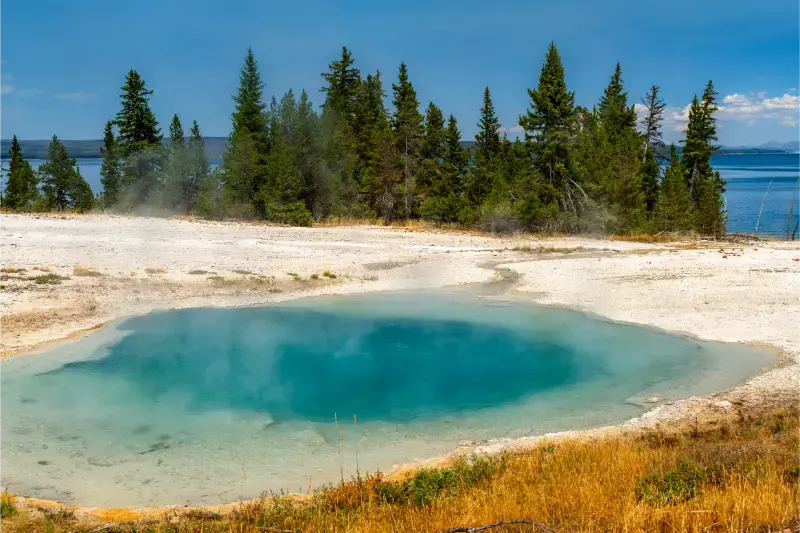
Mammoth Hot Springs and the northern wildlife corridor toward Tower-Roosevelt and Lamar Valley form a different experience again. If wildlife is a priority, sunrise and evening matter more than checking boxes at midday. A three-day itinerary can sample the main regions, but four or five days gives you room for weather, construction, animal traffic and slower walks around thermal features.
Old Faithful and the Upper Geyser Basin
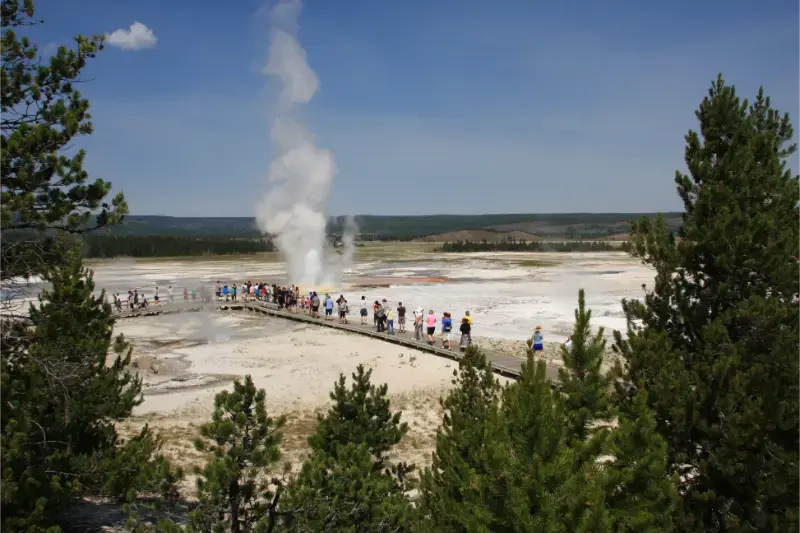
Old Faithful is famous because its eruptions are comparatively predictable, but the surrounding basin is the real reason to allow more than a quick photo stop. Miles of boardwalks connect hot springs, geysers and pools, and eruption predictions for several features are posted by the park. Walk beyond the immediate Old Faithful viewing area and the crowds thin noticeably.
The best strategy is to arrive early, check the next predicted eruption, then use the waiting time to explore nearby boardwalks rather than standing in one place. Thermal areas are not places to improvise shortcuts: stay on boardwalks and designated trails. The crust around hot springs can be thin, water can be scalding, and pets are restricted in thermal areas for good reason.
Grand Prismatic Spring without unrealistic expectations
Grand Prismatic Spring is one of Yellowstone’s signature sights, but two different viewpoints create two different experiences. The Midway Geyser Basin boardwalk brings you close to the steam and color, while the Fairy Falls trail leads to an elevated overlook that better reveals the full shape of the spring. Parking can be difficult at both during peak hours.
Cool mornings often produce heavy steam that partially obscures the colors, so photographers may prefer later morning or afternoon when air temperatures rise. Do not stop illegally along the road simply because the lot is full. Continue, return at a quieter hour, or shift to another basin and come back later.
Grand Canyon of the Yellowstone and Hayden Valley
The canyon area provides the park’s strongest waterfall scenery, with viewpoints on both the north and south rims. Choose a small number of overlooks instead of attempting every spur road. Artist Point is the classic perspective, while other viewpoints give closer or more vertical impressions of the canyon. Trails can be steep and elevation adds effort even on short walks.
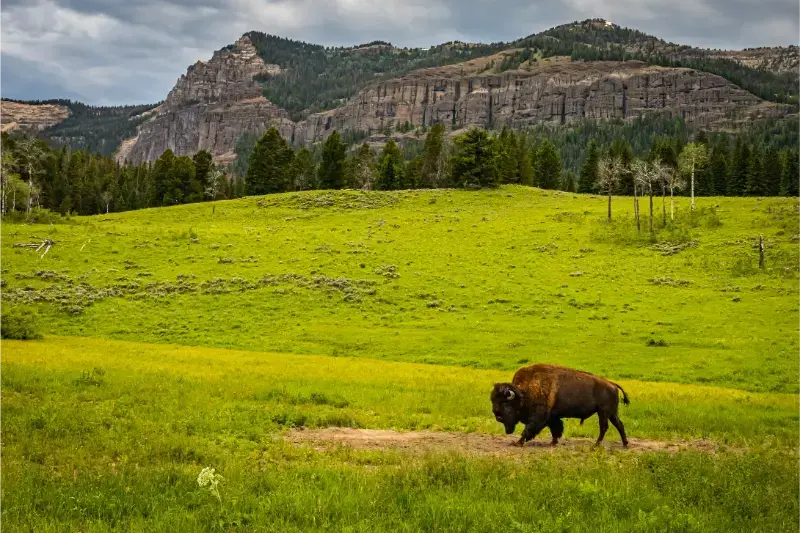
Hayden Valley lies south of Canyon and is one of the park’s most productive wildlife areas. Bison are common and can create long traffic delays; bears, wolves and other wildlife are possible but never guaranteed. Use pullouts, remain inside your vehicle when animals are close to the road, and follow the park’s minimum distance rules. A long lens or binoculars is more useful than trying to approach wildlife.
Lamar Valley and the northern route
Lamar Valley rewards patience. It is less about a single landmark than the experience of scanning a huge landscape for bison, pronghorn, bears and wolves. Serious wildlife watchers often arrive before sunrise with spotting scopes. Even casual visitors should bring binoculars and dress much warmer than the midday forecast suggests.
The road through the northern range also makes Yellowstone easy to connect with Montana gateways, but a Wyoming-focused trip can use Lamar as part of a loop between Canyon, Tower and the northeast side. Keep fuel and food in mind; services are not distributed like they are in a city, and mobile coverage remains inconsistent.
2026 road dates and why they matter
Yellowstone does not require a reservation simply to enter in 2026, but an entrance pass is required and summer traffic can be intense. The National Park Service lists projected 2026 opening dates beginning April 17 for several west-side roads, May 1 for the East Entrance to Fishing Bridge, May 8 for the South Entrance and May 22 for Dunraven Pass, the Beartooth Highway and Chief Joseph Scenic Byway. Most regular-vehicle park roads then close again in late October, with weather always capable of changing the schedule.
That makes spring and autumn planning fundamentally different from summer planning. A route that looks logical on a map may not exist on your travel date. Before moving hotels, confirm current conditions through the official Yellowstone road-status page. Construction can also add delays even when a road is open.
How many days do you really need?
Two days is enough only for a focused sample. Spend one day on Old Faithful, Grand Prismatic and nearby geyser basins, then use the second for Canyon and either Hayden or the northern wildlife corridor. Three days is a much better minimum for a first trip. Four days allows wildlife time without sacrificing geothermal areas, and five days creates space for a moderate hike or a slower lake day.
If you are combining Yellowstone with Grand Teton, avoid using Jackson as the only base for the entire park. The commute to Yellowstone’s central and northern areas is too long for repeated day trips. Split the stay between a Yellowstone-area base and Jackson/Grand Teton. Our 10-day Wyoming road trip shows one practical sequence.
Where to stay for Yellowstone
Inside-park lodging gives you the strongest location advantage but books early and can be expensive. Old Faithful works well for geyser basins, Canyon is central for the east side and wildlife routes, Lake provides a quieter base, and Mammoth suits the north. Outside the park, West Yellowstone is convenient for the western loop; Gardiner serves the year-round North Entrance; Cody is a longer but scenic approach to the East Entrance; and Jackson is best treated as the Grand Teton base rather than a Yellowstone commute.
Affiliate disclosure: we may earn a commission from qualifying bookings at no extra cost to you. Compare Yellowstone-area stays on Booking.com, paying particular attention to location and cancellation terms when road or weather conditions may change.
Food, fuel and the pace of the day
Restaurants and general stores exist in major developed areas, but lines and limited hours can shape the day. Carry water, picnic food and enough fuel that you are not forced to cross the park for a meal. A picnic also lets you take advantage of an unexpected wildlife stop or a quieter viewpoint instead of returning to a busy village at lunchtime.
Build the itinerary around one major area in the morning and one in the afternoon. If a bison jam costs an hour, let it cost an hour; that unpredictability is part of Yellowstone. The mistake is trying to recover the schedule by speeding or skipping rest. Distances are large, wildlife is active near roads, and fatigue is a real driving risk.
Safety around wildlife and thermal features
Yellowstone is not a zoo. Bison can run much faster than people, bears may be present near popular trails, and elk can become aggressive when protecting calves or during the rut. Follow NPS distance guidance, carry bear spray where appropriate and know how to use it, and never position yourself between an animal and its path.
Thermal areas demand the same discipline. Stay on boardwalks, supervise children closely and do not touch runoff water simply because it looks cooler. Drones are prohibited in national parks, and feeding wildlife is illegal. These rules protect both visitors and the animals and landscapes they came to see.
Best time to visit Yellowstone from Wyoming
July and August offer the most predictable road access but the heaviest crowds. June has long days, green landscapes and active wildlife, though some trails can remain wet or snowy. September is one of the strongest compromises: nights are colder and services begin tapering, but traffic often eases. October is beautiful and volatile, with road closures possible at any time.
Winter is a completely different trip. Most roads close to ordinary vehicles and access shifts to the year-round northern corridor plus authorized snowcoach and snowmobile travel on groomed routes. Use our best time to visit Wyoming guide before choosing dates for a multi-region trip.
A realistic first-day plan
If you enter from the south after Grand Teton, make West Thumb your first substantial Yellowstone stop, then continue toward the lodging area you have chosen rather than racing immediately to Old Faithful and Canyon. If you enter from Cody, let the East Entrance road, Yellowstone Lake and Hayden Valley form the first day. Matching the sightseeing sequence to the entrance prevents unnecessary backtracking.
The park rewards flexible travelers. Choose priorities, accept that one basin may be crowded or one road may be delayed, and keep a second option in the same geographic area. That approach produces a better visit than a minute-by-minute checklist.
Continue planning Wyoming
Pair Yellowstone with the Grand Teton guide, Cody guide and the Wyoming destination hub. For official operating information, always recheck the National Park Service Yellowstone website close to departure.