

New York becomes easier to understand when you stop treating its neighborhoods as dots around the landmarks. In the Village, the street you expected to follow may turn into another name. In Harlem, a museum visit can open a conversation with the buildings and cultural history around it. Across the river, the skyline becomes something you look back toward from a park.
You do not need to abandon Times Square or the major museums to experience that variety. Set aside a morning or an afternoon for a small area, with one reason to enter a building and enough time outside it. The aim is a visit with some depth, rather than a procession through neighborhoods whose names you remember without much sense of what happened there.
Read the city in regions, then choose a smaller walk
Manhattan runs roughly north to south, but the useful divisions for a visitor are more specific. Harlem, the Upper West Side, Midtown, Chelsea, the Village and the Lower East Side have different relationships with the park, rivers and subway. Distances accumulate quickly when a walk crosses several of them, particularly when you stop for shops, food and photographs.
Brooklyn, Queens, the Bronx and Staten Island are boroughs with many neighborhoods of their own. A borough name is not a complete afternoon route. Choose a focal point and the transport that reaches it, then add a nearby meal or walk. A planned journey into another borough often provides a richer day than several short, poorly connected Manhattan stops.
Greenwich Village and the West Village: follow the smaller streets
Washington Square provides a useful beginning for a Village walk. The open space and arch give you somewhere to get your bearings before exploring the surrounding streets. Notice how university activity, music, residents and visitors share the area. It is a public park in a working neighborhood, not a set arranged solely for people taking photographs.
West of the square, smaller streets and changes in direction make the walk interesting at a slower pace. Choose a handful of blocks, look at the buildings and allow a cafe or shop to interrupt the route. You do not need a long list of famous fictional addresses to make the neighborhood worth exploring.
Christopher Street offers a thread through LGBTQ history, including the Stonewall area. If you want more than an outside look, use the current National Park Service and visitor-center information for interpretation and access. History here belongs to organizing, conflict and continuing community life as well as a widely recognized name. Give it the same attention you would give another historical site.
The East Village and Lower East Side: different stories on adjacent streets
The East Village can suit a late afternoon that continues into dinner, with shops and a broad range of places to eat. Pick an area around the streets you want to explore rather than promising to walk every block between Union Square and the river. The neighborhood’s evening energy is part of its appeal, but it changes with the day and the particular street.

Farther south, the Lower East Side provides an especially strong setting for a visit about migration and ordinary household life. The Tenement Museum interprets that history through guided tours of historic apartments and neighborhood routes. Choose the actual story and format that interests you. This is not a large museum where one general ticket lets you wander through every reconstructed home independently.
Book the tour before organizing the rest of the afternoon. Its starting time and meeting point supply a clear anchor for a neighborhood meal and a shorter walk. Access and age rules differ between programs, so read the selected tour’s conditions. A thoughtful hour with one household’s story can change how you look at the streets outside.
Chinatown: arrive for a meal, leave time around it
Chinatown rewards a walk that is attentive to both the main commercial streets and smaller connections. Signs, groceries, bakeries and restaurants make the area useful to residents as well as interesting to visitors. Allow room for people shopping and working; stepping aside to look at a menu or take a picture helps the street keep moving.
Choose the kind of meal you want before ordering too widely. Dumplings, a bakery purchase and a seated meal can be different stops across a longer visit, rather than competing parts of one already large lunch. Ask about ingredients and portions when that matters, and keep payment options practical for the business you choose.
Chinatown can pair with a Lower East Side visit, but the two should not be reduced to a single food circuit. A museum or guided walk adds context, while time at the table gives the meal its own value. The point is not to find a supposedly hidden place that nobody else knows. It is to make an informed choice and enjoy being there.
Chelsea and the western waterfront: look beyond a single attraction
Chelsea offers several possible afternoons: galleries, the High Line, a market stop or walking farther west toward the Hudson. Choose the thread that interests you. Moving through every one quickly can turn an appealing district into a sequence of queues, while a gallery and a waterfront pause may provide a more satisfying contrast.
The High Line gives a raised perspective on buildings and planted spaces along a former railway. Consult its current access information if you need an elevator, and choose a section that fits the rest of the day. It is a linear park with particular entrances, rather than a sidewalk you can join at any point.
For galleries, check current exhibitions and opening days before selecting a route. A small number of visits with time to look can be more rewarding than walking into every open door. Finish near a useful subway entrance or an actual restaurant choice. A district’s westward reach matters when you are tired and deciding how to get back to the hotel.
Harlem: make culture the reason for the journey
Harlem deserves a visit organized around a subject you care about. Art, literature, music and the history of Black life in New York offer several starting points. The Studio Museum in Harlem’s new building at 144 West 125th Street opened in November 2025, so older guides describing only an off-site or construction-period visit no longer provide the full picture.
Use the museum’s current exhibitions and visit calendar, then leave time for surrounding streets and a meal. The Schomburg Center for Research in Black Culture, farther north at Malcolm X Boulevard and 135th Street, provides another institutional focus. Public exhibitions and events differ from research access; an archive reading-room appointment is not the same product as an ordinary gallery visit.
If live music is the main interest, choose a venue and performance from its current calendar. Churches are places of worship, and services should not be approached as unannounced entertainment stops. A guided history walk can be helpful when it provides informed context and respects the neighborhood’s daily life. Give the area a substantial part of the day instead of treating it as a brief excursion above the park.
Upper West Side: an ordinary neighborhood morning
The Upper West Side can provide a welcome change from tightly scheduled sightseeing. Broadway and Amsterdam Avenue offer places to buy breakfast or sit for a meal, while residential side streets lead toward two very different parks. Central Park has major visitor destinations; Riverside Park gives the walk a western, river-oriented direction.

One pleasant plan is to choose the American Museum of Natural History as the main visit, then keep the afternoon close by. Another is to make the neighborhood itself the morning, with a short park section and time to browse. Avoid promising both parks in full. A pause on a bench or a second coffee does more for the day than an unnecessarily large walking target.
Families often appreciate the practical side of this area: groceries, places to stop and the possibility of pairing a cultural visit with outdoor time. Those advantages can also appeal to adults traveling without children. A neighborhood visit does not have to reveal an obscure attraction; sometimes its value is seeing how the city supports a more everyday rhythm.
Brooklyn: waterfront views or a different neighborhood day
DUMBO and Brooklyn Heights make an accessible first Brooklyn pairing. Industrial buildings, the bridges, Brooklyn Bridge Park and the Promenade provide distinct views within a manageable area. Leave time for the slope between waterfront and higher streets, and choose a legal public route rather than following a straight line through a map’s buildings.
For another visit, consider Williamsburg or the neighborhoods around Prospect Park. Williamsburg suits browsing and a meal with a different East River perspective. The Prospect Park area can support an outdoor and museum day, with Brooklyn Botanic Garden and the Brooklyn Museum as separate possible destinations. They are not extensions of a quick DUMBO walk.
Our Brooklyn guide breaks the borough into practical clusters. Choose one for its own character and investigate the useful subway or ferry route. The better question is what you want to do on that side of the river, rather than how many Brooklyn names you can fit between two Manhattan reservations.
Queens: give one district enough attention
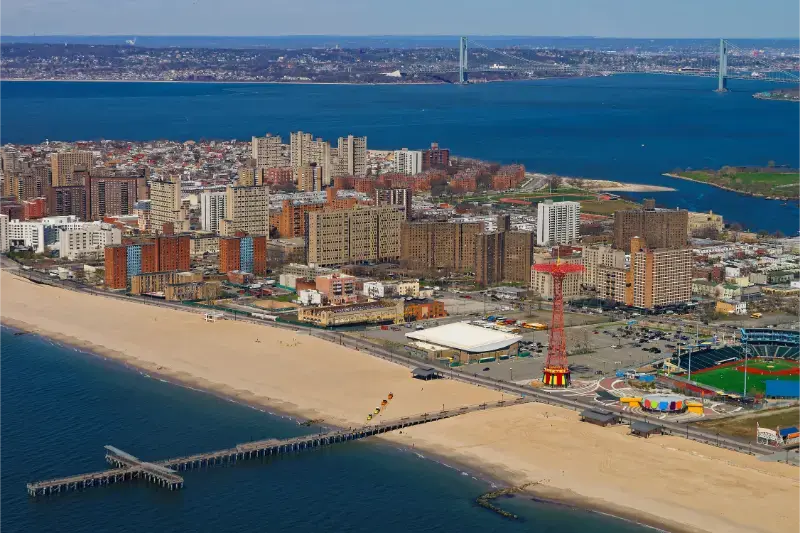
Queens can change a visit substantially, especially when you choose it for food, film or a public waterfront. Astoria offers the Museum of the Moving Image and neighborhood dining. Long Island City’s western edge provides skyline views and parks. Jackson Heights, Elmhurst and Flushing have their own commercial streets and food traditions, with routes that require more planning than a single broad Queens label suggests.
Start with one meal or institution that interests you, then explore nearby. A film museum visit and dinner in Astoria can fill an afternoon and evening without adding a second museum across the borough. A Flushing Meadows plan has another geography entirely. Our Queens guide explains those options and the distances between their transport stops.
Give the business or community space you enter its ordinary consideration. Ask before photographing people, keep doorways clear and buy food in quantities you can appreciate. The borough’s diversity is not a challenge to collect as many cuisines as possible in one sitting. It is a reason to return with different interests on another day.
The Bronx and Staten Island: choose a purpose beyond the crossing
For a Bronx day, a major garden or zoo can be the principal destination, with neighborhood time arranged separately around its actual location. If Arthur Avenue’s food businesses are the reason for coming, organize that meal and the remaining transport first. Borough-wide distances matter: a meal, a garden and a zoo are not interchangeable stops at one entrance.
Staten Island begins for many visitors with the free ferry, but the crossing need not be the entire visit. Snug Harbor Cultural Center and Botanical Garden offers a campus of gardens and cultural institutions reached by a separate connection from St. George. Its general outdoor grounds are free; particular gardens, museums and programs have their own admissions and hours. Current access notices matter during campus works.
Turn two interests into one useful afternoon
Good pairings follow geography: a Tenement Museum tour with nearby streets and a meal; Studio Museum with a Harlem walk; DUMBO with Brooklyn Heights; or the Museum of the Moving Image with Astoria dining. Put the dated or timed visit first, then leave the rest adjustable.
Use the transport guide to check the actual journey and the five-day itinerary to leave space around it. A neighborhood becomes clearer when you have time to notice more than its name. Two or three thoughtful hours in one area can add more to the trip than crossing half the city in search of the next district on a list.
Compare the options
| Choice | What it offers | Planning detail |
|---|---|---|
| Village / Lower East Side | Streets, community history and a selected tour | Pick a smaller circuit and one interior visit |
| Harlem | Art, archives or a specific performance | Use current institutional calendars |
| Brooklyn | Waterfront or a different neighborhood cluster | The borough is not one short walking route |
| Queens | Film, food, parks or a river view | Choose a district with a clear focus |
Find your bearings
Open the map in a new tab · Neighborhood orientation; select a smaller walk and the actual institution or meeting point.
Frequently asked questions
Can I cover all these neighborhoods in one day?
That would leave little time in any of them. Choose a geographic pairing or one substantial district visit.
Is the Tenement Museum an independent walk-through museum?
Its historic apartments are accessed on guided tours. Choose the story, format, age conditions and meeting point before booking.
Is the free Staten Island Ferry the whole journey to Snug Harbor?
No. Snug Harbor requires a separate connection from St. George, and its individual institutions have their own hours and admissions.
Plan the next part of your trip
- 5 Days in New York City: The Perfect First-Time Itinerary
- Getting Around New York City: Subway, OMNY, Ferries, Taxis & Airports
- Brooklyn Travel Guide: Best Neighborhoods, Things to Do & Tips
- Queens Travel Guide: Food, Neighborhoods, Things to Do & Tips
Arrange your stay and activities
Some booking links below are affiliate links. We may earn a commission if you book through them.
Compare stays: New York CityBrowse tours and experiencesCompare rental cars
Match the location, meeting point and cancellation terms to your itinerary before booking.
Official sources and visitor information
- NYC Tourism: Manhattan neighborhood orientation
- Tenement Museum: guided visits and program choices
- Tenement Museum: age, access and tour conditions
- National Park Service: Stonewall visitor information
- Studio Museum in Harlem: current visiting information
- New York Public Library: Schomburg Center
- Snug Harbor: grounds, attraction admission and access notices
Last updated: October 18, 2026.