

Getting around New York is less complicated once you separate the journeys. The subway handles many trips between neighborhoods; walking lets you enjoy the streets within one area. A bus can spare an awkward cross-town walk, while a ferry gives a river journey its own appeal. Airports require another calculation, with separate systems and charges.
For most visitors, the best approach is to use public transport as the backbone and keep room in the budget for an occasional car journey that makes the day easier. You do not need to walk everywhere, and you do not need a taxi for every transfer. Begin with the hotel entrance, the destination entrance and the conditions of the actual trip.
Understand the current subway and bus fare
The ordinary subway and local-bus fare is currently $3 for most riders. MTA express buses cost more and have different cap arrangements. For a typical sightseeing trip, concentrate first on the subway and local, limited or Select Bus Service routes that serve your destinations, rather than treating every vehicle with a bus symbol as the same fare product.
OMNY allows payment by a contactless bank card, a compatible phone or wearable, or a reloadable OMNY Card. At subway entry, tap the reader and wait for confirmation before going through. You do not tap out at the end of an ordinary subway journey. On buses, follow the boarding and reader arrangement for that service.
The old advice to arrive and buy a seven-day unlimited MetroCard is outdated. MTA stopped selling and refilling MetroCards from January 1, 2026. Its current guidance describes spending down remaining valid value during the transition, with a final acceptance date to be announced. A visitor starting fresh should use the current tap-and-ride options rather than plan around buying an old pass.
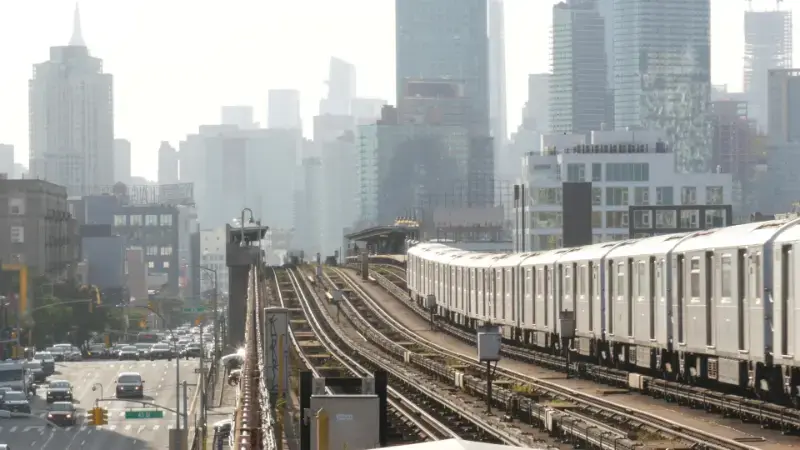
Use one payment method consistently for the fare cap
The full-fare cap for subway and local-bus travel is $35 within a seven-day period starting with the first tap. Keep using the same card or the same device and wallet card. A physical bank card and its phone-wallet version should not be alternated as though they necessarily share one running total.
Each paying traveler should have their own payment method to earn their own capped rides. Paying for several people by passing one card back does not give the whole party a shared unlimited entitlement. MTA also has a restriction on paying for additional riders immediately after the first-ever tap of a new card or device, so resolve the group’s setup before approaching a busy entrance.
The estimate below models ordinary full-fare subway and local-bus charges for travelers taking the same number of paid rides within one cap period. Free transfers are not extra paid rides. Airport trains, railroads, ferries and taxis belong outside that capped amount. The tool is useful for a simple budget, not for validating eligibility or reconstructing an actual OMNY account.
Choose the train by its letter or number
The route identifier matters more than the color. Trains sharing a colored corridor on a diagram can stop in different places and separate farther along the route. Read the train’s letter or number, its direction and whether it stops at the station you need. A line passing close to a destination on a map is not enough information.
In Manhattan, uptown generally means north and downtown south. Outside Manhattan, the borough or final destination on the sign may be the more useful instruction. Check the platform signs before boarding, especially at entrances that serve only one direction. If you have gone into the wrong entrance, ask for help rather than assuming every station lets you cross easily inside the paid area.
Local trains make more stops; express trains skip some. An express service is helpful only if it actually stops where you need to get off. Use the MTA app or current journey planner for the date and time, then listen for announcements. Planned work can change a familiar route at night or on a weekend without making the standard printed map disappear.
Make transfers and station exits part of the plan
Within the subway, follow the signed transfer route instead of leaving through the exit and expecting a new entry to be free. Large stations can involve long corridors or several levels. If two suggested routes have similar journey times, the one with a simpler interchange may be more comfortable with luggage, a stroller or someone who finds stairs difficult.

MTA’s ordinary subway-to-bus, bus-to-subway or bus-to-bus transfer is within two hours, using the same payment method, under its current conditions. Separate services do not automatically join that arrangement. A ticket for a commuter railroad, NYC Ferry or PATH should be evaluated within that operator’s system.
Look at the final exit before following the crowd upstairs. Choosing the useful corner can avoid an unnecessary crossing or several blocks in the wrong direction. At a busy destination, meet companions somewhere beyond the turnstiles and stair landing, where stopping does not obstruct the flow of people.
Use buses for the journeys they simplify
A bus can be particularly useful for a cross-town trip or a journey along an avenue when a subway route would require a detour. You remain at street level, which can make the surroundings easier to read. Traffic affects the journey, so this is a different choice from a guaranteed shortcut to a timed reservation.
Check the route number, destination and stop position. Stops for opposite directions may not be directly across from one another on a one-way avenue. On Select Bus Service, current MTA instructions allow boarding at any door and tapping an OMNY reader. Follow current payment guidance rather than using an old instruction about paper tickets without checking the method you are using.
For a tired group, the bus can preserve energy without the expense of a car. It also deserves a realistic waiting allowance. Compare a live departure with the remaining walk, rather than assuming a short bus line on a map will always save time. Keep aisles, accessible spaces and the door area available for people boarding.
JFK: subway or railroad, followed by AirTrain
JFK’s AirTrain connects the terminals with the city-side connections at Jamaica and Howard Beach. The currently published AirTrain fare for the rail connection is $8.75, separate from the subway or railroad fare. The subway-and-AirTrain option therefore totals $11.75 for most full-fare riders before any other travel. An OMNY cap on the subway does not absorb the AirTrain charge.
Jamaica can connect with the subway or an LIRR train. For Manhattan, the railroad offers journeys involving Penn Station or Grand Central; check that the particular train stops at Jamaica. LIRR tickets and prices are separate from ordinary subway taps, so buy the right rail ticket and follow its use instructions.
At Howard Beach, the useful A-train branch is the one serving Far Rockaway. A Lefferts Boulevard-bound A does not take you to that airport connection. Use the route that suits your hotel and terminal, allowing for elevator status and any airport works. The fastest-looking rail segment is only one part of a journey involving bags, waiting and the final walk to the hotel.
LaGuardia: a bus connection rather than an airport subway station
LaGuardia does not have a subway station inside the terminal complex. The free LaGuardia Link Q70 connects with city transit in Queens, including the Jackson Heights–Roosevelt Avenue/74th Street area and Woodside connections. MTA’s current guidance identifies terminals B and C for Q70 service, with a separate airport shuttle from B for Terminal A.
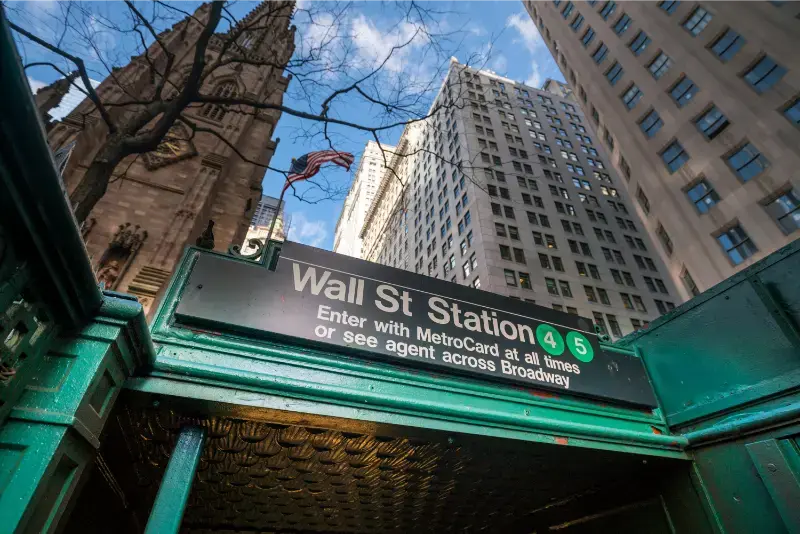
The M60 Select Bus Service is another option, particularly for uptown Manhattan connections, with an ordinary bus fare. These routes serve different starting points and can suit different hotel addresses. Do not choose between them merely by assuming every Manhattan destination begins at Times Square.
Allow for road conditions on the bus section and keep the terminal correct throughout the plan. If traveling with substantial luggage, examine the station-to-bus transfer as well as the travel time displayed by the app. The simplest usable route after a long flight can be worth more than saving a small amount through an additional change.
Newark: keep the two Penn Stations separate
Newark Liberty is in New Jersey. A rail journey toward Manhattan commonly involves AirTrain and NJ Transit, but the airport’s rail station, Newark Penn Station and New York Penn Station are different places. Read the whole itinerary and the destination on the ticket. PATH provides another New Jersey–Manhattan connection in some journeys, with its own fare.
The airport’s current guidance says Terminal A is not directly connected to AirTrain: a walk or shuttle links it with the AirTrain station. It also warns of temporary service disruptions during the replacement project, with shuttle arrangements when needed. Check the airport advisories close to travel rather than treating every published transfer time as unchanged.
Buy the appropriate through ticket when using the airport rail journey, and check what it includes before paying a separate AirTrain charge again. A normal NYC subway tap does not buy this entire transfer. Keep the return plan especially clear if leaving early or reaching the airport late, when the available connections may differ from the arrival trip.
Ferries: useful views, different tickets
NYC Ferry is a paid network with routes serving waterfront landings. Its current one-way fare is $4.50, with its own ticket system and transfer rules. A free transfer within that system is for an onward one-way journey within the stated period; it is not a free return sightseeing loop. Check the landing, direction and timetable before walking toward the river.
The Staten Island Ferry is a separate, free service between Lower Manhattan and St. George. It can provide an enjoyable harbor crossing, but it does not land on Liberty Island. If you want to visit the Statue of Liberty and Ellis Island, use the authorized islands ferry and the correct reservation instead.
A ferry is particularly appealing when the journey itself is part of the day. It may be less efficient for a destination several blocks inland, or when the next sailing leaves a long wait. In cool weather, allow for conditions while waiting at the landing. Read the actual route alerts; similar names and nearby piers do not make different ferry operators interchangeable.
Taxis, rideshares and trips that deserve a car
A taxi or booked car can be useful after a late evening, for a difficult luggage transfer or when the group needs a break. Compare the complete expected cost, vehicle capacity and pickup point. App quotes can change with demand, while metered journeys are affected by distance, slow traffic and applicable charges.
NYC’s Taxi and Limousine Commission currently lists a $70 yellow-taxi fare between JFK and Manhattan, plus applicable surcharges, tolls and tip. That is not an all-in airport price, and it does not describe JFK trips to every borough or journeys involving Newark. Airport pickup arrangements and charges need their own check before comparing a taxi with individual rail tickets for the group.
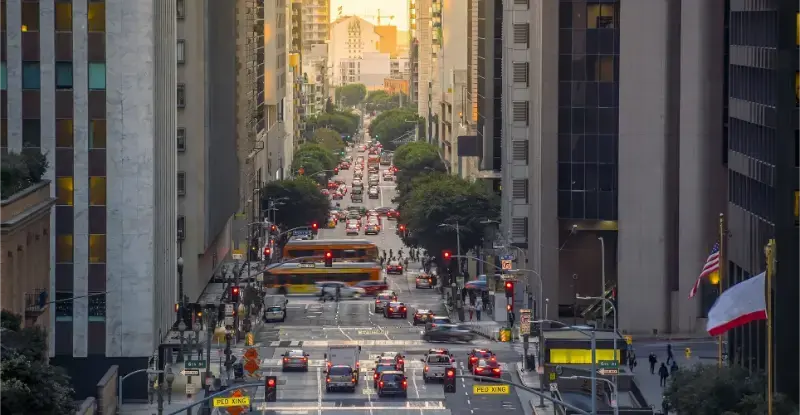
For most sightseeing stays, a rental car introduces parking and driving tasks without helping the central itinerary. A car may make sense for the next stage of a wider road trip, with collection timed for leaving the city. You can organize the New York portion around transit first and evaluate that separate journey on its own merits.
Accessibility, children and a comfortable pace
Check the complete step-free route and the live elevator status if stairs are a barrier. A station’s accessibility symbol does not guarantee that every entrance is usable or that an elevator is working today. A more straightforward bus journey can be a useful alternative when it fits the destination and the traveler’s needs.
Child fares use different rules on different systems. On MTA subways and the ordinary bus services listed in its guidance, up to three children under 44 inches tall can ride free with a fare-paying adult. Do not transfer that height rule automatically to a museum, AirTrain, commuter train or every boat. Our family guide helps with the wider choices.
Group the day’s walking within a district, then use transport between districts when it improves the trip. Keep bags manageable and leave yourself time to ask a station employee for help. Once you understand a few reliable routes from your base, the network becomes something that opens the city rather than another attraction you have to master.
Compare the options
| Choice | What it offers | Planning detail |
|---|---|---|
| Subway / local bus | Current ordinary fare $3 | Full-fare seven-day cap $35 on the same medium |
| JFK connection | AirTrain plus subway or LIRR | AirTrain is separate from the subway cap |
| LaGuardia connection | Free Q70 or paid M60 route | Select the correct terminal and transfer |
| Ferries / car trips | Different tickets and charging systems | Subway payment does not buy every journey |
Find your bearings
Open the map in a new tab · This is not a transit service diagram. Use current operator maps, service alerts and accessible-route information.
Estimate one seven-day transit period
This simple model assumes each paying traveler takes the same number of chargeable ordinary subway or local-bus rides, using their own consistent payment method within one cap period. Do not count eligible free transfers as another paid ride. The starting fare and cap are the published full-fare amounts checked for this guide; edit them if needed. Add airport trains, ferries, railroads, taxis and other group costs separately. It does not model express buses, reduced fares, group taps or more than one cap period.
Estimate = paying travelers × the smaller of (chargeable rides × fare) and the seven-day cap + separate group transport costs. For travelers with different ride counts or cap periods, calculate them separately. This is a budget estimate, not an OMNY payment or eligibility check.
Frequently asked questions
Does OMNY cap every transport expense?
No. The ordinary subway/local-bus cap does not include AirTrain, commuter rail, NYC Ferry, PATH or taxis.
Can the whole family earn a cap on one shared card?
Use separate payment methods for paying travelers. Group taps do not give everyone an individual capped entitlement on one card.
Is the Staten Island Ferry the boat for visiting Liberty Island?
No. It is a free crossing to St. George and does not land on Liberty Island. Island visits require the authorized ferry product.
Plan the next part of your trip
- Where to Stay in New York City: Best Areas for Every Trip
- 5 Days in New York City: The Perfect First-Time Itinerary
- New York City with Kids: Best Things to Do, Areas & Tips
- Statue of Liberty & Ellis Island Guide: Tickets, Ferries & How to Visit
Arrange your stay and activities
Some booking links below are affiliate links. We may earn a commission if you book through them.
Compare stays: New York CityBrowse tours and experiencesCompare rental cars
Match the location, meeting point and cancellation terms to your itinerary before booking.
Official sources and visitor information
- MTA: current subway and bus fares
- MTA: tap-and-ride payment and fare caps
- MTA: riding the subway and understanding routes
- MTA: JFK transit connections
- MTA: LaGuardia transit connections
- Port Authority: Newark AirTrain and terminal connections
- NYC Ferry: ticket types, prices and conditions
- NYC DOT: free Staten Island Ferry
- NYC Taxi and Limousine Commission: taxi fares and airport charges
Last updated: October 18, 2026.