

Destinations › Pacific USA › Washington State travel guide › Mount Rainier National Park Guide: 2026 Access, Paradise, Sunrise & Hiking
Mount Rainier looks close to Seattle on a map and enormous once you are under it. The park is organized around separate road corridors, not one central loop, and the famous subalpine areas of Paradise and Sunrise require different approaches. A first visit becomes much easier when you choose one side of the mountain per day.
For 2026 there is an important change from the timed-entry years: the National Park Service says no timed-entry reservation is required anywhere in Mount Rainier National Park. That does not remove congestion. Parking can still fill on peak days, so early starts, weekday visits and alternative areas remain practical tools.
Mount Rainier 2026 at a glance
| Timed entry 2026 | Not required |
| Best-known areas | Paradise and Sunrise |
| Ideal first visit | 2 nights / 1–2 full park days |
| Best season for high-country hiking | Usually July–September, snow dependent |
| Biggest planning issue | Parking, seasonal roads and changing mountain weather |
Understand Paradise and Sunrise before choosing a hotel
Paradise sits on the south side and is known for subalpine meadows, waterfalls, the Skyline Trail network and close glacier views. Sunrise, on the northeast side, is higher and opens later in many years because of snow. Driving between the two can consume a large part of a day, especially when roads are busy.
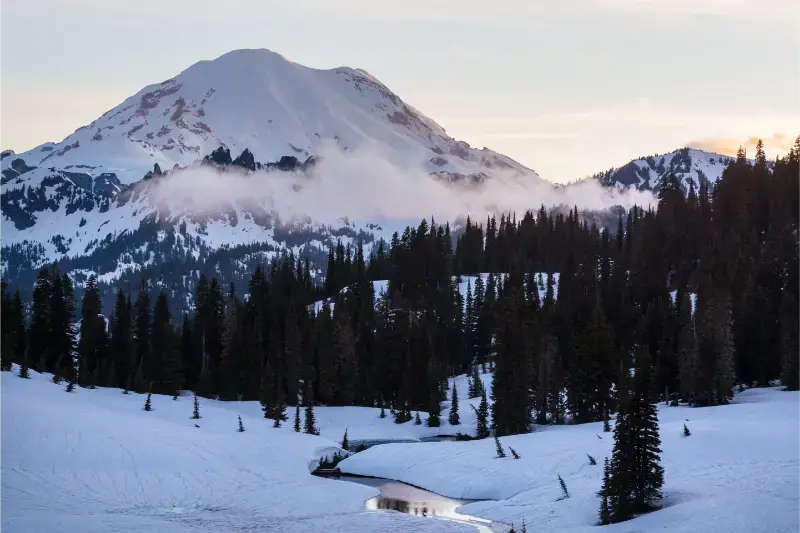
If you have one day, pick the side that best matches your route and current access. If you have two days, use one for Paradise and one for Sunrise or a less crowded corridor rather than rushing both into daylight hours.
The 2026 entry rule: no timed reservation, but arrive strategically
The National Park Service confirmed in February 2026 that timed-entry reservations will not be used this year. The park is instead using parking and traffic management. NPS recommends considering arrival before 7 a.m. or after 4 p.m. in busy summer periods, and weekdays are generally easier than weekends.
A no-reservation system does not mean unlimited parking. If a lot is full, turning circles and roadside searching waste time and create stress. Start early, have a second trail or picnic area in mind, and avoid treating one specific parking space as the only way the day can succeed.
Paradise: choose the hike for conditions, not reputation
Paradise offers the iconic Rainier experience, but snow can linger well into summer. The Skyline Trail is famous for a reason, yet its difficulty changes with snow, heat, crowds and your fitness. Shorter meadow loops and viewpoints can be more enjoyable for families or on a partial-weather day.
Stay on designated trails in fragile meadow areas. Wildflowers are not a reason to step off path for photographs. In a heavily visited alpine environment, responsible behavior is part of keeping the experience worth visiting.
Sunrise: a different mountain perspective
When the road is open, Sunrise provides broad east-side views, drier weather patterns and access to high-country trails. The season is shorter than lower park areas, so never assume late spring access from a generic Washington forecast.
Sunrise works particularly well on a North Cascades or central Washington route because you may avoid backtracking through the southwest side. Check road status the day before; mountain weather and construction can change access quickly.
Ohanapecosh and Grove of the Patriarchs corridor in 2026
Construction affects the Ohanapecosh developed area in 2026. NPS information notes that Ohanapecosh Campground and day-use parking are unavailable during the project period, while nearby access patterns and trailheads require checking before travel. This is a strong example of why old itineraries can be misleading.
If southeast Rainier is important, read current park construction notices rather than relying on a saved map pin. The broader corridor remains scenic, but your exact parking and trail plan should reflect the live status.
Hiking safety starts with turnaround time
Rainier creates its own weather. A clear morning can become cloud, wind or precipitation quickly, and snowfields can remain hazardous after nearby trails look dry. Carry layers, water and navigation appropriate to the route, and turn around when conditions or daylight reduce your margin.
For glacier travel or climbing above ordinary hiking routes, the skill and permit requirements change completely. Do not treat summit photographs as an extension of a day hike. Use ranger guidance and qualified instruction for technical objectives.
Where to stay near Mount Rainier
Compare available accommodation for your dates, budget and preferred location before you finalize your route.
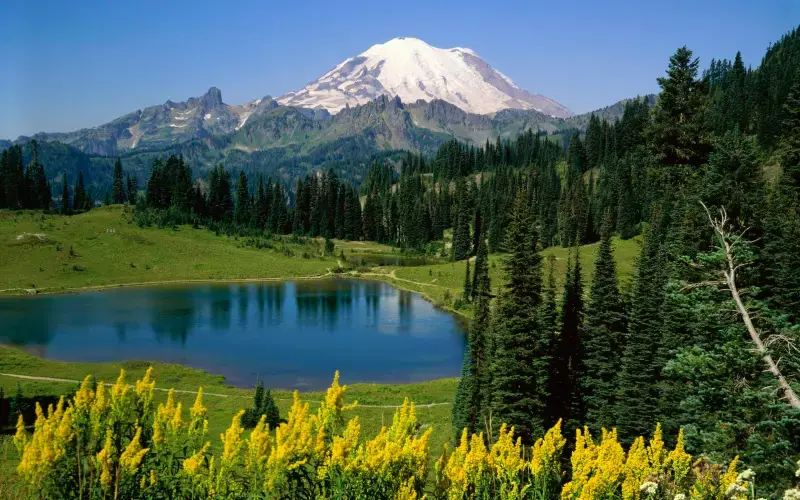
Ashford and the southwest approach are practical for Paradise. Packwood can work for the southeast side and road trips continuing toward Mount St. Helens or central Washington. Crystal Mountain/Greenwater can make more sense for Sunrise when access is open. There is no single “Mount Rainier hotel zone” that is ideal for every entrance.
Choose lodging by tomorrow morning’s trailhead. You can compare lodging around Mount Rainier on Booking.com, but inspect the map carefully: a property marketed as “near Rainier” may be much closer to one park corridor than another.
Should you day-trip from Seattle?
A Seattle day trip is possible, but it creates a long day and often places you in park traffic at the same time as everyone else. If Rainier is one of the main reasons for the trip, an overnight nearby gives you a better chance to hike early and adapt to weather.
If you do travel from Seattle, keep the plan simple: one major area, one main hike or scenic objective, and a conservative return. Do not add a second distant park entrance just because the map seems to show a loop.
A realistic two-day Rainier plan
- Night before: sleep near the entrance that matches Day 1.
- Day 1: Paradise early; choose Skyline or shorter meadow/waterfall routes based on conditions.
- Late Day 1: scenic pullouts or relaxed dinner rather than another long hike.
- Day 2: Sunrise when open, or a less crowded lower-elevation corridor if not.
- After Day 2: continue to Seattle, Yakima, Leavenworth or Mount St. Helens depending on the larger route.
Official sources to use
Check the Mount Rainier National Park website for alerts, roads, trails, fees and construction. For road approaches outside the park, use WSDOT real-time travel information. Recheck the morning of travel after storms or wildfire activity.
A better way to build this Washington trip
The strongest Rainier itinerary protects mornings. Sleep close enough to reach the chosen corridor before crowds peak, put the most weather-sensitive hike first, and leave the afternoon for shorter trails or viewpoints. This sequence works better than driving from Seattle, arriving at noon and hoping the best-known parking area still has space.
Keep a low-elevation alternative. If high cloud hides the mountain or snow makes your planned route unsuitable, waterfalls, forest walks and visitor areas can still deliver a valuable park day. A flexible plan prevents one weather forecast from deciding whether the entire visit feels successful.
Continue planning Washington State
Combine Rainier with Seattle, Mount St. Helens or the Washington road trip. Check the best time to visit Washington before locking high-country dates.
Build in realistic transition time
Washington itineraries are often underestimated because a map hides ferries, mountain passes, two-lane park roads, trailhead searches and urban traffic. Add a buffer between any two reservations that would be expensive to miss. On a normal sightseeing day, assume that a scenic drive will take longer than the navigation estimate because you will stop, walk, eat and wait for parking. On ferry days, treat the sailing schedule as a fixed anchor and everything after it as flexible. On mountain days, protect daylight and avoid planning a long drive after a strenuous hike. This extra margin is not wasted time: it is what allows a viewpoint, market, trail or meal to last long enough to feel like travel rather than a transfer.
What to reserve first
Reserve the hardest-to-replace part of this trip before ordinary accommodation or meals: limited ferry vehicle space, a permit-dependent overnight, scarce lodging next to a park, or an event weekend that compresses local inventory. Then build the route around that fixed point. Keep routine city nights and restaurant plans more flexible until weather-sensitive pieces are stable. This order reduces the chance that one attractive hotel rate forces an inefficient drive or that a tightly booked day becomes impossible when a ferry, road or trail condition changes. Before the cancellation deadline for each reservation, do one final route audit and confirm that the sequence still makes geographic sense.
Parking, weather and a better mountain-day strategy
Mount Rainier rewards an early, weather-aware plan. Cloud cover can hide the mountain even when lower trails are pleasant, while a clear morning can become hazier or stormier later. Check the park forecast and webcams before leaving your lodging, then choose a corridor rather than trying to cross the entire park in one day. At Paradise, Sunrise and popular trailheads, parking availability often becomes the practical limit long before the trail itself feels crowded. Carry food, water and an extra layer so a parking detour or longer-than-expected hike does not force an unnecessary return to the car. If visibility is poor at high elevation, use lower forest walks, waterfalls or a visitor-center stop instead of spending hours chasing a view that weather may not reveal.