

Destinations › Pacific USA › Washington State travel guide › Seattle Travel Guide: Neighborhoods, Waterfront, Ferries & a Smarter First Trip
Seattle works best when you stop treating downtown as the whole city. Pike Place Market, the waterfront and Seattle Center form an excellent first layer, but the character changes quickly in Capitol Hill, Ballard, Fremont, Queen Anne, the Central District and West Seattle. The city’s hills, water and neighborhood geography make a compact-looking map surprisingly varied.
For most visitors, three nights is the sweet spot before or after a Washington road trip. You can see the core without a car, use Link light rail from the airport, and add a ferry ride or neighborhood evening without losing half a day to parking. Pick up a rental car only when you leave for national parks.
Seattle at a glance
| Ideal first stay | 3 nights / 2 full days |
| Car needed? | No for a city-only stay; often a disadvantage downtown |
| Best first-time areas | Downtown/Pike Place, Lower Queen Anne, Capitol Hill |
| Easy scenic add-on | Bainbridge ferry or West Seattle waterfront |
| Best role in a WA trip | Arrival/departure city plus 2–3 urban days |
Start at Pike Place Market, but arrive with a plan
Pike Place Market is worth visiting because it is a working public market with food businesses, crafts, produce, fish, flowers and layers of history—not because of one photo at the sign. Go early enough to watch the market wake up, then wander the lower levels and surrounding streets instead of standing only at the most crowded entrance.
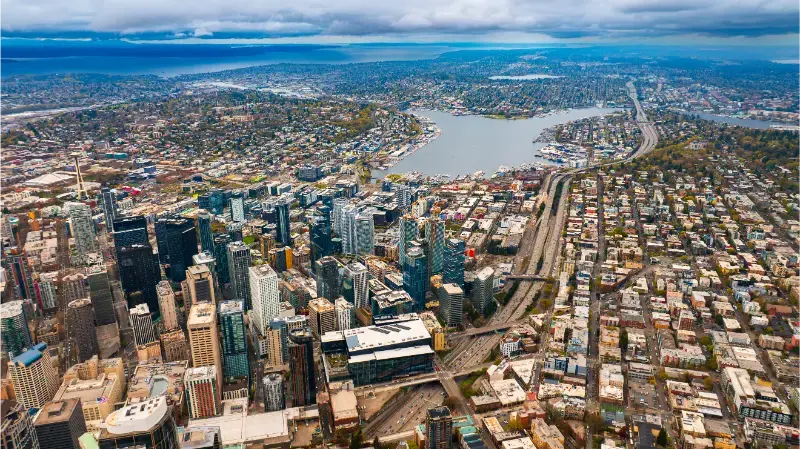
In 2026 Seattle continues to manage vehicle access around the Market with a pedestrian-focused pilot. That is another reason not to drive into the core. Walk from your hotel or use transit, then connect the Market naturally to the waterfront rather than treating it as an isolated attraction.
Use the rebuilt waterfront as a walking spine
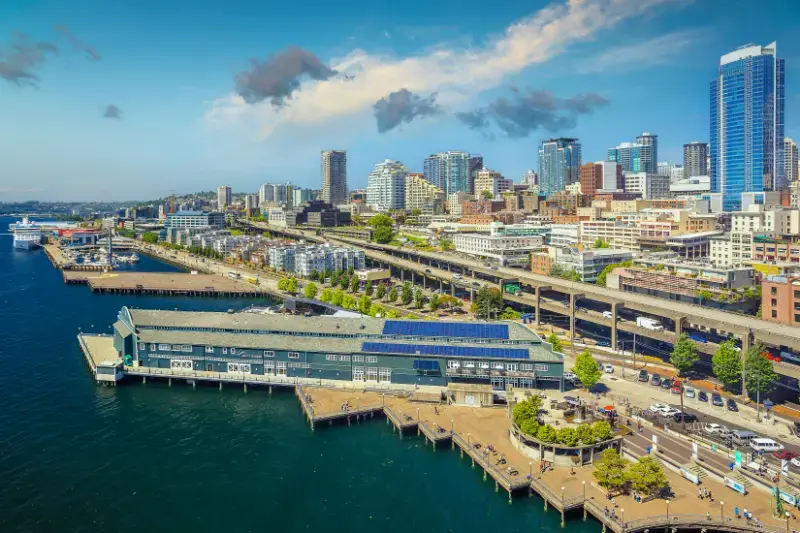
Seattle’s central waterfront has changed substantially in recent years, with new public spaces reconnecting downtown to Elliott Bay. Use it as a route: Pike Place above, piers and views below, Pioneer Square to the south, and Seattle Center reachable by a separate northbound link through downtown.
A waterfront hour can be free and flexible, which makes it ideal between timed reservations. Weather matters less than many visitors assume; low cloud can hide distant mountains but still create dramatic ferry and harbor views.
Seattle Center deserves more than a Space Needle photo
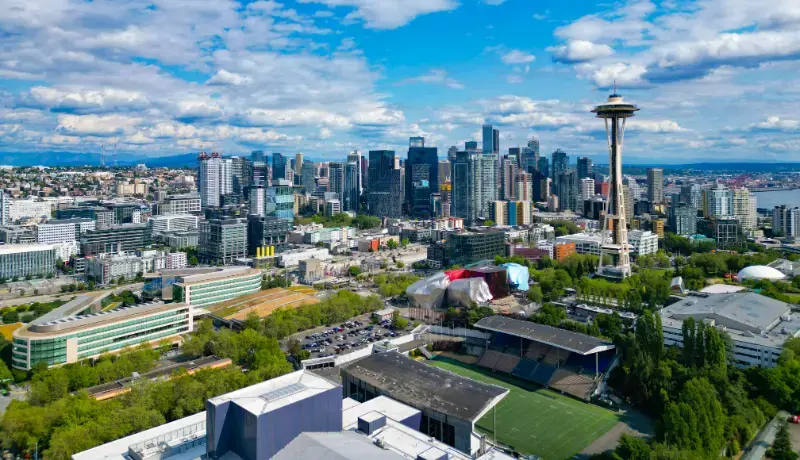
Seattle Center concentrates the Space Needle, Museum of Pop Culture, Chihuly Garden and Glass and other cultural venues. You do not need to visit everything. Choose one paid attraction that genuinely interests you, then use the public grounds, International Fountain and Lower Queen Anne for the rest of the block.
If you want a skyline view, compare the Space Needle with other viewpoints before buying multiple observation tickets. The best city experience is rarely improved by paying for every tall structure.
Choose neighborhoods by what you want after 5 p.m.
Capitol Hill suits visitors who want restaurants, nightlife and excellent transit. Ballard offers a maritime feel, breweries, restaurants and the Locks, but is less convenient for a short first trip without planning. Queen Anne combines residential streets with Seattle Center access. Pioneer Square is historic and close to stadiums; West Seattle gives a beach-town perspective across Elliott Bay.
This is why hotel location matters more than a small nightly price difference. A cheap room that forces rideshares for every dinner can cost more in money and time than a better-located stay. You can compare Seattle accommodation on Booking.com and then judge each property by transit and walking geography, not only star rating.
Ride a ferry even if the ferry is the activity
The Seattle–Bainbridge route is one of the easiest ways to experience Puget Sound without turning the day into a complicated island itinerary. Walk-on passengers do not need a vehicle reservation, and the crossing offers skyline, water and—on clear days—mountain views.
If you continue beyond Bainbridge, research the return schedule and ground transport. If your purpose is simply the ride, allow time for a short walk and coffee on the island, then return. Do not schedule the last feasible ferry before an airport transfer.
Explore Seattle without a car
Link light rail connects Seattle-Tacoma International Airport with central Seattle and continues through major neighborhoods. King County Metro fills in the gaps, while streetcars, ferries and water taxis add useful local connections. Seattle tourism guidance explicitly encourages car-free city visits.
An ORCA card can simplify paying across several regional transit services. Walking is practical inside individual neighborhoods, but hills matter: a route that looks short can include a steep climb. Use transit uphill and walk downhill when that improves comfort.
Build a food plan around neighborhoods, not viral restaurants
Seattle’s food identity is broader than salmon and coffee. Asian communities, seafood, bakeries, teriyaki, craft beer and seasonal Pacific Northwest ingredients are spread across the city. Instead of crossing town for every social-media recommendation, choose meals near the neighborhood you are already exploring.
Pike Place is excellent for grazing, the Chinatown-International District adds depth and history, Ballard works well for an evening, and Capitol Hill provides dense late-day options. Reservations help for a specific high-demand restaurant, but a flexible meal is often better than building the entire sightseeing day around one table.
Add one park or viewpoint that changes the scale
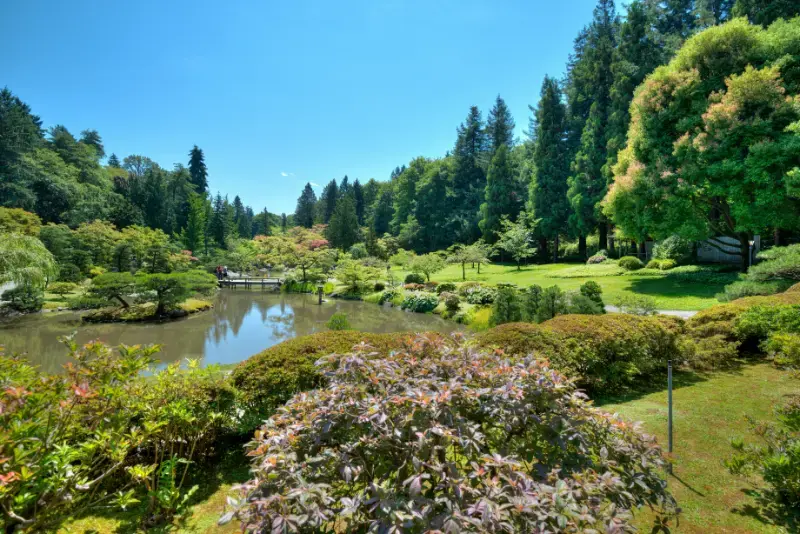
Kerry Park is famous because it compresses skyline and Mount Rainier into one classic view when conditions cooperate, but it is tiny. Discovery Park, Gas Works Park, Volunteer Park, Alki and the waterfront offer different relationships to water and city. Choose one based on route rather than collecting viewpoints.
The key variable is visibility. Do not postpone everything waiting for a perfectly clear Rainier view; the mountain can appear suddenly after hours of cloud, and the city is still worth exploring when it does not.
Plan day trips only after protecting Seattle time
Mount Rainier, Olympic and the San Juans are not efficient “quick day trips” if your goal is to experience them properly. They deserve their own nights on a Washington road trip. Better Seattle-based excursions include Bainbridge, Snoqualmie-area stops, Woodinville or a focused guided outing when you truly have extra time.
Use the city as a gateway, not as a hotel you commute back to from every national park. The state becomes much easier when you move bases.
Two-day first-timer itinerary
- Day 1 morning: Pike Place Market and waterfront.
- Day 1 afternoon: Pioneer Square or a downtown museum; evening in Capitol Hill.
- Day 2 morning: Seattle Center plus one paid attraction.
- Day 2 afternoon: Ballard, Fremont or a Bainbridge ferry depending on interests and weather.
- Day 2 evening: neighborhood dinner rather than another downtown checklist stop.
Useful official planning sources
Use Visit Seattle for current visitor information, Sound Transit for Link service and Washington State Ferries for ferry schedules and service alerts. Check event calendars before booking because major sports, conventions and festivals can change hotel pricing and transit demand.
A better way to build this Washington trip
If Seattle is the start of a road trip, separate the city and driving phases. Spend the first two or three nights car-free, then collect the rental vehicle on departure morning. This keeps parking out of the city budget and reduces the temptation to drive short distances that are easier by transit.
Protect one unscheduled block. Seattle weather and visibility can change quickly, and a free two-hour window lets you move a park, viewpoint or ferry ride to the moment when it will work best. That flexibility is more valuable than a minute-by-minute attraction list.
Continue planning Washington State
Pair Seattle with Olympic National Park, Mount Rainier or the San Juan Islands. For the bigger picture, see best places in Washington and the 14-day road trip.
Build in realistic transition time
Washington itineraries are often underestimated because a map hides ferries, mountain passes, two-lane park roads, trailhead searches and urban traffic. Add a buffer between any two reservations that would be expensive to miss. On a normal sightseeing day, assume that a scenic drive will take longer than the navigation estimate because you will stop, walk, eat and wait for parking. On ferry days, treat the sailing schedule as a fixed anchor and everything after it as flexible. On mountain days, protect daylight and avoid planning a long drive after a strenuous hike. This extra margin is not wasted time: it is what allows a viewpoint, market, trail or meal to last long enough to feel like travel rather than a transfer.
What to reserve first
Reserve the hardest-to-replace part of this trip before ordinary accommodation or meals: limited ferry vehicle space, a permit-dependent overnight, scarce lodging next to a park, or an event weekend that compresses local inventory. Then build the route around that fixed point. Keep routine city nights and restaurant plans more flexible until weather-sensitive pieces are stable. This order reduces the chance that one attractive hotel rate forces an inefficient drive or that a tightly booked day becomes impossible when a ferry, road or trail condition changes. Before the cancellation deadline for each reservation, do one final route audit and confirm that the sequence still makes geographic sense.