

Destinations › Pacific USA › Washington State travel guide › Washington State Road Trip: A Realistic 14-Day Seattle, Parks & Islands Itinerary
A good Washington road trip is a loop built around geography, not a list of famous places sorted by popularity. Ferries, mountain passes and the Olympic Peninsula can create hidden backtracking if you book hotels before drawing the route. This 14-day plan uses Seattle, Olympic National Park, Mount Rainier, Leavenworth, North Cascades and the San Juan Islands in an order that keeps most days focused on one corridor.
The itinerary is intentionally not packed with every possible destination. It leaves room for weather, ferry delays, hikes and scenic stops. You can remove the San Juans for more hiking, remove Leavenworth for a slower coast, or shorten the route to ten days by choosing only two of Washington’s three national-park regions.
- 1Days 1–2: Seattle without a rental car
- 2Day 3: This clean split between city and road trip makes the logistics simpler and reduces th…
- 3Days 3–5: Olympic Peninsula
- 4Day 4: move toward the west side for rainforest and beach time
- 5Day 5: can continue through Kalaloch/Quinault and south toward the Rainier corridor
- 6Days 6–7: Mount Rainier
- 7Day 8: cross to Leavenworth
- 8Day 9: Leavenworth and Icicle Creek
- 9Days 10–11: North Cascades and Methow Valley
- 10Days 12–13: San Juan Islands
- 11Day 13: becomes your full island day for hiking, kayaking, cycling or wildlife viewing
- 12Day 14: ferry back and Seattle departure buffer
14-day Washington road trip at a glance
| Start/end | Seattle |
| Core route | Seattle → Olympic → Rainier → Leavenworth → North Cascades → San Juans → Seattle |
| Best season | Generally summer to early fall for full high-road access |
| Driving style | Multiple two-night bases; no daily hotel changes |
| Reservation priorities | Park lodging, San Juan vehicle ferry, peak Leavenworth weekends |
Days 1–2: Seattle without a rental car
Use the first two days for Pike Place Market, waterfront, Seattle Center and one or two neighborhoods. Staying car-free avoids parking costs and lets you recover from travel before driving mountain roads.
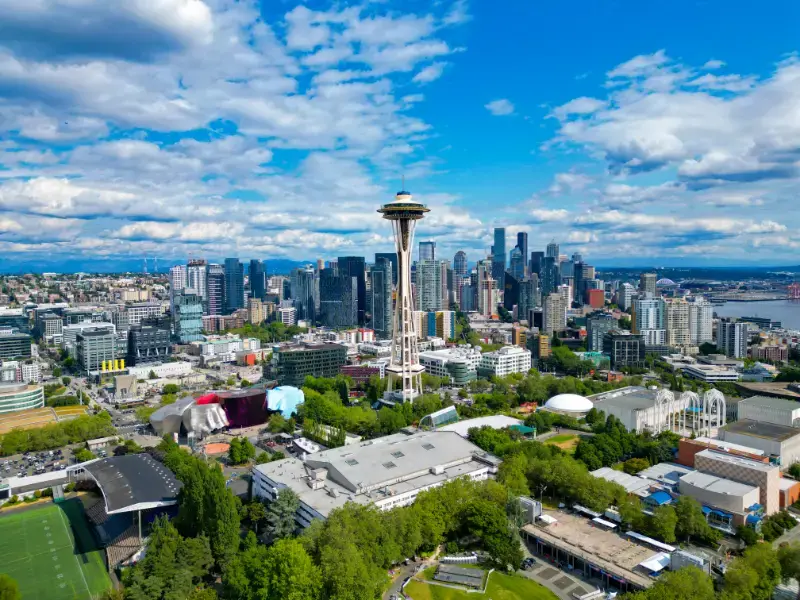
Collect the rental car on the morning of Day 3. This clean split between city and road trip makes the logistics simpler and reduces the risk of paying for an unused vehicle.
Days 3–5: Olympic Peninsula
Travel to Port Angeles via the route that best fits ferry schedules, then use Hurricane Ridge and Lake Crescent for the north side. On Day 4 move toward the west side for rainforest and beach time. Day 5 can continue through Kalaloch/Quinault and south toward the Rainier corridor.
Three days is still a highlights visit. If Olympic is your main priority, add a night here and remove a later destination instead of trying to see every peninsula region in a rush.
Days 6–7: Mount Rainier
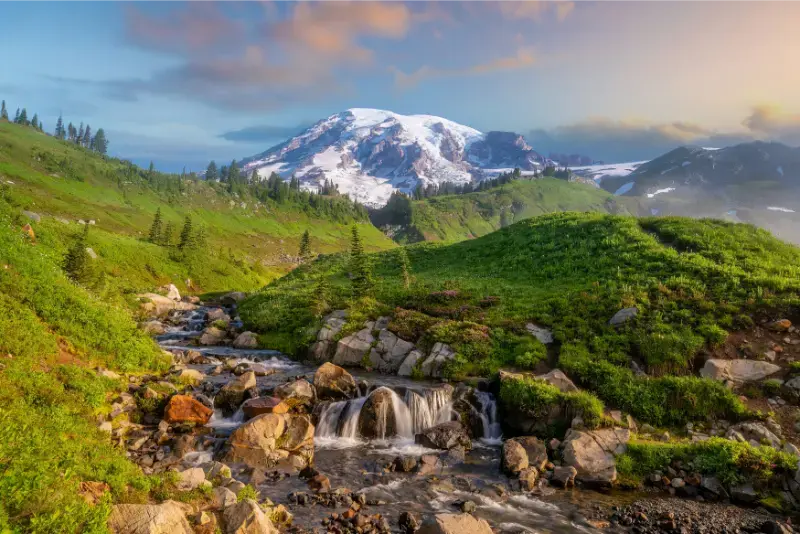
Base near the side you plan to use. Put Paradise or Sunrise first in the day, when parking and weather are often more manageable, and keep the second day flexible for another corridor or shorter hikes.
In 2026 no timed-entry reservation is required, but congestion still exists. An overnight near the park is what makes these two days feel like a national-park stay rather than a long Seattle commute.
Day 8: cross to Leavenworth
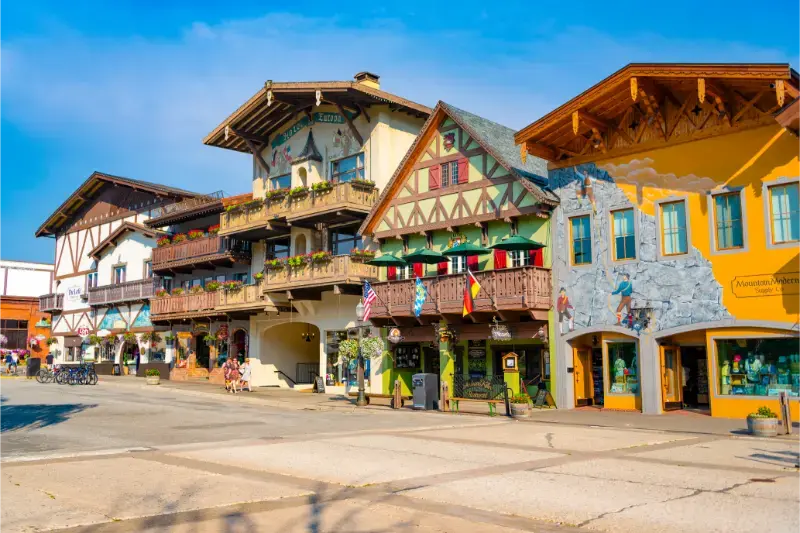
Use the transfer as a scenic day rather than stacking another major hike. Exact routing depends on the Rainier side, road conditions and your season. Arrive in Leavenworth with enough time to walk the center and eat without pressure.
This is the itinerary’s transition from wetter western Washington to the drier east side of the Cascades. The change in landscape is part of the experience.
Day 9: Leavenworth and Icicle Creek
Choose one outdoor anchor—a trail, river activity or winter alternative depending on season—then use the evening for town. Avoid turning a rest day into another long-distance drive.
If high-country access is poor, the river corridor and lower trails still provide a worthwhile day. This flexibility is why Leavenworth works as a buffer between larger park blocks.
Days 10–11: North Cascades and Methow Valley
When Highway 20 is open, continue through the North Cascades corridor toward Diablo Lake, Washington Pass and Winthrop/Mazama. Use one day for the scenic crossing and the next for a hike selected from current trail and smoke conditions.
If Highway 20 is closed, do not force the loop. Replace this block with Whidbey/Bellingham, more Olympic time or an eastern route that matches winter conditions.
Days 12–13: San Juan Islands
Drive to Anacortes and use a reserved vehicle sailing if taking the car. Choose San Juan, Orcas or Lopez rather than trying to sleep on multiple islands. Day 13 becomes your full island day for hiking, kayaking, cycling or wildlife viewing.
The islands deliberately slow the itinerary near the end. After ten days of roads and mountains, one base with water views and no long transfer can be the part of the trip you remember most.
Day 14: ferry back and Seattle departure buffer
Return from the islands with a generous schedule buffer. If your flight is early or long-haul, consider sleeping in Seattle the previous night instead of trusting a same-day ferry and interstate drive.
If you have a late flight, the final day can include a short waterfront stop, but do not build a chain of nonrefundable activities after the ferry.
Where to shorten this itinerary
- 10 days: Seattle + Olympic + Rainier + one of North Cascades or San Juans.
- 12 days: keep all regions but make Leavenworth one night and one of the park blocks shorter.
- 7 days: Seattle + one national park + one contrasting region such as San Juans or Leavenworth.
- Winter: remove North Cascades Highway and high-country assumptions; build around Seattle, Leavenworth and lower-elevation/coastal travel.
Booking order for the road trip
- 1. San Juan vehicle ferry if you need the car on the island.
- 2. Hard-to-replace park-area or island lodging.
- 3. Leavenworth/event weekends.
- 4. Rental car with cancellation flexibility.
- 5. Ordinary Seattle nights and flexible meals.
Navigation and road strategy
Use WSDOT real-time information for passes, closures and ferry approaches. Download offline maps before mountain regions and do not let the navigation app override an official seasonal closure. Fuel before remote corridors and keep water and food in the car for long transfer days.
A better way to build this Washington trip
This route works because the trip alternates intensity. City days lead into a multi-day park, then a mountain town, then another park corridor, then slower islands. Resist the urge to fill every transfer with a major attraction. Washington scenery appears along the drive, and arriving with energy is more valuable than checking one more pin.
If weather turns against one region, simplify rather than overcorrect. A smoky North Cascades forecast might justify more island or Olympic time; a marine storm might shift island activities toward town. The best road trip is robust enough that one closure changes a day, not the whole vacation.
Continue planning Washington State
Use the detailed guides for Seattle, Olympic, Mount Rainier, North Cascades, Leavenworth and San Juan Islands while booking each segment.
Build in realistic transition time
Washington itineraries are often underestimated because a map hides ferries, mountain passes, two-lane park roads, trailhead searches and urban traffic. Add a buffer between any two reservations that would be expensive to miss. On a normal sightseeing day, assume that a scenic drive will take longer than the navigation estimate because you will stop, walk, eat and wait for parking. On ferry days, treat the sailing schedule as a fixed anchor and everything after it as flexible. On mountain days, protect daylight and avoid planning a long drive after a strenuous hike. This extra margin is not wasted time: it is what allows a viewpoint, market, trail or meal to last long enough to feel like travel rather than a transfer.
What to reserve first
Reserve the hardest-to-replace part of this trip before ordinary accommodation or meals: limited ferry vehicle space, a permit-dependent overnight, scarce lodging next to a park, or an event weekend that compresses local inventory. Then build the route around that fixed point. Keep routine city nights and restaurant plans more flexible until weather-sensitive pieces are stable. This order reduces the chance that one attractive hotel rate forces an inefficient drive or that a tightly booked day becomes impossible when a ferry, road or trail condition changes. Before the cancellation deadline for each reservation, do one final route audit and confirm that the sequence still makes geographic sense.
Budget, fuel and lodging geography
A Washington road trip can become expensive when every night is booked in the most famous gateway town. Use geography to control the budget instead. Spend more where location genuinely saves hours—an island night tied to a ferry, a park gateway before an early hike, or a room that prevents a long mountain commute—and save on ordinary city or transfer nights. Fuel prices and availability vary, so refill before remote peninsula, mountain or island stretches rather than waiting for the gauge to become urgent. A cooler and a few simple groceries can also reduce both cost and lost time on park days, when leaving a corridor for lunch may mean giving up a parking space.
Rental car and ferry strategy
Do not collect a rental car earlier than you need it if your first Seattle days are fully urban, but once the road trip begins, make sure the rental agreement allows the mileage and geography you plan to cover. For the San Juans, decide whether the car is actually useful on your chosen island. Taking it provides flexibility but makes ferry reservations and vehicle loading part of the schedule; walking on removes that constraint but may require shuttles, bikes or tours after arrival. Whichever option you choose, keep the final ferry day lightly booked so a delay does not threaten a flight or a nonrefundable attraction.