

Choosing a New York observation deck is really choosing how you want to see the city. From Midtown, the buildings seem to gather around you. From Lower Manhattan, the harbor and rivers give the view a wider shape. A mirrored room can make the visit feel like an installation, while an open terrace makes wind and distance part of the experience.
For a first trip, one carefully chosen deck is often enough. Top of the Rock is a strong starting point if you want the Empire State Building within the skyline. The Empire State Building is the choice when being inside that particular landmark matters most. SUMMIT, Edge and One World Observatory offer other perspectives and visiting styles. The best match depends on the view, the people visiting and the rest of the day’s route.
Top of the Rock: a classic Midtown skyline with room to look
Top of the Rock sits within Rockefeller Center, giving it a useful place in a Midtown day. The Empire State Building is part of the view rather than the building beneath your feet, and Central Park provides another direction to explore. That combination is particularly appealing when the photograph in your mind includes the familiar Midtown towers together.
The experience spans three viewing floors, with different vantage points and outdoor space. Move around before settling on the first busy photograph location. You may find the city’s layout becomes clearer when you look toward the park, then turn south and trace the avenues. A few minutes without the phone can be as satisfying as the picture you came to take.
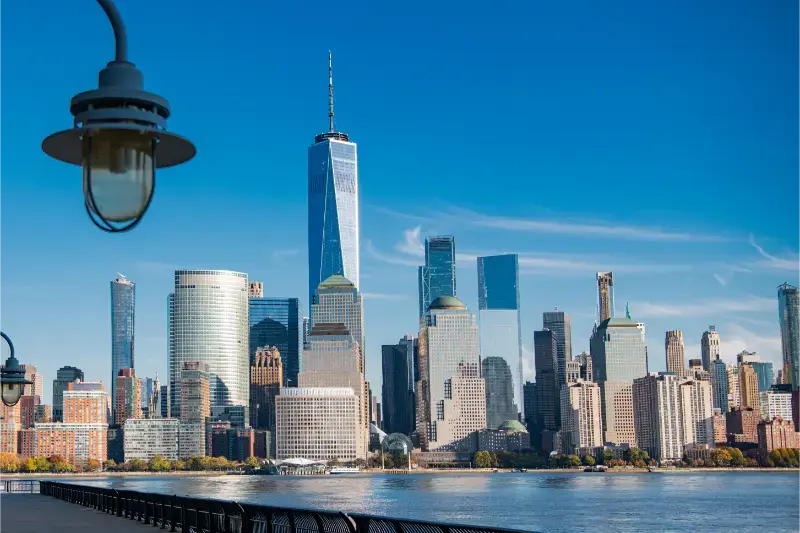
The operator’s current basic timed admission starts at $42. Its All-Inclusive Pass adds The Beam and SKYLIFT, which are distinct experiences rather than features to assume are included in the cheapest ticket. Check their suitability and restrictions for the people traveling. Choose ordinary viewing if that is what interests you; paying for extra movement above the deck is optional.
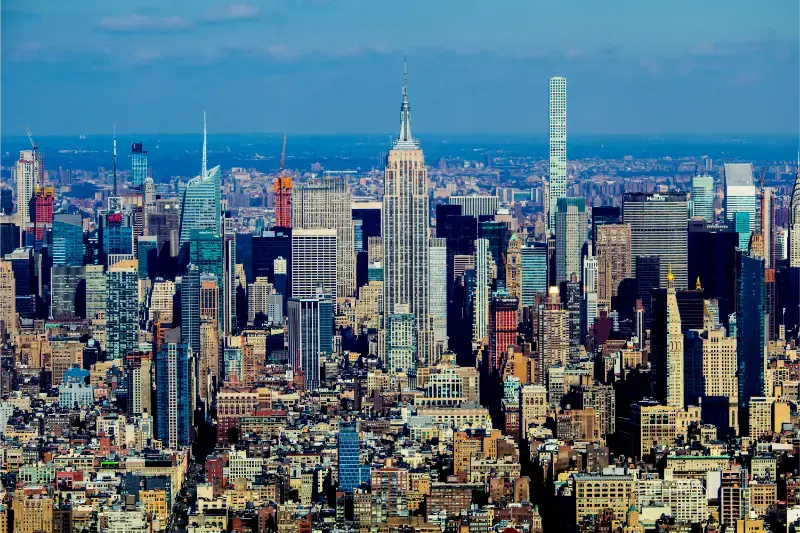
Use the entrance on 50th Street between Fifth and Sixth Avenues and the instructions on the reservation. Rockefeller Center is a larger complex, so allow time to reach the correct door. The deck can pair naturally with a Midtown walk, but keep a theater curtain or another fixed booking far enough away to enjoy the view without watching the clock.
Empire State Building: visit the landmark as well as the view
The Empire State Building suits travelers for whom its history and identity are part of the reason for going up. The exhibitions and journey through the building give the visit a narrative before the skyline opens. It is a different pleasure from looking at the tower from another deck, and a reasonable reason to choose it even if another viewpoint offers the photograph you first imagined.
The 86th-floor observatory is the familiar open-air main deck. The 102nd-floor observatory is an enclosed higher viewpoint, sold through the appropriate ticket option. Compare the floors actually included before choosing a price. A general mention of an Empire State Building visit does not establish that both levels are part of the purchase.
At the main deck, look in several directions and notice the city’s changing density. At night, the illuminated streets and buildings offer another way of reading the same space. Remember that the Empire State Building itself will not appear in your outward panorama. If seeing its entire silhouette is the main photographic goal, another deck may be more suitable.
The official visitor entrance is at 20 West 34th Street. Use current opening hours and allow for the exhibitions, security and elevator sequence. For a family, decide whether adding the higher enclosed level improves the experience enough to justify its cost. The most expensive package is not automatically the most enjoyable choice for every visitor.
SUMMIT One Vanderbilt: reflections and skyline together
SUMMIT blends the outside view with immersive art and reflective spaces. Its mirrored floors and ceilings change the sense of scale, so the visit involves more than standing beside a window. This can appeal strongly to travelers interested in the visual experience itself, while someone seeking a quiet, straightforward panorama may prefer another setting.
The route includes several environments across three main visiting levels, with installations, glass ledges and a terrace. Let the group look at the surroundings before concentrating on a particular photo pose. The famous images online cannot show how each person will feel about reflections, brightness or looking down through glass.
Read the practical guidance before dressing for the day. SUMMIT recommends sunglasses because the reflective setting can be bright, and clothing that accounts for mirrored floors. Footwear that could damage the surfaces is restricted. These details are worth resolving before arrival rather than discovering them at the entrance after a long sightseeing morning.
Ascent is an additional glass-elevator experience to evaluate through the current ticket description. Do not assume that an image of it means every admission includes it. The entrance is through the Grand Central transit-hall area or the indicated doors at One Vanderbilt; the building’s main lobby is not the SUMMIT entrance. This location pairs well with Grand Central and the eastern side of Midtown.
Edge: the western city, an outdoor platform and new indoor rooms
Edge is at Hudson Yards on Manhattan’s west side. Its projecting outdoor platform, angled glass and glass-floor section give the height a direct physical presence. The position also makes the Hudson River a more prominent part of the experience than it is from some central-Midtown viewpoints.
The current 2026 visit includes seven immersive indoor installations as well as the indoor viewing areas and outdoor deck. Older descriptions that present Edge only as an elevator ride to a terrace leave out part of the current product. If those installations interest you, give them attention rather than treating them as obstacles on the way to one photograph.
The website currently advertises general admission from $42, with a $2 processing fee added to tickets. Read the checkout total and the chosen date, since a starting price does not describe every slot or any applicable additional charges. Flexible and priority products provide different arrival arrangements at a higher price; compare what problem the upgrade would actually solve for your day.
The outdoor platform can close temporarily in severe weather while indoor experiences remain available. That distinction matters if the open-air deck is the main reason for your purchase. The separately ticketed Marquee Skydeck nightlife program is another product, with its own access and conditions. A standard sightseeing ticket should not be treated as admission to an evening club event.
One World Observatory: a Lower Manhattan and harbor perspective
One World Observatory gives the city a different center. From the southern end of Manhattan, the rivers, harbor, bridges and surrounding districts become part of a broad view. It is particularly useful if you want to understand the shape of the island after exploring its lower streets and waterfront.
The observatory occupies levels 100, 101 and 102, with the viewing experience inside the building. This can be comfortable when an exposed terrace is less appealing, though glass does not remove the effect of fog or cloud outside. An indoor visit protects the setting, not the visibility of a landmark hidden in weather.
Use the observatory entrance information for the corner of West and Vesey Streets. One World Trade Center, the nearby 9/11 Memorial and the 9/11 Museum are separate places and admissions. The observatory is not part of the Memorial and Museum. If both are important, allow the time and emotional space each visit deserves rather than treating one as a ticket upgrade for the other.
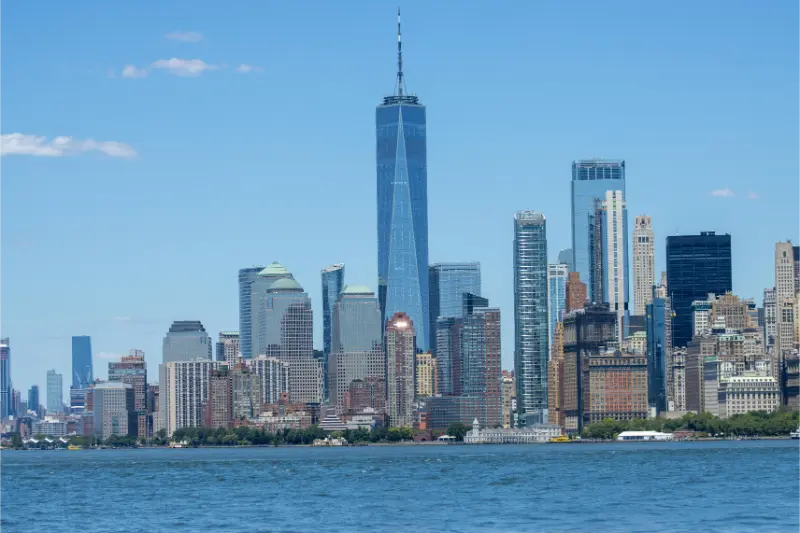
The operator describes a poor-visibility commitment alongside its general ticket conditions. Read its actual terms before buying; it is not a general promise of a cash refund whenever the view disappoints. Dining, digital guides and priority options also need their own comparison with the basic viewing ticket.
Daylight, sunset or after dark
Daylight is useful for understanding geography: the rivers, bridges, park shapes and the districts stretching into the distance. Sunset can offer changing light and the first illuminated windows, but it is also a popular period. Build in entry and elevator time rather than assuming the moment printed on the ticket is the moment you will reach your chosen railing.
After dark, the city becomes a pattern of lights. That can be beautiful without showing distant details as clearly as daytime does. Indoor glass can produce reflections in photographs, while outdoor decks introduce wind and different camera-handling conditions. Choose the time for the experience you want, not only for a picture taken by someone with different weather and equipment.
Look up the sunset for your actual date before comparing time slots. A summer booking and a December booking at the same hour create different experiences. Keep the meal around it straightforward, so the transition you wanted to watch is not interrupted by worrying about another reservation.
Compare the total for the people visiting
Gather quotes for the same date, party and type of access. Include mandatory fees, any sunset supplement and the specific extras you intend to use. Child and senior bands differ between operators. A higher advertised base price can still produce a different final comparison once the actual tickets are selected.
The comparison tool below accepts complete group quotes for up to three options, with a separate total for extras you have not already included. It does not search live prices or assume that every pass covers the same floors. A sightseeing pass needs its own check for reservations, upgrades and exclusions before it can be compared with direct tickets.
If considering two decks, choose a meaningful contrast: perhaps an outdoor Midtown view and a southern indoor view, or a historic landmark and an immersive experience. Two neighboring viewpoints at similar times can feel repetitive. Spend the second admission only when its perspective or visiting style adds something you actually want.
Make the visit comfortable
Discuss the route with the operator if someone needs assistance or has a sensory concern. A building being accessible does not establish the suitability of every optional ride or glass-floor feature. Children and adults can enjoy a panorama without participating in every height-focused photograph or add-on.
Check bag rules before combining the visit with shopping or an airport journey. Several operators restrict large luggage, and a ticket does not promise a storage facility. Leave time for security and keep the rest of the day in the same part of the city where possible. The five-day itinerary provides a few useful pairings; the view is easier to enjoy when reaching it is the day’s main plan for that interval.
Compare the options
| Choice | What it offers | Planning detail |
|---|---|---|
| Top of the Rock | Midtown skyline with Empire State in view | Basic viewing differs from Beam / SKYLIFT products |
| Empire State Building | The landmark and open-air 86th floor | 102nd-floor access requires the appropriate ticket |
| SUMMIT | Reflective art environments and skyline | Dress guidance and separate Ascent comparison |
| Edge | West-side platform plus new indoor installations | Outdoor access remains weather-dependent |
| One World | Lower Manhattan and harbor perspective | Indoor viewing; separate from the 9/11 Museum |
Find your bearings
Open the map in a new tab · General Manhattan orientation; use the selected observatory’s entrance directions and your booked ticket.
Compare up to three observation-deck quotes
Collect complete U.S. dollar quotes for the same travelers and intended dates. Include mandatory charges in the ticket figure and enter only optional purchases not already included as extras. Label your choices A, B and C in your notes; an unused zero option is not a confirmed free admission. This compares alternatives and does not check reservations, weather, pass eligibility or live prices.
Alternative A = group ticket quote A + its additional extras. B and C use their own quotes and extras in the same way. Do not enter a fee both in the complete quote and again as an extra; each alternative is separate, not part of a combined itinerary total.
Frequently asked questions
Which deck puts the Empire State Building in the skyline?
Top of the Rock is a useful first comparison for that view. Visiting the Empire State Building itself provides a different experience.
Are Edge and its nightlife program the same admission?
No. Marquee Skydeck is a separate ticketed nightlife experience with its own conditions.
Does an indoor observatory guarantee a clear panorama?
No. It shelters the visit, but fog, cloud and other outside conditions still affect visibility.
Plan the next part of your trip
- 5 Days in New York City: The Perfect First-Time Itinerary
- Best Time to Visit New York City: Month-by-Month Guide
- New York City with Kids: Best Things to Do, Areas & Tips
- Getting Around New York City: Subway, OMNY, Ferries, Taxis & Airports
Arrange your stay and activities
Some booking links below are affiliate links. We may earn a commission if you book through them.
Compare stays: New York CityBrowse tours and experiencesCompare rental cars
Match the location, meeting point and cancellation terms to your itinerary before booking.
Official sources and visitor information
- Rockefeller Center: Top of the Rock ticket levels
- Empire State Building: official ticket and visitor FAQ
- SUMMIT One Vanderbilt: route, entrance and visitor guidance
- Edge: current experiences and ticket products
- Edge: weather, access and separate nightlife admission
- One World Observatory: access, ticket conditions and FAQ
Last updated: October 18, 2026.