

Destinations › Pacific USA › Washington State travel guide › Best Time to Visit Washington State: Weather, Parks, Wildflowers, Larches & Coast
There is no single best month for all of Washington because the state changes climate on opposite sides of the Cascades. Seattle and the Olympic Peninsula can be cool and marine while Yakima or Walla Walla are hot and dry; mountain roads can hold snow after lowland spring has fully arrived. The useful question is which experience you want to optimize.
For a first road trip linking all three national-park regions, July through September is generally the easiest window for high-country access, but it is also the busiest period and late-summer wildfire smoke can disrupt plans. Spring favors waterfalls and green lowlands; October can be excellent for larches and shoulder-season cities; winter is a completely different trip built around snow, coast storms and urban travel.
Washington seasons at a glance
| Best for full mountain road trips | July–September, conditions permitting |
| Best for waterfalls/green lowlands | Spring |
| Best for golden larches | Usually early to mid-October, elevation/weather dependent |
| Best for snow + Leavenworth winter atmosphere | December–February |
| Big summer wildcard | Wildfire smoke and heat east of Cascades |
March–May: green lowlands, strong waterfalls, snowy mountains
Spring is excellent for Seattle, gardens, lower-elevation hikes and waterfalls. The western side becomes lush, daylight grows quickly and peak summer crowds have not arrived. The trade-off is mountain access: high trails and roads can remain snowbound long after cities feel like spring.
Olympic rainforest and coast can be atmospheric, but expect rain and cool temperatures. North Cascades Highway may not yet be open early in the season, and Rainier high-country hiking is still a snow experience rather than a wildflower walk.
June: long daylight, but do not assume every alpine trail is summer-ready
June brings very long days and increasingly pleasant city weather. It can be a great month for a mixed Seattle/coast trip and lower-elevation outdoor travel.
The common mistake is equating June with fully melted mountains. Snowpack varies by year. High trails around Rainier, North Cascades and the Alpine Lakes region may still require winter skills or remain unsuitable for ordinary hiking.
July: the easiest all-around month for a classic first trip
By July, major mountain corridors are usually in their strongest access period, wildflowers begin to build at elevation and ferry/island trips benefit from long daylight. This is why demand rises sharply.
Book park-area lodging and San Juan ferry plans early, especially around weekends. Start popular hikes early and use weekdays for the most congested locations when possible.
August: superb access with heat, crowds and smoke risk
August often provides the most reliable high-country access and dry weather west of the Cascades. It is excellent for hiking, islands and full statewide road trips.
The major wildcard is wildfire smoke. Even fires far from your exact route can affect visibility and air quality. Keep one coastal or urban alternative and avoid assuming a clear mountain panorama simply because the rainfall forecast is zero.
September: one of the best balance months
Early and mid-September can combine open mountain roads with cooler nights and slightly reduced family-travel crowds. Seattle and the islands often remain pleasant, while hiking conditions can be excellent.
Days shorten, storms can return and high-country weather becomes less predictable later in the month. Treat September as late summer in planning but carry autumn layers and keep an eye on early snow at elevation.
October: larches, shoulder-season cities and rapidly changing mountains
The Leavenworth/North Cascades region is famous for golden larches, with peak often falling in the first half of October depending on elevation and weather. The window is short and trailheads can be very busy.
October is also a good city and food month, but it is not a reliable substitute for an August national-parks loop. Early snow can close high roads or make trails technical. Build flexible alternatives below snow line.
November–February: choose winter intentionally
Winter works well for Seattle culture, storm-watching on the coast, snow sports, Leavenworth atmosphere and lower-elevation escapes. It does not work for a “same itinerary as summer, but cheaper” approach.
North Cascades Highway normally closes for winter, many high-elevation roads and services are limited, and mountain-pass driving can require traction equipment. If snow is part of the goal, plan for it rather than treating it as an inconvenience.
Seattle season versus mountain season
Seattle can be visited year-round. Summer is driest and busiest; shoulder seasons are cooler and often excellent for museums, neighborhoods and food. Winter days are short but city logistics remain straightforward compared with mountain travel.
This flexibility is useful when building a broader trip. Put Seattle at the beginning or end and adjust the mountain block to the better forecast window.
Coast and Olympic Peninsula season
The coast is cooler than inland Washington even in summer, and water temperatures remain cold. Summer offers easier camping and longer daylight, while winter storm-watching can be dramatic from safe, developed viewpoints.
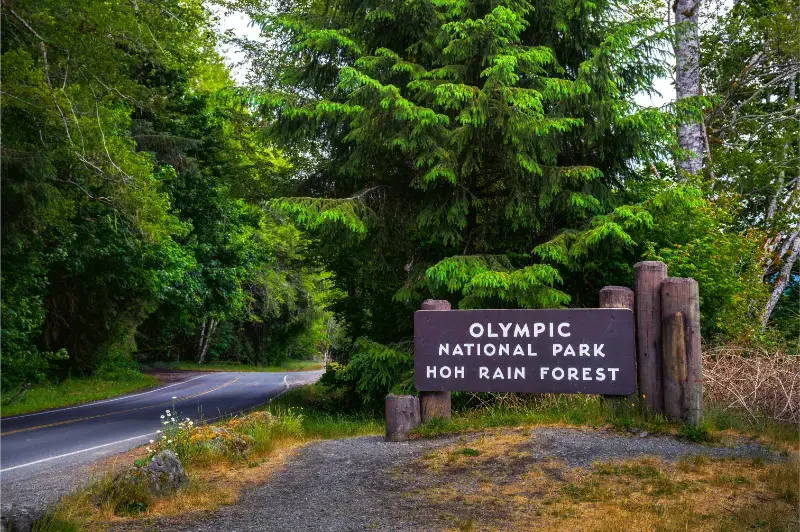
Rainforest landscapes do not need blue skies. In fact, mist and rain can deepen the atmosphere. Bring waterproof layers and judge success by the ecosystem, not by whether the forecast shows a sun icon.
How to choose your month
- Choose July–August for maximum high-country access and accept crowds/smoke risk.
- Choose September for a strong balance of access and cooler conditions.
- Choose spring for waterfalls, Seattle and lower elevations—not for guaranteed alpine hiking.
- Choose early October for larches if you can tolerate changing mountain weather.
- Choose winter for a deliberately snow/coast/city itinerary.
Check live conditions close to departure
Use State of Washington Tourism for statewide alerts, WSDOT for roads and passes, and the individual NPS websites for Rainier, Olympic and North Cascades. Seasonal averages help choose a month; live conditions decide what you should do tomorrow.
A better way to build this Washington trip
Match reservations to seasonal certainty. A July island hotel can reasonably be booked far ahead; an October high-elevation hiking plan should remain flexible because snow timing is uncertain. The farther your activity depends on a specific trail, pass or visibility window, the more useful flexible cancellation becomes.
Build geographic backups instead of hoping weather changes. If mountain smoke is severe, shift toward Seattle, Puget Sound or the coast. If a marine storm makes kayaking unattractive, use a town, museum or forest day. Washington’s diversity is the insurance policy when the itinerary is not overbooked.
Continue planning Washington State
After choosing the season, use our 14-day road trip and the guides to Mount Rainier, Olympic, North Cascades and Leavenworth to match access to your dates.
Build in realistic transition time
Washington itineraries are often underestimated because a map hides ferries, mountain passes, two-lane park roads, trailhead searches and urban traffic. Add a buffer between any two reservations that would be expensive to miss. On a normal sightseeing day, assume that a scenic drive will take longer than the navigation estimate because you will stop, walk, eat and wait for parking. On ferry days, treat the sailing schedule as a fixed anchor and everything after it as flexible. On mountain days, protect daylight and avoid planning a long drive after a strenuous hike. This extra margin is not wasted time: it is what allows a viewpoint, market, trail or meal to last long enough to feel like travel rather than a transfer.
What to reserve first
Reserve the hardest-to-replace part of this trip before ordinary accommodation or meals: limited ferry vehicle space, a permit-dependent overnight, scarce lodging next to a park, or an event weekend that compresses local inventory. Then build the route around that fixed point. Keep routine city nights and restaurant plans more flexible until weather-sensitive pieces are stable. This order reduces the chance that one attractive hotel rate forces an inefficient drive or that a tightly booked day becomes impossible when a ferry, road or trail condition changes. Before the cancellation deadline for each reservation, do one final route audit and confirm that the sequence still makes geographic sense.

Choose the season by activity, not by a single weather average
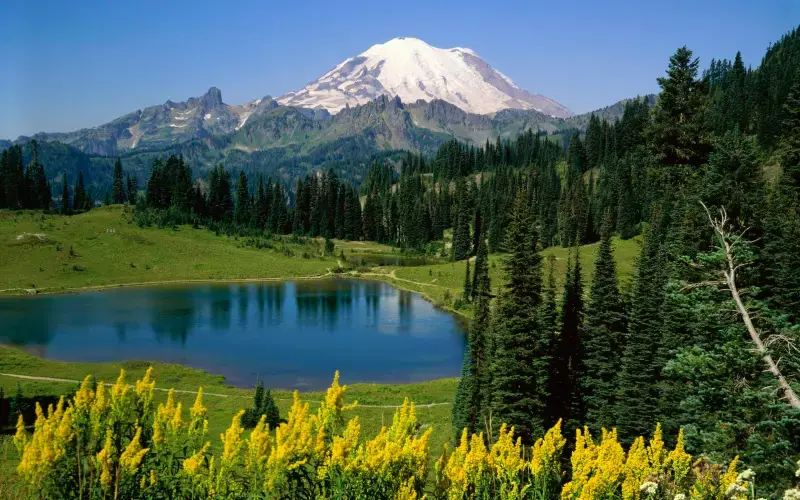
For wildflowers around Mount Rainier, summer timing depends on snowmelt and elevation; for golden larches east of the Cascade crest, the most sought-after autumn window is typically much later and can vary from year to year. Whale-watching opportunities, ferry demand, skiing, waterfall flow and high-country hiking all follow different calendars. That is why a traveler focused on alpine trails may prefer July through September, while someone who wants storm-watching and quiet coastal towns may deliberately choose a wetter month. Start with the activity that would disappoint you most if unavailable, then choose the dates around that constraint.
Shoulder-season packing and flexible plans
Spring and autumn can deliver excellent value and fewer crowds, but they demand more adaptable packing. Carry waterproof layers, warm insulation and footwear that can handle mud, and keep at least one lower-elevation alternative for each mountain day. Shorter daylight also matters: a hike that feels comfortable in July may leave very little margin in October. In shoulder season, flexible hotel cancellation is often worth more than a small prepaid discount because a pass, trail, wildfire or storm can make a different part of the state the better choice a few days before arrival.