

Destinations › Pacific USA › Washington State travel guide › Olympia Washington Travel Guide: State Capitol, Waterfront, Tumwater & South Sound
Olympia is often driven through rather than visited. That is a mistake if your Washington trip includes Seattle, Mount Rainier or the Olympic Peninsula, because the state capital offers a compact mix of civic architecture, independent downtown streets, shoreline and easy nature without the scale or traffic of a major city.
The best version of Olympia is not a checklist of government buildings. Pair the Capitol Campus with the waterfront, the farmers market area, a neighborhood meal and Tumwater Falls. With two days, you can also use the city as a base for South Puget Sound or the lower Olympic Peninsula.
Olympia planning at a glance
| Good length | 1–2 days |
| Signature sight | Washington State Capitol Campus |
| Easy nature add-on | Brewery Park at Tumwater Falls |
| Best for | History, food, South Sound, relaxed city break |
| Road-trip role | Natural stop between Seattle and the Olympic Peninsula / Mount Rainier |
Give the Capitol Campus enough time to be more than a photo
The Legislative Building and landscaped campus dominate Olympia’s identity, but the experience improves when you walk rather than park, photograph the dome and leave. Memorials, gardens and views toward the water reveal how the civic district connects to the city.
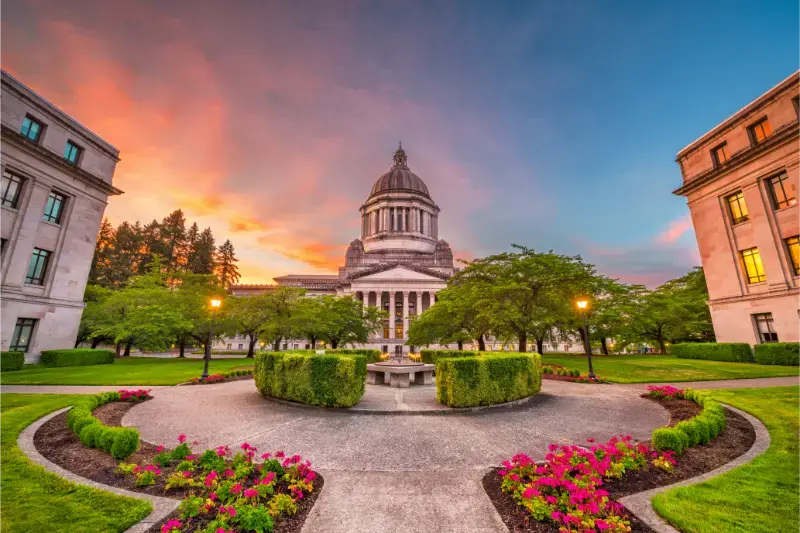
Free guided Legislative Building tours are offered on many days and usually last about 50 minutes; schedules can change, so verify current times through Experience Olympia’s Capitol Campus information or the official Capitol site before your visit.
Downtown Olympia has a different rhythm from Seattle
Downtown is compact, independent and slightly eccentric, with bookstores, cafés, murals, restaurants and local businesses rather than a polished tourist core. That is part of the appeal. Walk toward Percival Landing and the marina to connect the urban blocks with Budd Inlet.
The Olympia Farmers Market can be one of the easiest places to understand the region’s food culture because produce, seafood and prepared food bring the agricultural hinterland into the city. Check operating days before assuming it will be open.
Tumwater Falls is the simplest high-return detour
Just south of Olympia, Brewery Park follows the Deschutes River around Tumwater Falls. The loop is short enough to fit between other stops, but the combination of waterfalls, bridges, industrial history and salmon-season context makes it more interesting than a generic city park.
Experience Olympia notes that September and October can be particularly interesting for the annual salmon return. The broader Tumwater area also carries the history of the old brewing industry. See current Tumwater visitor information before going.
Use the water to understand where Olympia sits
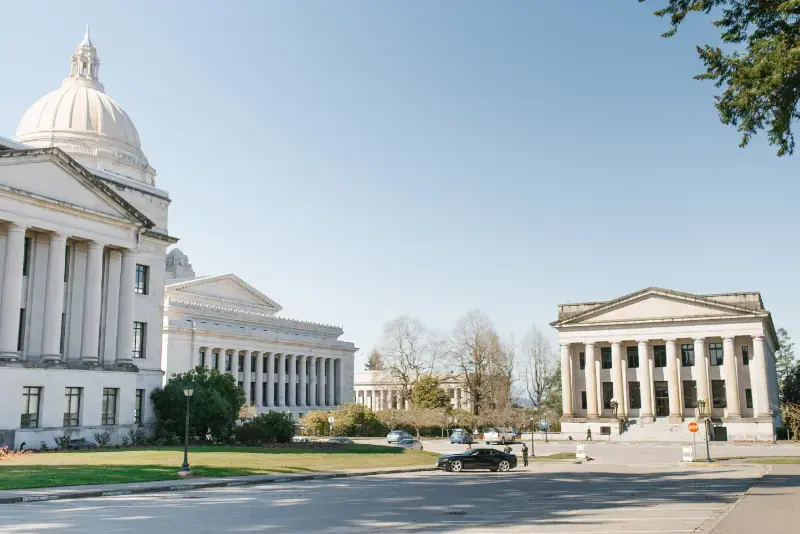
Olympia occupies the southern end of Puget Sound, and the shoreline is more tidal and estuarine than many visitors expect. Percival Landing is easy, while nearby wildlife refuges and waterfront parks create stronger nature experiences if you have a car and several hours.
Tides can transform the appearance of inlets and mudflats. If photography or birding matters, check tide times instead of assuming the waterline will look the same throughout the day.
Where to stay in Olympia
Compare available accommodation for your dates, budget and preferred location before you finalize your route.
Downtown is best if you want to walk to restaurants, the Capitol and waterfront; Lacey and Tumwater often have easier highway access and larger parking lots. Compare Olympia hotels with Tumwater accommodation depending on whether evening walkability or road-trip convenience matters more.
For a one-night transit stop, proximity to I-5 may be practical. For two nights, downtown usually gives the trip more personality and reduces short car journeys.
A relaxed two-day Olympia itinerary
- Day 1 morning: Capitol Campus and guided tour if available.
- Day 1 afternoon: downtown, farmers market area and Percival Landing.
- Day 1 evening: local restaurant or brewery, then a waterfront walk.
- Day 2 morning: Tumwater Falls and local history.
- Day 2 afternoon: South Sound nature, museum or an early departure toward your next region.
One full day is enough for the core sights if you start early. The second day becomes worthwhile when you use Olympia as a gateway to the wider South Sound rather than simply adding more downtown stops.
Olympia with children
The Capitol tour can work well for school-age children when paired with outdoor time rather than another indoor attraction. Tumwater Falls, waterfront walks and hands-on museums in the region keep the day from becoming too formal.
Families driving between Seattle and the Olympic Peninsula can also use Olympia as a deliberate break. A real lunch and a short walk often make the rest of the drive easier than pushing through traffic in the hope of arriving 45 minutes earlier.
How Olympia fits into a Washington road trip
Olympia combines especially well with Mount Rainier National Park, Olympic National Park and Tacoma. It can also be the first or last urban stop on a Washington coast road trip.
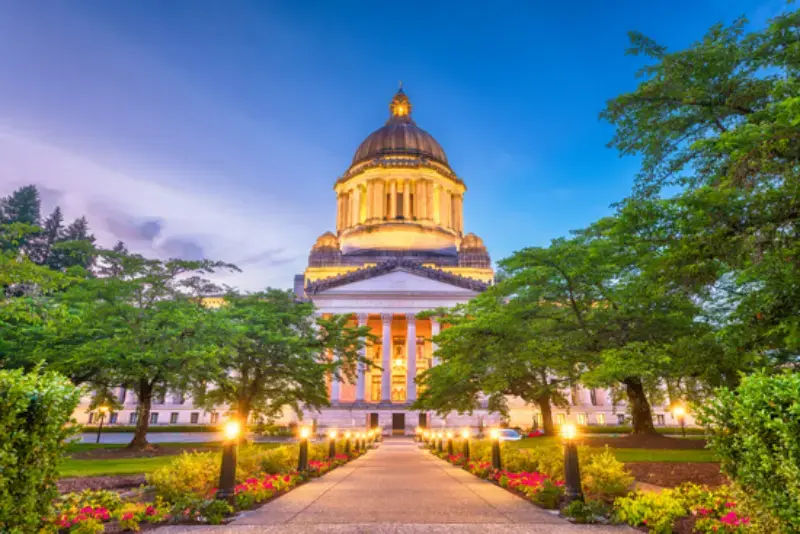
If your itinerary already includes Seattle and Tacoma, do not treat Olympia as “another city.” Give it a civic-and-South-Sound focus so each stop has a different reason to be there.
When Olympia is worth an overnight rather than a lunch stop
Stay overnight when you want a Capitol tour, dinner downtown and Tumwater the next morning, or when I-5 timing would otherwise place you in peak traffic. Skip the overnight if you are racing to Hurricane Ridge or Rainier and the city is only a refueling stop.
That sounds obvious, but it is a useful road-trip principle: sleeping somewhere should create a better evening or a better morning. If it does neither, keep moving.
The farmers market and food scene deserve room in the itinerary
Olympia’s relationship with surrounding farms is visible in seasonal produce, seafood, bakeries and small producers. When the market is operating, it is more useful as a lunch-and-shopping stop than as a quick photo opportunity. Ask what is in season, buy something you can actually eat on the road, and notice how quickly the landscape outside the city turns agricultural.
Downtown dining is varied enough that you do not need to drive to a chain corridor after sightseeing. A locally owned dinner also makes an overnight in Olympia feel distinct from a highway stop. Check opening days carefully because smaller businesses may keep shorter hours early in the week.
South Sound nature is close, but tides shape the experience
The southern reaches of Puget Sound are a maze of inlets rather than an open-ocean coast. Low tide can expose large intertidal areas, while high tide changes paddling access and shoreline appearance. Birders and photographers should check tide tables before choosing a waterfront time, especially if mudflats and estuary wildlife are part of the plan.
If you add a wildlife refuge or shoreline trail, allow time for slow observation. South Sound nature is less about one dramatic viewpoint and more about herons, waterfowl, changing light and the meeting of forest with tidal water. That quieter pace is a useful contrast after Seattle or Mount Rainier.
Parking and walking the center efficiently
The Capitol, downtown and waterfront are close enough that repeated short drives usually waste time. Park once for the central portion of the day, walk the civic campus and downtown, then move the car only for Tumwater or a wider South Sound stop. Street rules and event closures can change around legislative sessions and festivals, so read signs carefully rather than relying on an old parking app screenshot. Comfortable shoes matter because the city has modest slopes, and a light rain jacket is more useful than an umbrella when wind comes off Budd Inlet.
Build margin into the part of the day you care about most
The most useful planning improvement for Olympia Washington travel guide is to protect the experience you would be disappointed to miss. Put that activity in the strongest weather or energy window, then keep the surrounding hours flexible. Parking, meals and short scenic stops should support the day rather than compete with it.
Washington trips are vulnerable to small delays that become large because water, mountain passes and two-lane roads limit alternative routes. An extra hour of margin is rarely wasted: it becomes a longer walk, an unhurried lunch or an earlier hotel check-in when everything runs smoothly.
What to check again the night before
Review the next day’s weather, road or ferry alerts, parking instructions and the official page for the main attraction. Download any map or confirmation that would be difficult to retrieve without cell service. If wildfire smoke is possible, add air quality to the list.
Also look at the boring details: fuel, snacks, water, opening hours and the last practical place to buy supplies. Those checks are what keep a scenic Washington day from turning into a search for an open gas station or a missed sailing.
A slower trip usually reveals more
It is tempting to turn a Washington road trip into a sequence of famous names. In practice, the strongest memories often come from the hour you did not schedule: watching ferries cross the sound, eating fruit from a farm stand, waiting for cloud to lift from a mountain, or walking a waterfront after dinner. Leaving room for those moments is not inefficient planning; it is the reason to travel independently.
Use driving estimates as minimums rather than promises, especially on weekends and in summer. If a destination deserves two nights, give it two nights instead of stealing an evening from one place and a morning from the next. The state is too varied to “finish,” and a route with fewer bases usually produces more actual experience.