

Philadelphia Pennsylvania Travel Guide. Philadelphia works especially well for travelers who want major American history without giving up the energy of a living city. The historic core around Independence Hall can fill a day, but the city becomes much more rewarding when you also spend time along the Benjamin Franklin Parkway, in Reading Terminal Market, around Rittenhouse Square, on the Schuylkill River Trail or inside neighborhoods such as Old City, South Philadelphia and Fishtown. It is compact enough for a short break yet deep enough for four or five days.
Why visit Philadelphia Pennsylvania?
Philadelphia is one of the easiest large U.S. cities to combine with New York, Washington, DC, Lancaster County or the rest of Pennsylvania. Amtrak makes car-free city-to-city travel practical, while the walkable central area means you do not need a rental car until you are ready to leave for suburban or rural destinations. History is the obvious reason to visit, but food, art, murals, markets and neighborhood culture are what prevent the trip from feeling like a school-history checklist.
Best things to see and do
Independence National Historical Park
Start in the historic district with Independence Hall, the Liberty Bell Center, Congress Hall and the surrounding blocks. The strongest visit is not a race between landmarks. Give yourself enough time to understand how the buildings connect to the Declaration of Independence, the Constitution and the complicated realities of the eighteenth-century city. Timed-entry procedures can change, so check the National Park Service before the day you visit.
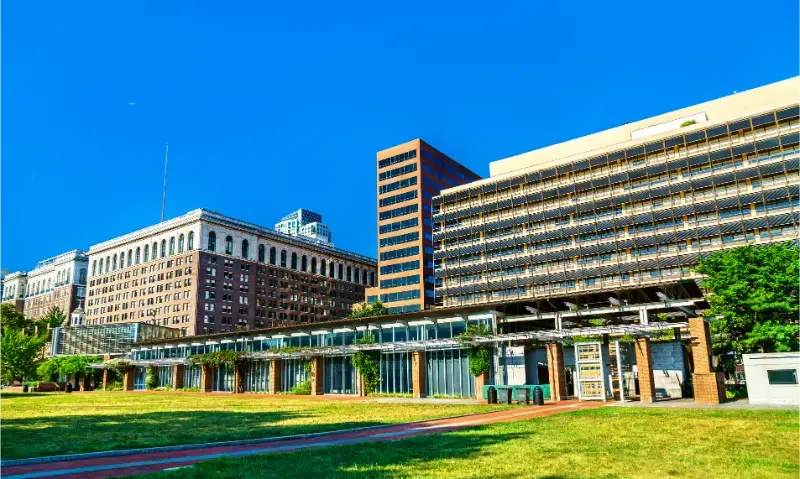
For most travelers, the best way to approach Independence National Historical Park is to decide whether it is a headline experience or a flexible stop. If it is central to your trip, verify current access, reservations, parking and seasonal services on the official website shortly before arrival. If it is secondary, keep enough flexibility to change plans for weather, traffic or a more interesting discovery nearby.
Reading Terminal Market and Center City food
Reading Terminal Market is useful both as an attraction and as a practical meal stop. It lets you sample Philadelphia specialties, Pennsylvania Dutch baked goods and a broad range of local vendors under one roof. Go outside the busiest lunch window if you want time to browse. Beyond the market, build at least one meal around a neighborhood rather than only chasing a famous cheesesteak name.
For most travelers, the best way to approach Reading Terminal Market and Center City food is to decide whether it is a headline experience or a flexible stop. If it is central to your trip, verify current access, reservations, parking and seasonal services on the official website shortly before arrival. If it is secondary, keep enough flexibility to change plans for weather, traffic or a more interesting discovery nearby.
Benjamin Franklin Parkway museums
The Philadelphia Museum of Art, Barnes Foundation, Rodin Museum and other cultural institutions make the Parkway a separate sightseeing zone from the historic district. Trying to combine several major museums with Independence Hall on the same day usually creates a rushed itinerary. Pick one large museum and leave time for the steps, river views and nearby green spaces.
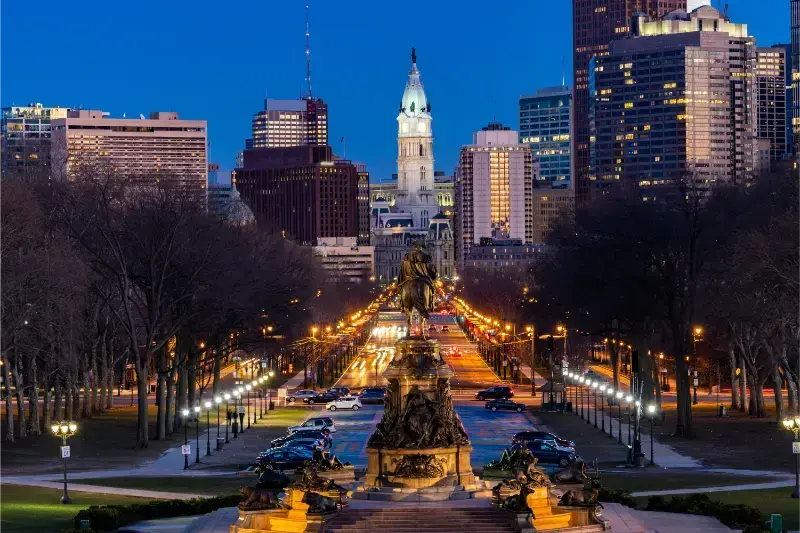
For most travelers, the best way to approach Benjamin Franklin Parkway museums is to decide whether it is a headline experience or a flexible stop. If it is central to your trip, verify current access, reservations, parking and seasonal services on the official website shortly before arrival. If it is secondary, keep enough flexibility to change plans for weather, traffic or a more interesting discovery nearby.
Old City, Society Hill and the Delaware waterfront
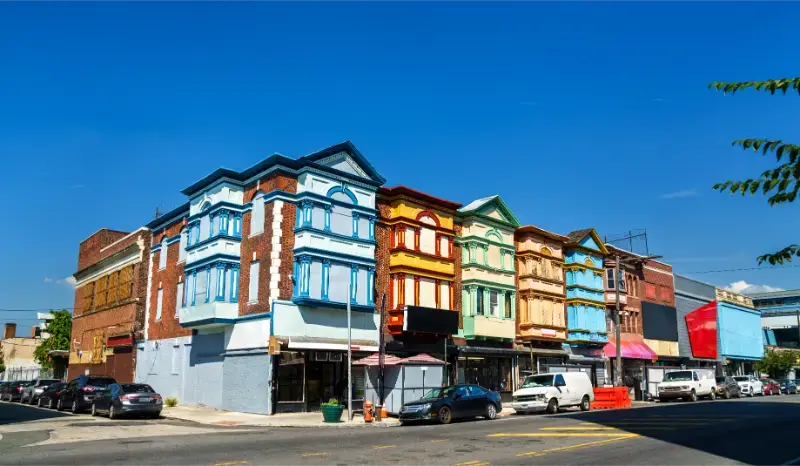
Old City is convenient for historic sites, but it also works in the evening for restaurants, galleries and a walk toward the Delaware River. Society Hill adds quieter brick streets and residential architecture. Depending on season, the waterfront can add parks, seasonal attractions and a useful change of pace after museums.
For most travelers, the best way to approach Old City, Society Hill and the Delaware waterfront is to decide whether it is a headline experience or a flexible stop. If it is central to your trip, verify current access, reservations, parking and seasonal services on the official website shortly before arrival. If it is secondary, keep enough flexibility to change plans for weather, traffic or a more interesting discovery nearby.
Neighborhoods beyond the monuments
South Philadelphia, the Italian Market area, Fishtown, University City and Rittenhouse each show a different side of the city. You do not need to visit all of them. Choose one or two that fit your interests—food, nightlife, university museums, architecture or simply a less tourist-focused walk—and let them replace a lower-priority central attraction.
For most travelers, the best way to approach Neighborhoods beyond the monuments is to decide whether it is a headline experience or a flexible stop. If it is central to your trip, verify current access, reservations, parking and seasonal services on the official website shortly before arrival. If it is secondary, keep enough flexibility to change plans for weather, traffic or a more interesting discovery nearby.
How many days do you need?
Three days is a strong first visit: one day for the historic district, one for museums and Center City, and one for neighborhoods or a day trip. Two days can work if you are selective. Four days gives enough room for a slower museum visit, Eastern State Penitentiary, more neighborhoods or Valley Forge without constantly checking the clock.
Where to stay
Compare available accommodation for your dates, budget and preferred location before you finalize your route.
For a first trip, Center City is the simplest base because you can walk or use SEPTA to reach most major sights. Old City is ideal if history is your priority; Rittenhouse works well for restaurants and an evening-oriented stay; the Parkway area suits museum-heavy trips. Compare the total cost of a hotel with parking before deciding to keep a car in central Philadelphia.
When comparing accommodation, look at the total trip cost rather than only the room rate. Parking, resort fees, breakfast, distance from your first activity and the time spent driving can make a seemingly cheaper hotel less useful. For high-demand weekends, reserve early with a cancellation policy that matches your plans.
Check accommodation options on Booking.com.
Getting there and getting around
Philadelphia International Airport connects to Center City by regional rail as well as road transport. Amtrak at 30th Street Station makes Philadelphia unusually easy to combine with New York, Baltimore and Washington, DC. Inside the central city, walking and SEPTA are usually more useful than driving. If your Pennsylvania itinerary continues to Lancaster, the Poconos or other rural areas, consider collecting a rental car only when you leave the city.
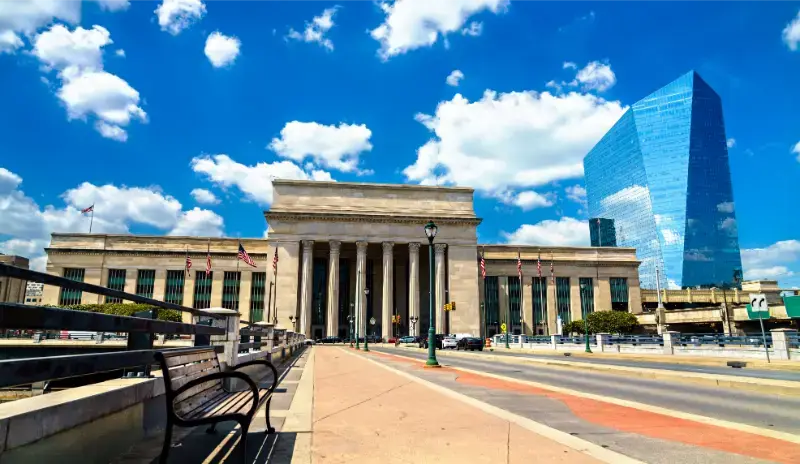
If you are building a multi-stop Pennsylvania trip, group places geographically and avoid returning to the same base after every excursion. Urban areas are usually easier without a car, while parks, rural regions and small towns are substantially simpler with one. Check parking arrangements before picking up a rental vehicle, especially in city centers.
Best time to visit
Spring and fall are usually the easiest seasons for long walking days. Summer brings heat, humidity and busy event periods, while winter can be cold but often works well for museums and lower-demand city breaks. Major festivals, conventions and holiday weekends can change hotel prices dramatically, so check your exact dates rather than relying on a generic “best month.”
Weather averages are useful for broad planning, but they are not a daily forecast. In Pennsylvania, mountain elevations, Great Lakes influence and urban conditions can create meaningful regional differences. For outdoor days, keep one lower-commitment alternative and check official alerts shortly before departure.
Food and local experience
Treat food as part of the itinerary. Cheesesteaks and roast pork sandwiches are famous, but the city’s identity also includes soft pretzels, markets, Italian-American traditions, Chinatown, modern tasting menus, bakeries and immigrant-run neighborhood restaurants. One meal at Reading Terminal Market plus one neighborhood dinner gives a more rounded introduction than repeating the same signature sandwich several times.
Visiting with kids
Philadelphia is manageable with children because major historic sites, the Franklin Institute, Please Touch Museum, parks and markets can be mixed rather than stacked. Build one high-attention museum or historic attraction into each half-day, then add a park, food stop or short walk. Families using strollers should plan around cobblestones and older buildings in the historic core.
A practical first-time itinerary
Day 1: understand the destination
Start with the experience that best explains Philadelphia Pennsylvania rather than the most photogenic stop. Use the morning for the main historic, cultural or outdoor anchor, keep lunch close to the route, and spend the afternoon in a contrasting area. Finish with dinner near your accommodation so the first day does not become a late logistical transfer.
Day 2: go deeper
Use the second day for the experience that would feel rushed on arrival day: a major museum, longer trail, guided tour, lake or park outing. Leave at least one block of unstructured time for a market, neighborhood, scenic road or local restaurant. This is usually where the destination begins to feel more personal and less like a list of attractions.
Day 3 and beyond
If you have another day, add a nearby place that complements rather than duplicates the first two days. The goal is not to collect more stops but to broaden the trip. From Philadelphia Pennsylvania, that may mean a smaller town, a landscape, a historic site or a slower food-focused day before continuing through Pennsylvania.
Common mistakes to avoid
- Trying to see every historic site in one morning instead of choosing the ones that matter most to you.
- Keeping a rental car in Center City when you do not need it and paying for parking.
- Planning several large museums on the same day.
- Eating only at the most famous tourist food stops and missing neighborhood restaurants.
- Linking Philadelphia and Pittsburgh as a casual day trip; they belong in a wider Pennsylvania itinerary.
How to combine this with the rest of Pennsylvania
Philadelphia pairs naturally with Valley Forge, Lancaster County and Gettysburg if you are heading west. If your trip continues along the Northeast corridor, New York and Washington, DC are straightforward rail extensions. For a Pennsylvania-only journey, two or three nights in Philadelphia followed by a rental car is often the cleanest transition from urban sightseeing to rural and historic regions.
For a longer trip, use the Pennsylvania travel hub to choose the next region. Keep transfer days realistic: Philadelphia, Pittsburgh, Erie and the mountain regions are spread across a large state, so a route built around two or three geographic clusters usually works better than zigzagging between famous names.
Official sources and current information
Opening hours, tickets, parking systems, restoration work, seasonal services and event schedules can change. Before traveling, confirm the details that matter to your exact dates using the official sources below.
Frequently asked questions
Is Philadelphia Pennsylvania worth adding to a first Pennsylvania trip?
Yes, if it matches the theme of your route and does not create an inefficient detour. Philadelphia Pennsylvania adds a distinct part of Pennsylvania rather than simply repeating another stop. The strongest first trip normally combines a major city with one or two contrasting regions.
Do I need to book in advance?
Book the experiences that are difficult to replace: timed historic tours, architecture tours, major theme-park days, high-demand lodging, seasonal activities and popular event weekends. Keep ordinary meals and lower-priority stops flexible unless your dates are unusually busy.
Do I need a car?
It depends on the destination. Central Philadelphia and parts of Pittsburgh can work well without one, but most rural Pennsylvania destinations are far easier by car. If your itinerary begins in a city, consider collecting the vehicle only when you are ready to leave the urban core.
Related Pennsylvania travel guides
-
Philadelphia with Kids: Family Attractions, Museums, Parks & Easy Itineraries
Plan a family trip to Philadelphia with kid-friendly museums, historic sites, parks, markets, practical pacing and itinerary ideas for different ages.
-
Philadelphia Food Guide: Cheesesteaks, Roast Pork, Markets & Local Favorites
Plan what to eat in Philadelphia with cheesesteaks, roast pork, hoagies, pretzels, Reading Terminal Market, neighborhood dining and practical food-trip advice.
-
Best Time to Visit Pennsylvania: Weather, Seasons, Crowds & Regional Trips
Choose the best time to visit Pennsylvania for Philadelphia, Pittsburgh, fall foliage, state parks, family trips and road trips with a season-by-season guide.
-
Allegheny National Forest Pennsylvania Guide: Trails, Reservoir, Scenic Drives & Camping
Explore Allegheny National Forest in Pennsylvania with hiking, Allegheny Reservoir, scenic drives, camping, old-growth forest, paddling and fall travel tips.
-
Pittsburgh with Kids: Museums, Science, Animals, Parks & Family Trip Tips
Plan Pittsburgh with kids using a family-friendly mix of science, museums, animals, parks, inclines, riverfront walks and practical itinerary advice.
-
14-Day Pennsylvania Road Trip: Philadelphia, Amish Country, Pittsburgh, PA Wilds & Erie
Plan a 14-day Pennsylvania road trip through Philadelphia, Lancaster County, Gettysburg, Hershey, the PA Wilds, Erie, Pittsburgh, Laurel Highlands and Raystown Lake.