

Pittsburgh Pennsylvania Travel Guide. Pittsburgh is a city of rivers, hills, bridges and neighborhoods whose industrial history now sits beside major museums, universities, sports culture and an increasingly confident food scene. The skyline is dramatic, but the city is best understood from ground level: ride an incline, walk a riverfront trail, spend time in the Strip District, choose one or two Carnegie museums, and explore a neighborhood beyond Downtown.
Why visit Pittsburgh Pennsylvania?
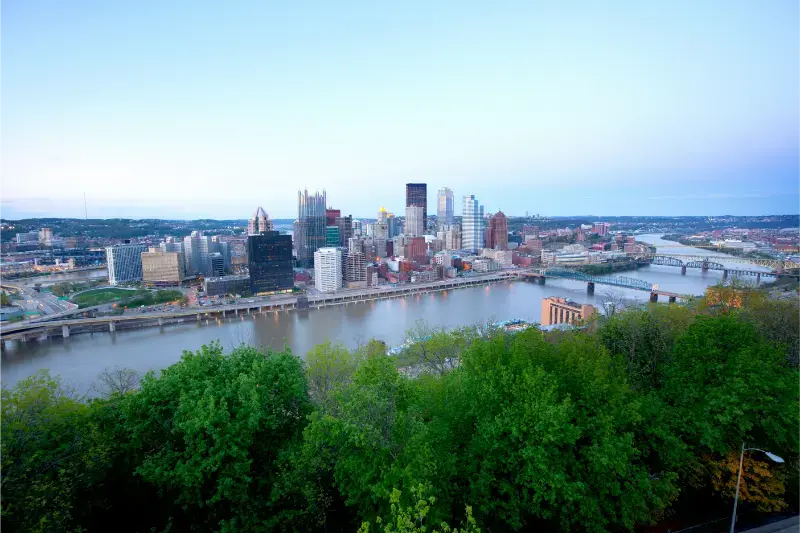
Pittsburgh rewards travelers who enjoy cities with a strong identity rather than a polished tourist center. Its geography shapes the trip: Downtown sits where the Allegheny and Monongahela meet to form the Ohio River, while steep slopes create viewpoints and distinct neighborhood pockets. It can be a standalone long weekend or the western anchor of a Pennsylvania road trip through the Laurel Highlands and Fallingwater.

Best things to see and do
Mount Washington and the inclines
The classic skyline view comes from Mount Washington. Riding an incline is more memorable than simply driving to a viewpoint because it makes the city’s steep geography tangible. Go near sunset if the weather is clear, but keep an alternative time because haze, rain or event traffic can change the experience.

For most travelers, the best way to approach Mount Washington and the inclines is to decide whether it is a headline experience or a flexible stop. If it is central to your trip, verify current access, reservations, parking and seasonal services on the official website shortly before arrival. If it is secondary, keep enough flexibility to change plans for weather, traffic or a more interesting discovery nearby.
Carnegie museums and Oakland
Oakland concentrates the Carnegie Museum of Natural History, Carnegie Museum of Art and major university architecture. These are substantial institutions, not quick stops. Choose according to interest and give one of them enough time rather than rushing through both before lunch.
For most travelers, the best way to approach Carnegie museums and Oakland is to decide whether it is a headline experience or a flexible stop. If it is central to your trip, verify current access, reservations, parking and seasonal services on the official website shortly before arrival. If it is secondary, keep enough flexibility to change plans for weather, traffic or a more interesting discovery nearby.
Strip District
The Strip District is one of the best places to feel everyday Pittsburgh through food shops, markets, restaurants and converted industrial buildings. It is especially lively earlier in the day. Pair it with Downtown or the riverfront rather than treating it as an isolated destination.
For most travelers, the best way to approach Strip District is to decide whether it is a headline experience or a flexible stop. If it is central to your trip, verify current access, reservations, parking and seasonal services on the official website shortly before arrival. If it is secondary, keep enough flexibility to change plans for weather, traffic or a more interesting discovery nearby.
Andy Warhol Museum and North Shore
The North Shore brings together the Andy Warhol Museum, stadiums and riverfront paths. Sports schedules can transform the area, so check event calendars even if you are not attending a game. A quiet weekday and a game day can feel like two completely different places.
For most travelers, the best way to approach Andy Warhol Museum and North Shore is to decide whether it is a headline experience or a flexible stop. If it is central to your trip, verify current access, reservations, parking and seasonal services on the official website shortly before arrival. If it is secondary, keep enough flexibility to change plans for weather, traffic or a more interesting discovery nearby.
Neighborhood evenings
Lawrenceville, Shadyside, Squirrel Hill and other neighborhoods offer restaurants, bars and a more local-scale city experience. Pick one based on where you are staying and what you want to eat. Pittsburgh is not a city where you need to collect every neighborhood to understand it.
For most travelers, the best way to approach Neighborhood evenings is to decide whether it is a headline experience or a flexible stop. If it is central to your trip, verify current access, reservations, parking and seasonal services on the official website shortly before arrival. If it is secondary, keep enough flexibility to change plans for weather, traffic or a more interesting discovery nearby.
How many days do you need?
Two full days cover the central highlights if you are selective. Three days is better because it lets you separate museums, river views and neighborhoods. Add a fourth day if you want a Laurel Highlands or Fallingwater excursion without sacrificing time in the city.
Where to stay
Compare available accommodation for your dates, budget and preferred location before you finalize your route.
Downtown is convenient for a first visit and event travel; the Strip District works for food-focused travelers; Oakland is practical for museums and universities; East End neighborhoods offer a more residential evening atmosphere. Because hills and bridges affect travel times, choose a base according to the places you will actually visit rather than the map distance alone.
When comparing accommodation, look at the total trip cost rather than only the room rate. Parking, resort fees, breakfast, distance from your first activity and the time spent driving can make a seemingly cheaper hotel less useful. For high-demand weekends, reserve early with a cancellation policy that matches your plans.
Check accommodation options on Booking.com.
Getting there and getting around
Pittsburgh International Airport is west of the city. Downtown and several neighborhoods can be explored without a car using walking, buses and light rail where available, but a vehicle becomes useful for Fallingwater, Ohiopyle and the wider Laurel Highlands. If you rent a car, check hotel parking costs and game-day restrictions.
If you are building a multi-stop Pennsylvania trip, group places geographically and avoid returning to the same base after every excursion. Urban areas are usually easier without a car, while parks, rural regions and small towns are substantially simpler with one. Check parking arrangements before picking up a rental vehicle, especially in city centers.
Best time to visit
Late spring and fall suit outdoor viewpoints and riverfront walking particularly well. Summer can be warm and busy around festivals and sports, while winter is colder but still works for museums, restaurants and indoor culture. Hills make snow and ice more consequential than the temperature alone suggests.
Weather averages are useful for broad planning, but they are not a daily forecast. In Pennsylvania, mountain elevations, Great Lakes influence and urban conditions can create meaningful regional differences. For outdoor days, keep one lower-commitment alternative and check official alerts shortly before departure.
Food and local experience
Pittsburgh food is broader than the famous sandwich-with-fries image. Build your meals around the Strip District, neighborhood bakeries, Eastern European traditions, modern restaurants and breweries. A food-focused visit works best when you let neighborhoods guide dinner plans rather than commuting across the city for every famous address.
Visiting with kids
Families can mix the Carnegie Science Center, natural history, riverfront spaces, the incline and shorter neighborhood visits. The geography makes overpacked days tiring, especially with small children. Schedule one major museum and one outdoor or viewpoint experience per day.
A practical first-time itinerary
Day 1: understand the destination
Start with the experience that best explains Pittsburgh Pennsylvania rather than the most photogenic stop. Use the morning for the main historic, cultural or outdoor anchor, keep lunch close to the route, and spend the afternoon in a contrasting area. Finish with dinner near your accommodation so the first day does not become a late logistical transfer.
Day 2: go deeper
Use the second day for the experience that would feel rushed on arrival day: a major museum, longer trail, guided tour, lake or park outing. Leave at least one block of unstructured time for a market, neighborhood, scenic road or local restaurant. This is usually where the destination begins to feel more personal and less like a list of attractions.
Day 3 and beyond
If you have another day, add a nearby place that complements rather than duplicates the first two days. The goal is not to collect more stops but to broaden the trip. From Pittsburgh Pennsylvania, that may mean a smaller town, a landscape, a historic site or a slower food-focused day before continuing through Pennsylvania.
Common mistakes to avoid
- Underestimating how hills, rivers and bridges affect travel time.
- Trying to visit several Carnegie museums quickly instead of choosing one deeply.
- Ignoring sports schedules that can affect traffic and parking.
- Keeping every meal in Downtown rather than trying a neighborhood.
- Treating Fallingwater as a quick add-on without allowing for the drive and timed tour.
How to combine this with the rest of Pennsylvania
Pittsburgh combines especially well with Fallingwater, Ohiopyle and the Laurel Highlands. If you are crossing the state, add Gettysburg or the Allegheny region rather than driving straight to Philadelphia in one sightseeing day. The city also works as a gateway to nearby West Virginia and Ohio on a multi-state route.
For a longer trip, use the Pennsylvania travel hub to choose the next region. Keep transfer days realistic: Philadelphia, Pittsburgh, Erie and the mountain regions are spread across a large state, so a route built around two or three geographic clusters usually works better than zigzagging between famous names.
Official sources and current information
Opening hours, tickets, parking systems, restoration work, seasonal services and event schedules can change. Before traveling, confirm the details that matter to your exact dates using the official sources below.
Frequently asked questions
Is Pittsburgh Pennsylvania worth adding to a first Pennsylvania trip?
Yes, if it matches the theme of your route and does not create an inefficient detour. Pittsburgh Pennsylvania adds a distinct part of Pennsylvania rather than simply repeating another stop. The strongest first trip normally combines a major city with one or two contrasting regions.
Do I need to book in advance?
Book the experiences that are difficult to replace: timed historic tours, architecture tours, major theme-park days, high-demand lodging, seasonal activities and popular event weekends. Keep ordinary meals and lower-priority stops flexible unless your dates are unusually busy.
Do I need a car?
It depends on the destination. Central Philadelphia and parts of Pittsburgh can work well without one, but most rural Pennsylvania destinations are far easier by car. If your itinerary begins in a city, consider collecting the vehicle only when you are ready to leave the urban core.
Related Pennsylvania travel guides
-
Philadelphia with Kids: Family Attractions, Museums, Parks & Easy Itineraries
Plan a family trip to Philadelphia with kid-friendly museums, historic sites, parks, markets, practical pacing and itinerary ideas for different ages.
-
Philadelphia Food Guide: Cheesesteaks, Roast Pork, Markets & Local Favorites
Plan what to eat in Philadelphia with cheesesteaks, roast pork, hoagies, pretzels, Reading Terminal Market, neighborhood dining and practical food-trip advice.
-
Best Time to Visit Pennsylvania: Weather, Seasons, Crowds & Regional Trips
Choose the best time to visit Pennsylvania for Philadelphia, Pittsburgh, fall foliage, state parks, family trips and road trips with a season-by-season guide.
-
Allegheny National Forest Pennsylvania Guide: Trails, Reservoir, Scenic Drives & Camping
Explore Allegheny National Forest in Pennsylvania with hiking, Allegheny Reservoir, scenic drives, camping, old-growth forest, paddling and fall travel tips.
-
Pittsburgh with Kids: Museums, Science, Animals, Parks & Family Trip Tips
Plan Pittsburgh with kids using a family-friendly mix of science, museums, animals, parks, inclines, riverfront walks and practical itinerary advice.
-
14-Day Pennsylvania Road Trip: Philadelphia, Amish Country, Pittsburgh, PA Wilds & Erie
Plan a 14-day Pennsylvania road trip through Philadelphia, Lancaster County, Gettysburg, Hershey, the PA Wilds, Erie, Pittsburgh, Laurel Highlands and Raystown Lake.