

Destinations › Southwest › Arizona › Best Things to Do
Arizona is much bigger than a Grand Canyon checklist. The state works best when you mix one or two headline landscapes with the quieter experiences that explain why the scenery changes so dramatically: a sunrise on the South Rim, red-rock trails in Sedona, saguaro desert around Tucson, historic Route 66, high-elevation pine forest, Navajo Nation landscapes and a slow evening under genuinely dark skies.
The list below is designed for trip planning rather than bragging rights. You do not need to complete all 25 experiences in one vacation. Choose the group that fits your season, driving tolerance and interests, then use the more detailed Arizona guides linked throughout this article to turn those ideas into a realistic route.
At a glance
| Planning question | Best answer |
| Ideal first trip | 7–14 days |
| Best first route | Phoenix → Sedona → Grand Canyon → Page/Monument Valley |
| Best for first-timers | Grand Canyon, Sedona and one contrasting desert/city base |
| Biggest mistake | Underestimating driving time and elevation changes |
| Best all-round seasons | Spring and fall; exact choice depends on elevation |
25 essential Arizona experiences
1. Watch sunrise or sunset at the Grand Canyon South Rim
The Grand Canyon changes character minute by minute as low light reveals side canyons, buttes and layers that midday flattens. For a first visit, build at least one sunrise or sunset into the plan rather than arriving for a single noon overlook. The South Rim is open year-round and has the deepest visitor infrastructure.
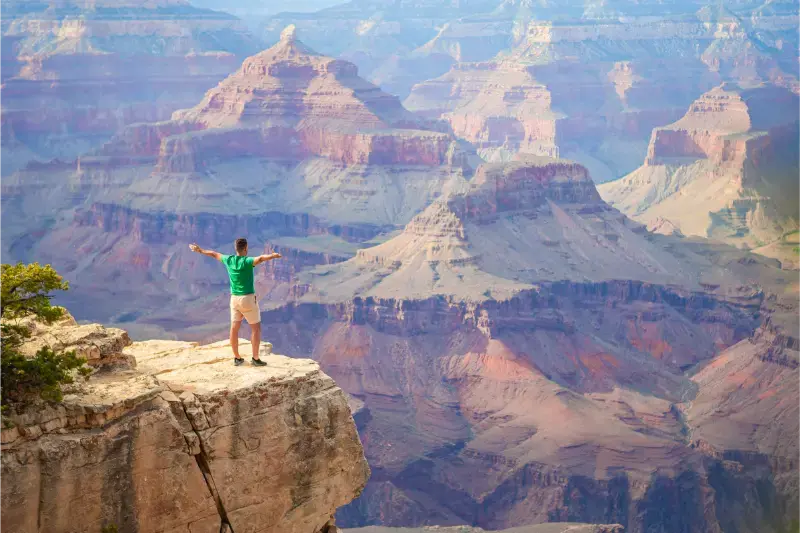
2. Walk part of the Grand Canyon Rim Trail
You do not have to descend into the canyon to hike. The Rim Trail lets you combine viewpoints with easy walking, and shuttle stops make it possible to customize the distance. It is one of the best options for families, mixed-ability groups and travelers visiting during extreme heat or icy trail conditions.
3. Hike below the rim—carefully
A short descent on Bright Angel or South Kaibab reveals scale that overlooks cannot. But the climb out is the real test. NPS warns against a rim-to-river-and-back day hike, especially from May through September. Choose a turnaround that matches temperature, daylight and the least experienced person in your group.
4. Spend several nights in Sedona
Sedona becomes frustrating when treated as a two-hour photo stop. Give yourself time for one major hike, one easier trail, a scenic drive, sunset and a slower morning. The red-rock formations look different throughout the day, and parking/shuttle logistics reward travelers who do not squeeze everything into a single afternoon.
5. Hike Cathedral Rock or choose a quieter alternative
Cathedral Rock is iconic, but “best” depends on your comfort with steep rock, exposure and crowds. Bell Rock Pathway, Little Horse, Mescal and other trail systems can deliver excellent scenery with a different effort profile. Use the free Sedona trailhead shuttle where it operates rather than circling full parking lots.
6. See Devil’s Bridge with realistic expectations
The famous sandstone arch is photogenic, but the experience includes approach distance, sun exposure, queues and trail traffic. Go early, carry more water than you think you need and decide whether the photo itself matters enough to justify peak-time crowds. Dry Creek Vista is served by Sedona’s shuttle system.
7. Drive Oak Creek Canyon
State Route 89A between Sedona and Flagstaff is one of the state’s most useful scenic connectors. The canyon gives you forest, cliffs and cooler air in a relatively short distance, but curves and busy pullouts mean it should be treated as part of the day rather than a highway to rush through.
8. Experience Flagstaff’s high-country contrast
Flagstaff sits in ponderosa pine forest and feels like a different state from Phoenix. It is a practical base for the Grand Canyon, Route 66, Walnut Canyon and Sunset Crater, and its elevation means winter snow and much cooler summer nights. That contrast is one of the keys to understanding Arizona.
9. Stand at Horseshoe Bend
Horseshoe Bend is popular because the Colorado River curve is immediately legible from above. The walk is straightforward but exposed; heat and wind matter. Pair it with Page and Lake Powell rather than driving hours solely for a photograph.
10. Tour Antelope Canyon with an authorized guide
Antelope Canyon lies on Navajo Nation land and visits operate through authorized tours. Upper and Lower Antelope Canyon offer different walking experiences and light conditions. Book based on mobility, photography priorities and schedule rather than assuming one version is universally better.
11. Explore Monument Valley Navajo Tribal Park
Monument Valley is not a national park; it is on Navajo Nation land. The famous mesas are only part of the experience. A Navajo-guided tour can reach areas beyond the standard scenic loop and adds cultural context that a self-drive photo circuit cannot provide.
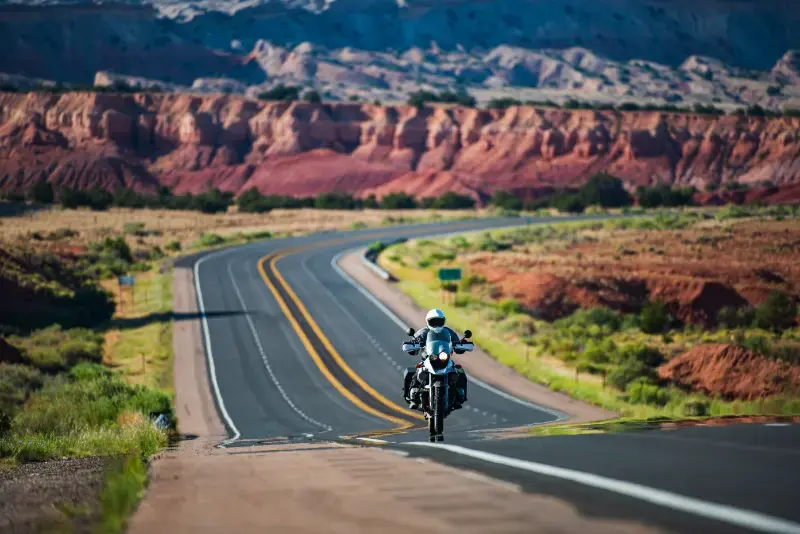
12. Drive a meaningful stretch of Route 66
Arizona preserves some of the strongest Route 66 travel experiences in the country. Flagstaff, Williams, Seligman, Kingman and the long drive through smaller communities work best when you slow down for diners, signs, roadside history and surviving businesses instead of treating the road as a museum prop.
13. See the Sonoran Desert around Phoenix
The Sonoran Desert is visually different from the high plateau of northern Arizona. Saguaros, palo verde and broad desert mountains make the Phoenix area more than an airport gateway. In cool months, a short desert hike can be one of the best contrasts to a northern-Arizona road trip.
14. Spend time in Scottsdale beyond the resorts
Old Town, galleries, restaurants, desert design and trail access make Scottsdale useful even if you are not taking a spa vacation. It pairs naturally with Phoenix and can serve as a softer first or last day after a long road trip.
15. Visit Tucson and Saguaro National Park
Tucson deserves its own trip, but even on a statewide route it provides a strong change of pace. Saguaro National Park has two districts on opposite sides of the city, so plan one side well rather than trying to cross Tucson repeatedly in a single day.
16. Eat your way through Tucson
Arizona travel is richer when food is not an afterthought. Tucson’s culinary identity draws from Sonoran, Mexican and borderlands traditions. Build meals around regional specialties and neighborhoods instead of choosing restaurants only by proximity to the hotel.
17. Walk among petrified wood
Petrified Forest National Park combines fossilized logs, badlands, archaeology and a Route 66 connection. It is one of Arizona’s easiest national parks to underestimate because photographs rarely convey the color range and open space.
18. Visit Canyon de Chelly with cultural context
Canyon de Chelly lies within Navajo Nation lands and includes living communities, archaeology and dramatic canyon walls. Some overlooks are accessible independently, while deeper experiences require appropriate guidance. Treat the area as a cultural landscape, not simply another red-rock viewpoint.
19. Explore the Verde Valley
Cottonwood, Jerome, Clarkdale and the Verde Valley add historic towns, wine, rail experiences and lower-elevation scenery between Phoenix and Sedona. They are especially useful when you want a non-hiking day without abandoning the broader red-rock region.
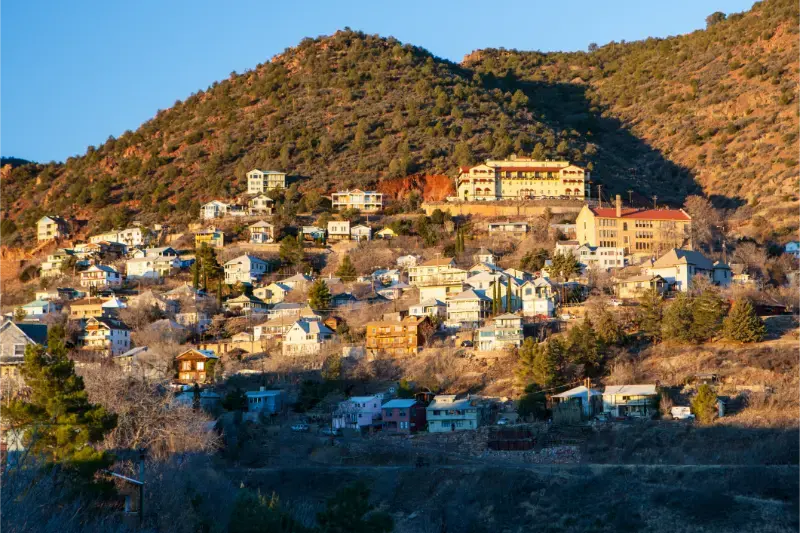
20. Climb through mining history in Jerome
Jerome’s hillside streets, industrial remnants and long views over the Verde Valley make it one of the state’s most distinctive small-town stops. Parking and steep streets can be awkward at busy times, so a few unrushed hours work better than a drive-by.
21. Stargaze under dark Arizona skies
Northern Arizona has major dark-sky destinations, but even simpler rural stops can deliver impressive night skies. Avoid scheduling every evening around sunset dinners indoors. One clear, moon-aware night can become a highlight of the trip.
22. Experience monsoon season with respect
Arizona’s official monsoon season runs June 15 through September 30. Storms can bring lightning, dust, flash flooding and rapidly changing conditions. The dramatic skies are memorable, but slot canyons, washes and exposed high ground require conservative decisions.
23. See snow in Arizona
Winter travelers are often surprised by snow around Flagstaff and the Grand Canyon. Arizona is not uniformly warm. A winter itinerary can combine mild desert cities with genuine high-country conditions, but rental-car choices and road monitoring become more important.
24. Choose one scenic drive and actually stop
Desert View Drive, Oak Creek Canyon, Route 66 and many state routes reward frequent stops. A scenic road is not just mileage between attractions. Build time for overlooks, short walks and weather changes rather than stacking a second distant destination into the same afternoon.
25. Leave one half-day unscheduled
Arizona rewards flexibility because heat, storms, trail access and crowds can change the best plan. The empty half-day lets you repeat a sunset, add a short hike, linger over a meal or simply stop driving. It is often the difference between a road trip and a transportation exercise.
How to choose the right experiences for your trip
For seven days, pick one primary corridor: Phoenix–Sedona–Grand Canyon is the easiest first-trip backbone. For ten to fourteen days, add Page and Monument Valley or move south toward Tucson. The state looks compact on a map, but scenic stops, trailheads and elevation changes slow the real pace.
Prioritize experiences that are hard to substitute. A Grand Canyon sunrise, a Sedona hike and a Navajo Nation landscape are fundamentally different. Three similar observation stops or three long red-rock hikes in a row create less variety than a thoughtfully mixed route.
Arizona safety is part of trip planning
Heat, altitude, dehydration, lightning and flash flooding should shape the itinerary. Phoenix can be dangerously hot while Flagstaff is comfortable; a trail that feels easy on the way down can be punishing on the return. Start early, carry water, check local alerts and turn around before conditions force the decision for you.
During monsoon season, never enter a flooded roadway or assume a dry wash will stay dry. In the Grand Canyon, current 2026 closures affect inner-canyon routes after the August 29 flash flood, so hikers should verify trail status directly with NPS before choosing any below-rim objective.
Useful official resources
Hours, road access, weather alerts and trail conditions can change quickly in Arizona. Use official sources for the final check before driving to a trailhead or building a day around a timed activity.
- Visit Arizona — official state tourism site
- Grand Canyon National Park — NPS
- Sedona Shuttle — official trailhead transit
Frequently asked questions
What is the number-one thing to do in Arizona?
For most first-time visitors, the Grand Canyon is the single irreplaceable experience. Sedona is the strongest second anchor because it offers a very different red-rock landscape and more flexible hiking.
Can you see Arizona in one week?
Yes, if you focus. A seven-day Phoenix–Sedona–Grand Canyon route is realistic. Adding Page or Monument Valley is possible, but every extra stop reduces hiking and scenic time.
Do you need a car in Arizona?
For a multi-destination trip, usually yes. Phoenix and some resort areas have local transport, but national parks, scenic roads and trailheads make a rental car the practical default.
Is Arizona good for kids?
Yes. Rim walks, easy red-rock trails, wildlife, science museums, Route 66 and short scenic drives work well for families. The main challenge is heat management and avoiding adult-paced hiking schedules.
What should you book first?
Book constrained lodging and timed experiences first: Grand Canyon rim lodging, Sedona peak weekends, Antelope Canyon tours and special tribal-land activities. Then fit flexible scenic stops around them.
Continue planning your Arizona trip
- Arizona Travel Guide
- Arizona Road Trip
- Best Places to Visit in Arizona
- Best Time to Visit Arizona
- Where to Stay in Arizona
- Grand Canyon National Park Travel Guide
- Grand Canyon South Rim Guide
- Grand Canyon Hiking Guide
- Sedona Travel Guide
- 7 Days in Arizona Itinerary
Go deeper by destination
- Best Things to Do in Sedona
- Page Arizona Travel Guide
- Phoenix Travel Guide
- Saguaro National Park & Tucson Guide
Looking for the right place to stay? Compare hotels and accommodation on Booking.com.