

Destinations › Pacific USA › Washington State travel guide › Washington State with Kids: Family Road Trips, National Parks, Islands & Rainy-Day Planning
Washington works unusually well for family travel because the scenery changes faster than children’s patience. A ferry ride, city museum, rainforest walk, beach, volcano viewpoint and lake can all fit into one trip without requiring a flight between each experience.
The challenge is distance. Adults see Seattle, Olympic, Rainier and the San Juans on one map and imagine a compact loop; children experience every extra hour in the car. A successful family itinerary uses fewer bases, more two-night stays and one major activity per day.
- 1Days 1–2: Seattle with one ferry or waterfront day
- 2Days 3–5: Olympic Peninsula with one major zone each day
- 3Day 6: transfer day with a real lunch and short stop, not a packed attraction list
- 4Days 7–9: Mount Rainier or Tacoma + Rainier depending on weather and lodging
- 5Day 10: return to Seattle with margin before the flight
Washington with kids at a glance
| Strong first trip | Seattle + one national park + one ferry/island experience |
| Best pacing | 2–3 nights per base where possible |
| Easy family wins | Ferries, beaches, short waterfall walks, Junior Ranger programs |
| Main challenge | Long transfer days and variable mountain weather |
| Rain strategy | Keep one indoor or low-commitment backup in each region |
Choose regions by age and attention span
Toddlers usually benefit from beaches, short forest walks, playgrounds and ferries more than a famous six-mile hike. School-age children can engage with Junior Ranger programs, tide pools, volcano stories and city museums. Teenagers may enjoy longer hikes, kayaking or more ambitious road-trip days.
Build the trip around the youngest traveler’s realistic limit, then add optional extensions for older family members. A family itinerary fails when every day requires everyone to perform at the most ambitious adult’s pace.
Seattle is a useful first or last family base
Seattle gives you indoor options, recognizable landmarks and a chance to recover from travel before driving into mountain country. Pike Place Market, the waterfront, ferries and museums can be mixed rather than attempted as one giant sightseeing day.
Use the Seattle guide to choose neighborhoods. Families with a car should pay close attention to overnight parking cost; a central hotel is valuable only if it actually reduces the number of car trips you need.
A ferry ride can be the attraction
For younger children, a walk-on trip to Bainbridge can feel like an adventure without the commitment of a full island road trip. The Washington State Ferries guide explains tickets and vehicle reservations; the Bainbridge guide shows how to make the island day simple.
Bring a warm layer even on sunny days because outdoor decks can be windy. Keep snacks accessible and use the crossing as downtime rather than filling it with another screen-based activity.
Mount Rainier: shorter walks often win with families
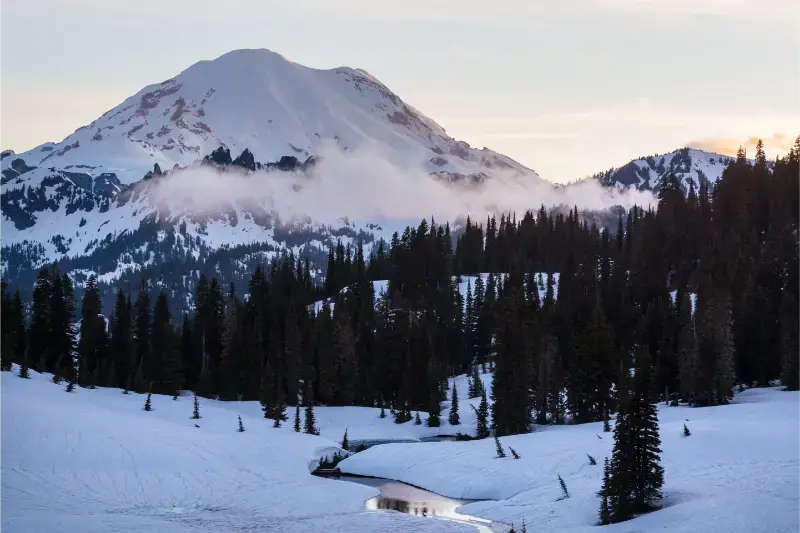
At Mount Rainier, the iconic experience does not require the longest trail. Visitor centers, waterfall stops, short meadow walks and viewpoints can fill a day, especially when children stop for snow, flowers or wildlife.
Check current road and trail access in our Mount Rainier guide. Mountain conditions can change enough that a pre-selected hike is not always the best family choice on the day.
Olympic National Park rewards a multi-base mindset
Olympic is huge. Families should avoid trying to combine Hurricane Ridge, Hoh Rain Forest and Pacific beaches in one day. Choose one major zone per day and let short walks, picnic stops and tide pools create the rest of the experience.
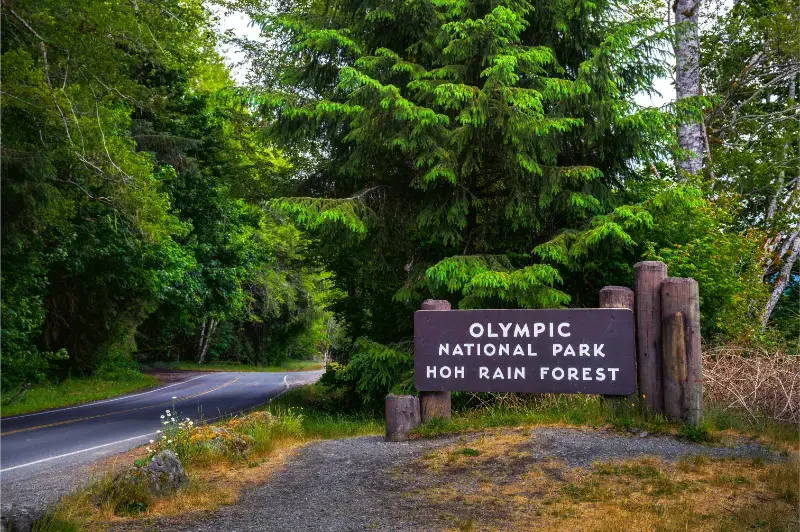
The Olympic National Park guide explains the geography. If beaches are central, tide timing becomes part of family safety; never let children run around driftwood in active surf or explore around headlands without understanding the return route.
North Cascades and Mount Baker for mountain-loving families
Diablo Lake overlooks and short walks can provide a North Cascades experience without an all-day hike. Around Mount Baker, Heather Meadows and Artist Point can be excellent when access is open and snow conditions are manageable.
For current planning, use the North Cascades guide and Mount Baker / Artist Point guide. High-elevation snow can linger after lowland summer has arrived.
Where to stay on a Washington family trip
Compare available accommodation for your dates, budget and preferred location before you finalize your route.
Family rooms, parking, refrigerators and laundry often matter more than boutique design. Compare Seattle family accommodation, Port Angeles family stays and Tacoma family hotels depending on your route.
Before booking, verify room occupancy rather than assuming two beds accommodate every family combination. On road trips, a hotel with easy parking and breakfast can save more energy than a more scenic property that requires another drive for every meal.
A realistic 10-day family route
- Days 1–2: Seattle with one ferry or waterfront day.
- Days 3–5: Olympic Peninsula with one major zone each day.
- Day 6: transfer day with a real lunch and short stop, not a packed attraction list.
- Days 7–9: Mount Rainier or Tacoma + Rainier depending on weather and lodging.
- Day 10: return to Seattle with margin before the flight.
For younger children, this is already a full trip. Add the San Juan Islands or North Cascades only by removing something else, not by making every day longer.
Rainy-day backups prevent family frustration
Washington rain is often manageable with waterproof clothing, but cold children stop enjoying even beautiful places. Keep a dry set of clothes in the car and identify one museum, aquarium, café district or easy town stop for each region.
The backup should be genuinely enjoyable, not a consolation prize. That makes it easier for adults to change plans before everyone is wet and tired.
Wildlife and water need clear family rules
Children should know before the animal appears that wildlife is observed from a distance and never followed for a photo. Around lakes, rivers and the ocean, adults should treat cold water and currents as hazards even when the shoreline looks calm.
Set one simple rule for each environment: stay behind the adult on narrow trails, never climb on driftwood in surf, and never approach wildlife. Clear rules are easier to remember than a long safety lecture.
Use driving days as part of the vacation
Washington’s scenic roads are easier with children when the transfer includes one meaningful stop: a ferry, waterfall, picnic, farm stand or short lake walk. Three minor roadside stops often create more chaos than one planned break with bathrooms and food.
For the overall route, compare the Washington State road trip itinerary and the seasonal guide. Family travel improves when the itinerary accepts the season instead of fighting it.
National-park days are better when the child has a job
Give children a simple role: carry the wildlife checklist, choose the picnic stop, complete a Junior Ranger page, photograph three kinds of leaves or help follow the trail map. Participation turns a scenic drive from something adults are “making them do” into a shared project.
Do not bribe children with the promise of a gift shop after every hike. Food, rest and a predictable routine work better. The goal is for the park to feel like exploration rather than a sequence of adult objectives that children must endure.
Packing for Washington family travel
Keep a small day bag ready with waterproof shells, warm layers, sunscreen, hats, snacks, refillable water bottles and a change of socks. The car should hold a full dry change of clothes for young children, especially on beach and rainforest days. Wet shoes can ruin the next morning if you have no way to dry them overnight.
For ferry and mountain days, keep essentials outside the main luggage so they are reachable without unloading the trunk. A simple picnic blanket, trash bag for wet gear and a few familiar snacks solve more family problems than another bag of toys.
Build margin into the part of the day you care about most
The most useful planning improvement for Washington State with kids is to protect the experience you would be disappointed to miss. Put that activity in the strongest weather or energy window, then keep the surrounding hours flexible. Parking, meals and short scenic stops should support the day rather than compete with it.
Washington trips are vulnerable to small delays that become large because water, mountain passes and two-lane roads limit alternative routes. An extra hour of margin is rarely wasted: it becomes a longer walk, an unhurried lunch or an earlier hotel check-in when everything runs smoothly.
What to check again the night before
Review the next day’s weather, road or ferry alerts, parking instructions and the official page for the main attraction. Download any map or confirmation that would be difficult to retrieve without cell service. If wildfire smoke is possible, add air quality to the list.
Also look at the boring details: fuel, snacks, water, opening hours and the last practical place to buy supplies. Those checks are what keep a scenic Washington day from turning into a search for an open gas station or a missed sailing.
A slower trip usually reveals more
It is tempting to turn a Washington road trip into a sequence of famous names. In practice, the strongest memories often come from the hour you did not schedule: watching ferries cross the sound, eating fruit from a farm stand, waiting for cloud to lift from a mountain, or walking a waterfront after dinner. Leaving room for those moments is not inefficient planning; it is the reason to travel independently.
Use driving estimates as minimums rather than promises, especially on weekends and in summer. If a destination deserves two nights, give it two nights instead of stealing an evening from one place and a morning from the next. The state is too varied to “finish,” and a route with fewer bases usually produces more actual experience.