

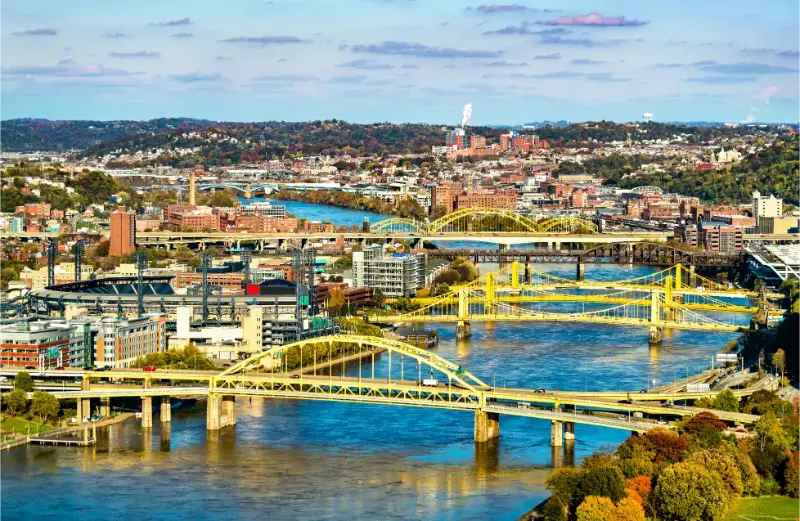
Best Things to Do in Pittsburgh: Museums, Inclines, Neighborhoods & River Views. Pittsburgh is easiest to understand when you stop treating it as one downtown and start exploring the city as a collection of river valleys, hills and distinct neighborhoods. The skyline at the Allegheny and Monongahela rivers is memorable, but the strongest visit mixes that view with museums, former industrial districts, food markets, sports neighborhoods and green riverfront space. A first trip can feel surprisingly varied even over two or three days because the Strip District, Oakland, North Shore, Mount Washington and Downtown each offer a different reason to get off the bus or light rail and walk.
Why this Pennsylvania stop is worth your time
Pittsburgh is easiest to understand when you stop treating it as one downtown and start exploring the city as a collection of river valleys, hills and distinct neighborhoods. The skyline at the Allegheny and Monongahela rivers is memorable, but the strongest visit mixes that view with museums, former industrial districts, food markets, sports neighborhoods and green riverfront space. A first trip can feel surprisingly varied even over two or three days because the Strip District, Oakland, North Shore, Mount Washington and Downtown each offer a different reason to get off the bus or light rail and walk. The goal of this guide is not to turn the destination into a checklist. It is to help you decide what deserves a place in your itinerary, how much time it needs and what practical details should be verified before you travel.

Highlights and how to experience them
Ride an incline and see the city from Mount Washington
The Duquesne and Monongahela inclines are more than photo opportunities. They are surviving pieces of Pittsburgh's hillside transportation history and still provide one of the clearest ways to understand the geography of the city. From Mount Washington, the Golden Triangle and the meeting of three rivers make much more sense than they do at street level. Go when visibility is good, and allow time to walk between overlooks rather than treating the ride itself as the entire experience.
A good visit to Ride an incline and see the city from Mount Washington starts with geography. Pennsylvania destinations often combine compact historic or urban cores with attractions that require a car, so place the fixed-time activity first and arrange flexible stops around it. That reduces backtracking and leaves room for weather, parking or unexpected discoveries.
Explore the Carnegie museums in Oakland
Oakland is the cultural heavyweight of the city. The Carnegie Museum of Natural History and Carnegie Museum of Art share a large complex, while the nearby university district adds architecture, cafés and public spaces. Families can spend several hours with dinosaurs, geology and science collections; art-focused travelers can easily devote the same amount of time to the galleries. Avoid squeezing both museums into a rushed hour simply because the buildings are connected.
A good visit to Explore the Carnegie museums in Oakland starts with geography. Pennsylvania destinations often combine compact historic or urban cores with attractions that require a car, so place the fixed-time activity first and arrange flexible stops around it. That reduces backtracking and leaves room for weather, parking or unexpected discoveries.
Walk the Strip District
The Strip District is one of the best places to see Pittsburgh's everyday food culture. Produce markets, international grocers, coffee, bakeries, old warehouse buildings and local institutions sit close together, making it ideal for a morning on foot. Weekends are livelier, but arriving early gives you more room to browse before brunch crowds and event traffic build.
A good visit to Walk the Strip District starts with geography. Pennsylvania destinations often combine compact historic or urban cores with attractions that require a car, so place the fixed-time activity first and arrange flexible stops around it. That reduces backtracking and leaves room for weather, parking or unexpected discoveries.
Visit the North Shore and North Side
The North Shore combines stadiums with riverfront paths and easy access to the Andy Warhol Museum. It works especially well on a non-game day when you can enjoy the river rather than navigating event crowds. On the North Side, the National Aviary, historic streets and smaller cultural attractions reward travelers who move beyond the stadium district.
A good visit to Visit the North Shore and North Side starts with geography. Pennsylvania destinations often combine compact historic or urban cores with attractions that require a car, so place the fixed-time activity first and arrange flexible stops around it. That reduces backtracking and leaves room for weather, parking or unexpected discoveries.
Spend time downtown and at Point State Park
Downtown is compact enough to explore on foot. Market Square, the Cultural District and the historic business core can be combined with Point State Park, where the rivers meet. The park is valuable not because it takes all day, but because it gives you open space and perspective between museums and neighborhoods.
A good visit to Spend time downtown and at Point State Park starts with geography. Pennsylvania destinations often combine compact historic or urban cores with attractions that require a car, so place the fixed-time activity first and arrange flexible stops around it. That reduces backtracking and leaves room for weather, parking or unexpected discoveries.
Use the riverfront trails
Pittsburgh has become much easier to experience by walking and cycling along the rivers. The trails link key districts and are especially useful for travelers who prefer active sightseeing. Even a short section between Downtown and the North Shore can make the bridges, skyline and topography feel connected rather than fragmented.

A good visit to Use the riverfront trails starts with geography. Pennsylvania destinations often combine compact historic or urban cores with attractions that require a car, so place the fixed-time activity first and arrange flexible stops around it. That reduces backtracking and leaves room for weather, parking or unexpected discoveries.
How long to stay
With two days, use one day for Downtown, Point State Park, Mount Washington and the Strip District, then spend the second in Oakland and the North Shore/North Side. With a third day, slow down: add a focused museum, a neighborhood such as Lawrenceville or Squirrel Hill, or a riverfront bike ride rather than filling the schedule with another distant attraction.
For most travelers, adding an extra half day is more valuable than adding another distant stop. It gives you room for weather, a slower meal, a museum that takes longer than expected or a neighborhood you discover after arrival. If you are building a statewide trip, keep transfer days honest and avoid assuming that every Pennsylvania destination can be reduced to a two-hour stop.
Where to stay
Compare available accommodation for your dates, budget and preferred location before you finalize your route.
For a first visit, Downtown is convenient for the Cultural District, Point State Park and transit. The Strip District is attractive for food-focused travelers who like a more local morning atmosphere, while the North Shore is useful for sports and riverfront access. Oakland makes sense when museums, universities or medical visits dominate the trip. Choose based on the attractions you will visit most often rather than searching the whole metropolitan area for the lowest nightly rate.
When comparing hotels, look at the total trip cost rather than only the room rate. Parking, resort or destination fees, breakfast, distance from your first activity and the time spent in traffic can make a cheaper property less useful. For high-demand weekends, reserve early with a cancellation policy that matches your plans.
Check accommodation options on Booking.com.
Food and where to eat
Pittsburgh's food identity is broader than one famous sandwich. Try pierogies, neighborhood bakeries, market food in the Strip District and modern restaurants that reflect the city's changing population. Primanti-style sandwiches are part of the local story, but a stronger food day includes more than a single checklist dish. Build meals around neighborhoods so eating becomes part of exploration instead of another cross-town journey.
A practical rule is to keep lunch close to the day’s main attraction and use dinner for a neighborhood or restaurant you specifically want to experience. This prevents a food stop from becoming an hour of extra driving. If a famous local specialty matters to you, try it once in a place known for it, then use the rest of your meals to understand the broader regional food scene.
Getting there and getting around
Many major visitor areas can be combined without a car. Pittsburgh Regional Transit buses and light rail cover central districts, and the downtown light-rail zone can be especially useful. Walking is realistic within individual neighborhoods, but steep hills mean distances on a map can feel longer. A car becomes more useful if Pittsburgh is the start of a trip to Fallingwater, Ohiopyle or the Laurel Highlands.
If you are combining several Pennsylvania regions, group destinations geographically. Philadelphia, Pittsburgh, Erie and the northern forests are spread across a large state. A route that moves steadily in one direction is usually more enjoyable than repeatedly returning to the same base after long day trips.
Best time to visit
Spring and fall are excellent for neighborhood walking and river views. Summer brings festivals, baseball and long evenings but also heat and humidity. Winter can be cold and gray, yet museums, sports and indoor attractions keep the city viable year-round. Major games, concerts and university weekends can raise hotel rates dramatically, so check the event calendar before assuming a random weekend will be inexpensive.
Weather is only one part of timing. Also check university calendars, sports schedules, festivals, fall-foliage weekends and major local events, all of which can change hotel prices and parking conditions. For outdoor destinations, verify trail, river or road conditions shortly before departure rather than assuming last year’s schedule still applies.
A realistic first-time itinerary
With two days, use one day for Downtown, Point State Park, Mount Washington and the Strip District, then spend the second in Oakland and the North Shore/North Side. With a third day, slow down: add a focused museum, a neighborhood such as Lawrenceville or Squirrel Hill, or a riverfront bike ride rather than filling the schedule with another distant attraction.
A good visit to Best Things to Do in Pittsburgh starts with geography. Pennsylvania destinations often combine compact historic or urban cores with attractions that require a car, so place the fixed-time activity first and arrange flexible stops around it. That reduces backtracking and leaves room for weather, parking or unexpected discoveries.
Do not build the day from a list of search results alone. In Best Things to Do in Pittsburgh, the quality of the trip depends on giving the most distinctive experience enough time. If one museum, trail or neighborhood is the reason you came, protect that time rather than sacrificing it to three secondary stops.
For photography and quieter streets, early morning is usually the most reliable window. Late afternoon can also be rewarding, but only if you have already solved parking and return transport. Midday is often best reserved for museums, meals or lower-priority attractions that are less sensitive to light and crowds.
Costs, tickets and reservations
Pennsylvania can be good value when free historic districts, parks, markets and scenic walks are mixed with a smaller number of paid experiences. The expensive items are usually central accommodation, event weekends, rental cars, parking and major attractions. Before paying, check whether a ticket is timed, whether parking is included and whether cancellation remains flexible.
Reserve the hardest-to-replace pieces first. That usually means a high-demand hotel, a limited-capacity tour, a major game or performance, or an activity tied to a specific departure time. Ordinary meals and flexible outdoor stops should remain adaptable when weather could change the day.
Accessibility and family planning
Accessibility can vary sharply between modern museums, historic buildings, steep streets and natural trails. If mobility is important, consult the official site for the exact attraction rather than relying on a general city guide. Families usually have a better trip when they alternate a structured attraction with open space, a casual meal or a short walk.
For children, the best schedule is rarely the one with the most admissions. Choose one anchor activity, add one flexible secondary experience and leave room for snacks, weather and energy levels. This approach is especially useful in Pennsylvania, where a city museum day can often be balanced by a park, riverfront or small-town stop.
How to combine this with the rest of Pennsylvania
Continue with Pittsburgh Pennsylvania Travel Guide · Pennsylvania Travel Hub. These connections are chosen because they fit the geography or theme of the trip rather than simply linking to unrelated popular pages.
For a longer Pennsylvania itinerary, use the state hub to choose the next region and keep driving realistic. A strong route usually combines one major city with one or two contrasting regions: historic towns, mountains, lakes or parks.
Official sources and current information
Opening hours, tickets, parking systems, restoration work, seasonal services, river conditions and event schedules can change. Before traveling, confirm the details that matter to your exact dates using the official sources below.
Frequently asked questions
Is this worth adding to a first Pennsylvania trip?
Yes when it fits the geography and interests of your route. A strong first trip usually combines one major city with one or two contrasting regions rather than trying to see every famous destination in the state. Prioritize the experiences that are difficult to replicate elsewhere and leave lower-priority stops for a future visit.
Do I need a car?
It depends on the destination. Central Philadelphia and parts of Pittsburgh work well without one, but most state parks, forest regions, small towns and cross-state routes are much easier by car. If your trip starts in a city, consider collecting the rental vehicle only when you are ready to leave the urban core.
When should I book?
Reserve high-demand lodging, timed tours, major event weekends and seasonal activities early. Keep lower-priority outdoor stops flexible until the weather forecast is clearer. Always verify operating days because some heritage attractions and recreation services do not run daily outside peak season.
How do I avoid an overpacked itinerary?
Choose one anchor experience per half day. If a museum, trail or historic district deserves three hours, give it three hours. Pennsylvania is large enough that an extra night in one region often creates a better trip than adding another destination that requires several hours of driving.
Related Pennsylvania travel guides
-
Philadelphia with Kids: Family Attractions, Museums, Parks & Easy Itineraries
Plan a family trip to Philadelphia with kid-friendly museums, historic sites, parks, markets, practical pacing and itinerary ideas for different ages.
-
Philadelphia Food Guide: Cheesesteaks, Roast Pork, Markets & Local Favorites
Plan what to eat in Philadelphia with cheesesteaks, roast pork, hoagies, pretzels, Reading Terminal Market, neighborhood dining and practical food-trip advice.
-
Best Time to Visit Pennsylvania: Weather, Seasons, Crowds & Regional Trips
Choose the best time to visit Pennsylvania for Philadelphia, Pittsburgh, fall foliage, state parks, family trips and road trips with a season-by-season guide.
-
Allegheny National Forest Pennsylvania Guide: Trails, Reservoir, Scenic Drives & Camping
Explore Allegheny National Forest in Pennsylvania with hiking, Allegheny Reservoir, scenic drives, camping, old-growth forest, paddling and fall travel tips.
-
Pittsburgh with Kids: Museums, Science, Animals, Parks & Family Trip Tips
Plan Pittsburgh with kids using a family-friendly mix of science, museums, animals, parks, inclines, riverfront walks and practical itinerary advice.
-
14-Day Pennsylvania Road Trip: Philadelphia, Amish Country, Pittsburgh, PA Wilds & Erie
Plan a 14-day Pennsylvania road trip through Philadelphia, Lancaster County, Gettysburg, Hershey, the PA Wilds, Erie, Pittsburgh, Laurel Highlands and Raystown Lake.