

Destinations › West › Utah › Moab Travel Guide
Moab is not simply the town outside Arches. It is the most useful adventure base in southeastern Utah, sitting between Arches, Canyonlands, Dead Horse Point, the Colorado River and a huge network of public lands. The best Moab trips stay several nights and alternate high-effort days with scenic or water-based activities.
Compare available accommodation for your dates, budget and preferred location before you finalize your route.
This guide focuses on how to use Moab as a base: which park to visit when, where to stay, how many days you need and what to do when heat, wind or parking makes the original plan less attractive.
Moab at a glance
| Question | Best answer |
| Ideal first stay | 3–4 nights |
| Main parks | Arches + Canyonlands |
| Best state park add-on | Dead Horse Point |
| Best non-park hike | Corona Arch |
| Best summer strategy | Dawn activity + midday recovery + evening |
| Car needed | Yes for most visitors |
Why stay at least three nights
A two-night Moab stop often produces one frantic Arches day and little else. Three or four nights let you separate Arches from Canyonlands, add Dead Horse Point and still have room for a river trip, mountain biking or a slower evening.
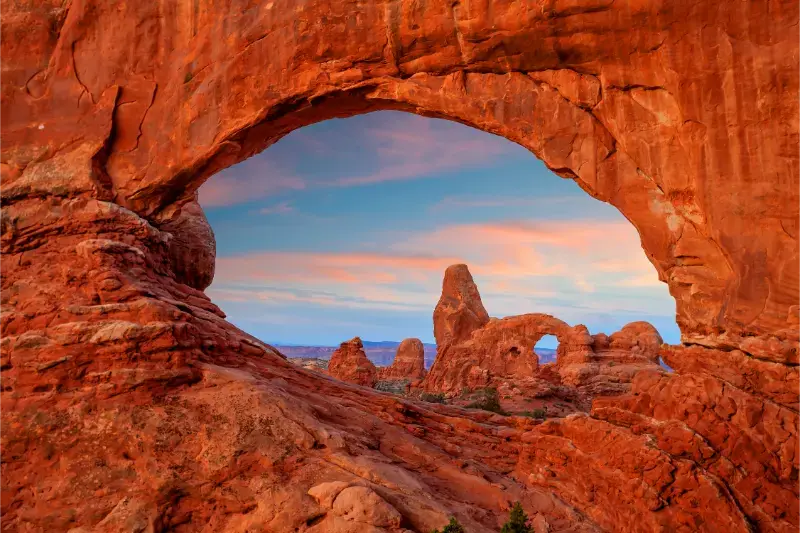
Arches from Moab
The Arches entrance is just north of town. In 2026 no advance timed-entry reservation is required, but entrance lines and full parking lots remain possible. Early morning and evening are the best tools for both heat and congestion.
Canyonlands from Moab
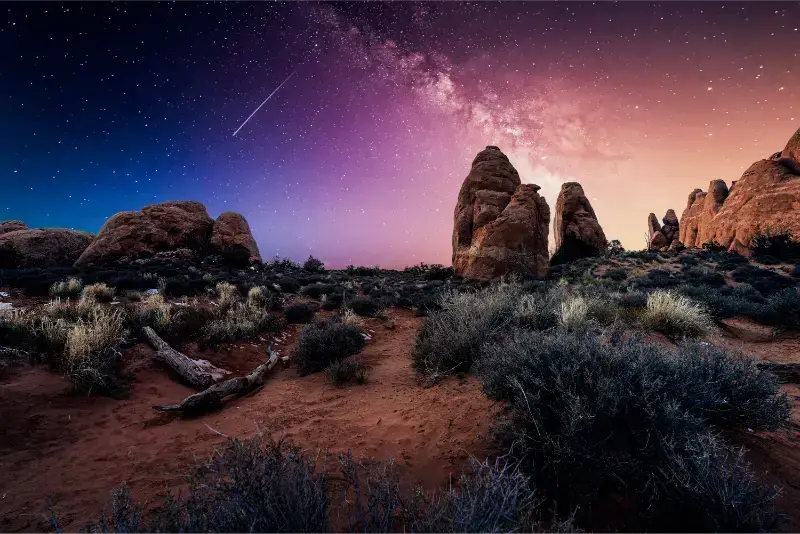
Island in the Sky is the easiest district and pairs naturally with Dead Horse Point. The Needles is much farther south and deserves a dedicated full day. Do not attempt to combine both districts as if they were adjacent trailheads.
Dead Horse Point State Park
Dead Horse Point gives you enormous canyon views with straightforward access and excellent sunset potential. It is particularly efficient on the same day as Island in the Sky because the roads branch from the same general corridor.
Corona Arch
Corona Arch is on BLM land west of Moab and does not require entering Arches National Park. The hike crosses railroad tracks, slickrock and short assisted sections with cables/ladder. Start early in warm weather because shade is limited.
Utah 128 and Fisher Towers
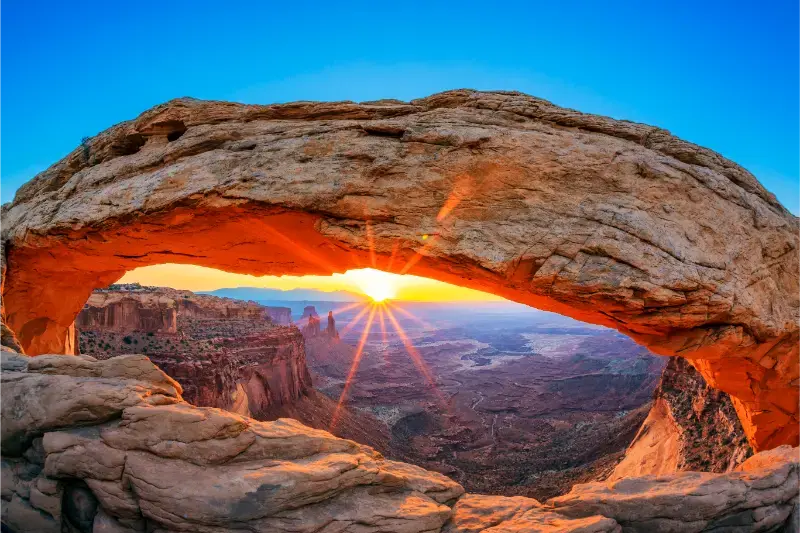
Utah 128 follows the Colorado River northeast from Moab through a dramatic canyon corridor. Fisher Towers offers one of the area’s most distinctive landscapes, while the road itself works as a lower-effort scenic outing after a long hiking morning.
Colorado River activities
Rafting and float trips provide a useful change of pace in hot weather. Choose the trip based on season, river conditions and desired intensity rather than assuming every Colorado River tour is whitewater.
Mountain biking
Moab is one of America’s iconic mountain-bike destinations, but famous trails range from beginner-friendly to highly technical. First-time riders should use a reputable rental or guide company to match terrain to skill level and current trail conditions.
Where to stay in Moab
Downtown is best for walking to restaurants and shops. North Moab slightly shortens the trip to Arches. South Moab can feel quieter and may offer better value, but you will drive a little farther to northern trailheads.
For a first visit, prioritize parking, air conditioning and a pool over boutique extras if traveling in warm months. Recovery matters after desert hiking.
Compare accommodation: compare hotels and other stays on Booking.com.
Where to eat and when
Moab restaurants can be busy at exactly the time every hiker returns from sunset. Eat early, book when possible or use a substantial late lunch before an evening outing. Carry trail snacks so hunger does not force you into a rushed schedule.
Best time to visit Moab
Spring and fall provide the broadest hiking window, but they are also busy. Summer requires early starts and conservative trail choices. Winter can be quiet and beautiful, with occasional snow and ice that change slickrock driving and hiking.
A three-day Moab plan
- Day 1: Arches, with one major hike and evening viewpoints.
- Day 2: Island in the Sky + Dead Horse Point.
- Day 3: choose rafting, biking, Corona Arch, Fisher Towers or a Needles day depending on energy.
A four-day Moab plan
Use the extra day for The Needles or for a genuine recovery/adventure day. The best fourth day is not another sunrise-to-sunset checklist; it is the activity that contrasts with what you already did.
Moab mistakes to avoid
- Treating the town as a one-night stop.
- Scheduling Arches and The Needles on the same day.
- Underestimating summer heat because trail mileage looks short.
- Driving remote dirt roads without checking vehicle requirements.
- Returning from sunset with no dinner plan.
Official resources
Continue planning your Utah trip
- Utah Travel Guide
- Best Things to Do in Utah
- Utah Road Trip: Mighty 5
- Best Places to Visit in Utah
- Best Time to Visit Utah
- Where to Stay in Utah
- Zion National Park Travel Guide
- Bryce Canyon National Park Travel Guide
- Arches National Park Travel Guide
- Moab Travel Guide
- Canyonlands National Park Travel Guide
Recovery is part of the itinerary
A pool, shaded lunch, laundry break or slow river evening can be the decision that makes the next day’s hike enjoyable. Multi-day desert trips fail when every day is planned as if it were the only day.
Frequently asked questions
How many nights in Moab?
Three to four nights is ideal for a first trip.
Can I visit Arches and Canyonlands in one day?
You can see small parts of both, but separate days produce a much better experience.
Is Moab good with kids?
Yes, especially with shorter Arches walks, Dead Horse Point, river activities and careful heat planning.
Final planning checklist
- Check official park conditions 24–48 hours before major hikes.
- Download offline maps before leaving gateway towns.
- Carry water, sun protection and a warm layer even when the forecast looks simple.
- Keep one activity per day flexible for parking, storms or heat.
- Avoid scheduling a long drive immediately after a demanding sunset hike.
A deeper planning strategy
Moab works best when one day is intentionally less ambitious. After two early national-park mornings, use a slower day for the river, a short hike, laundry, a long lunch, a scenic drive or the pool. This is not wasted time; it protects the quality of the next sunrise or long hike. Desert travel accumulates fatigue through heat, dry air, early alarms and hours on your feet. Travelers who ignore that often discover that their fourth day is physically miserable. A four-night Moab stay lets the area feel like a destination rather than a staging ground, and it creates the flexibility to move Arches or Canyonlands around wind, storms and parking conditions.
Moab with kids
Moab can be excellent for families when the itinerary uses shorter hikes, river time and pool breaks. Windows and Double Arch in Arches, Dead Horse Point and easy Colorado River activities provide big scenery without requiring technical skills.
The main risk is overestimating how well children tolerate heat and repeated early mornings. Build one low-effort afternoon into a multi-day stay and carry more snacks and water than you would at home.
Off-road driving: know what you are renting
Moab’s 4WD culture is visible everywhere, but rental contracts and road difficulty vary enormously. A road that looks smooth in a video may have ledges, sand or weather damage. Do not take a standard rental onto a route that requires high-clearance 4WD.
Guided 4WD trips are often a better first experience because you can see remote terrain without risking a vehicle or misunderstanding route conditions. If you drive yourself, check BLM or NPS conditions and carry recovery gear appropriate to the route.
Season-by-season Moab rhythm
Spring and fall are the classic hiking seasons and also the busiest. Summer favors dawn hikes, river activities and long midday breaks. Winter can offer solitude and low-angle light but requires flexibility for snow, ice and cold nights.
Wind is an underrated factor. Strong desert winds can make exposed rim walks, biking and picnics unpleasant even when the temperature looks ideal. Keep one sheltered or lower-effort backup activity.
Moab in a wider Southwest trip
Moab connects naturally with Capitol Reef to the west, Monument Valley to the south and Colorado to the east. The best continuation depends on how many nights remain. Do not add Monument Valley as a same-day out-and-back after a full national-park morning.
If you are crossing from Arizona, use Moab as a reset point: stay several nights rather than treating it as another one-night box between Monument Valley and Salt Lake City.
Practical services and downtime
Moab has supermarkets, outfitters, fuel, laundromats and medical services, which is another reason it works well as a multi-night base. Restock water and food before remote days rather than waiting until the morning of a Needles drive. If your trip includes camping, river gear or bike rentals, confirm pickup hours before building the day around sunrise or sunset.
Evenings can be surprisingly busy in peak season. A simple strategy is to eat an early dinner before sunset, or have a later meal plan that does not depend on getting a table immediately after hundreds of visitors return from the parks.
Go deeper around Moab
Use these guides for activities beyond the national parks and for the southbound/northbound road trip toward Monument Valley.