

Destinations › Pacific USA › Washington State travel guide › Best Places to Visit in Washington State: 25 Destinations Worth Building a Trip Around
Washington is easiest to understand as several very different trips sharing one state. Seattle and Puget Sound feel maritime and urban; the Olympic Peninsula combines rainforest, mountains and wild Pacific beaches; the Cascades create volcanoes, alpine roads and hiking country; east of the mountains, the climate becomes drier and wine, agriculture and river landscapes take over. A strong itinerary does not try to sample every zone in five days.
This guide is a decision tool rather than a ranking. The 25 places below are worth considering for different reasons, and the useful question is not which is “best” in isolation but which group of places fits your season, driving tolerance and interests. First-time visitors usually get more from Seattle plus one or two nature regions than from a statewide sprint.
Washington State trip planning at a glance
| Best first trip | Seattle + Olympic National Park + Mount Rainier |
| Best alpine trip | North Cascades + Methow Valley + Mount Baker region |
| Best island trip | San Juan Islands + Whidbey Island + Seattle |
| Best east-side extension | Leavenworth + Yakima Valley or Walla Walla |
| Ideal length | 8–14 days for a multi-region road trip |
1. Seattle: the most useful gateway, not just an airport stop
Seattle deserves at least two full days because the city works as its own destination and as the logistical center for ferries, national parks and the Cascade corridor. Pike Place Market, the waterfront, Seattle Center, neighborhoods such as Capitol Hill and Ballard, parks and viewpoints create a trip that feels very different from the mountain days around it.
Stay without a rental car if your first days are city-focused, then collect the vehicle when you leave. That avoids downtown parking costs and lets you use light rail, buses, walking and ferries. Read our Seattle travel guide before deciding where to sleep.
2. Mount Rainier: Washington’s defining mountain landscape
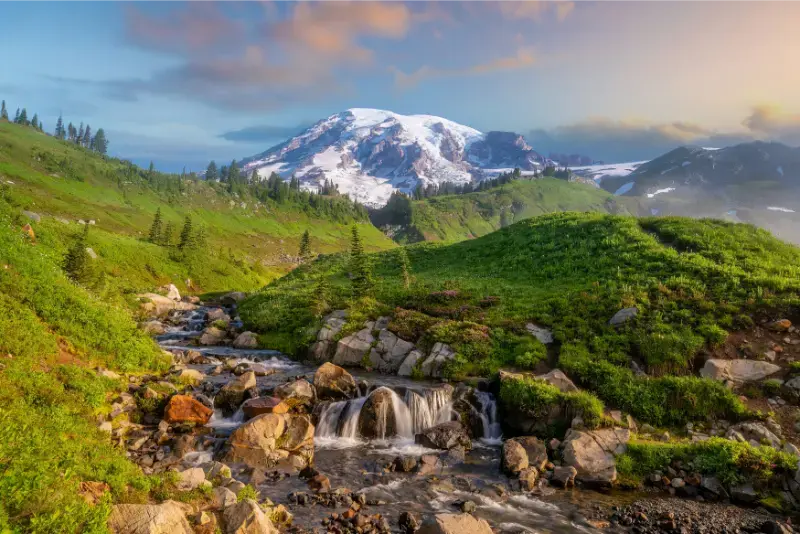
Mount Rainier National Park is the classic volcano-and-wildflower destination, but it is not a single viewpoint. Paradise and Sunrise offer different approaches, and seasonal access can change what is realistic. In 2026 the park does not require timed-entry reservations, but congestion and parking still matter, especially on summer weekends.
Treat Mount Rainier as a hiking and landscape day, not as a quick roadside photo stop between Seattle and another distant hotel. A nearby overnight gives you an early start and more flexibility than commuting from downtown Seattle. Use the Mount Rainier guide for current planning.
3. Olympic National Park: mountains, rainforest and Pacific coast in one loop
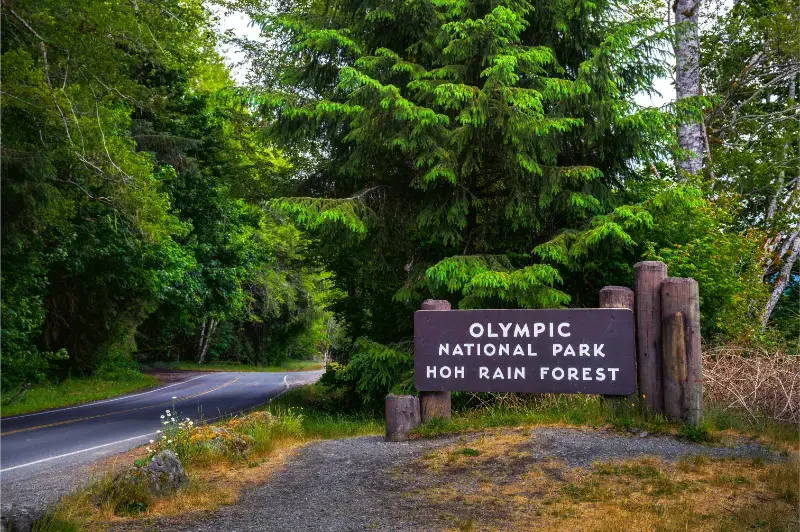
Olympic is the state’s strongest destination for variety. Hurricane Ridge, Lake Crescent, temperate rainforest valleys and the outer coast sit in the same park, but the roads do not cut straight across the mountains. That means a good visit is a loop with two or three bases, not a single long day from Seattle.
Port Angeles works for the north side, Forks for the west, and Lake Quinault or the southern corridor for a slower loop. Distances on the peninsula routinely take longer than a map suggests because sightseeing itself is the point.
4. North Cascades: dramatic scenery with fewer urban distractions
The North Cascades Highway is one of Washington’s great seasonal drives. Diablo Lake, Washington Pass and trailheads along State Route 20 make the corridor accessible when the road is open, while much of the actual national park remains backcountry. This is a place where the distinction between “national park,” recreation area and surrounding forest matters less to travelers than understanding access.
Pair the highway with Winthrop or the Methow Valley rather than trying to return to Seattle after a full mountain day. Snow and avalanche conditions normally close the high highway in winter, so this is primarily a late-spring-through-fall road-trip component.
5. San Juan Islands: slow down instead of collecting ferry crossings
Friday Harbor on San Juan Island, Eastsound and Moran State Park on Orcas, and quieter Lopez all offer different versions of island life. The mistake is to treat the archipelago like a checklist and move a car between several islands in a weekend. Ferries are part of the trip, but they also consume time.
Choose one island for a two- or three-night stay unless you have a longer itinerary. Vehicle reservations on the Anacortes–San Juan route are strongly recommended; walk-on travel removes much of the reservation pressure if your plans can work without a car.
6. Leavenworth: use the Bavarian theme as a gateway to the Cascades
Leavenworth’s themed center is fun, especially during events and winter lights, but the town becomes more interesting when you connect it to Icicle Creek, nearby trails, river scenery and the Alpine Lakes Wilderness. Two nights lets you experience both the pedestrian core and the mountain setting.
It also works as a bridge between Seattle and central/eastern Washington. Summer hiking, autumn larches and winter snow produce very different trips, so choose the season before building the activity list.
7. Mount St. Helens: the state’s most powerful geology lesson
Mount St. Helens is not simply another Cascade volcano. The 1980 eruption reshaped the landscape, and the drive on Spirit Lake Memorial Highway explains that transformation through viewpoints, lakes and interpretive sites. In 2026, Johnston Ridge Observatory remains unreachable while the SR 504 bridge replacement continues, so visitors should plan around currently accessible west-side stops instead of following older itineraries.
The monument is especially valuable for travelers who like geology, photography and landscapes with visible ecological recovery. It pairs naturally with southwest Washington or a Portland extension.
8–12. Whidbey Island, Deception Pass, Bellingham, Mount Baker and Tacoma
Whidbey combines ferry travel, small towns and Ebey’s Landing landscapes. Deception Pass adds one of the state’s most dramatic bridges and coastal parks. Bellingham is a practical food-and-waterfront base for the Mount Baker corridor, while Mount Baker Highway leads toward alpine scenery and seasonal hiking. Tacoma, meanwhile, deserves attention for glass art, museums and a waterfront setting that is easy to overlook when travelers rush between Seattle and Rainier.
These places are often strongest as connectors. Whidbey can link Seattle with the San Juans; Bellingham can precede North Cascades; Tacoma can split an airport day from Rainier. Their value is partly geographic, which is why they belong in realistic road-trip planning.
13–17. Port Townsend, Lake Chelan, Winthrop, Yakima Valley and Walla Walla
Port Townsend adds Victorian architecture and a ferry-linked peninsula location. Lake Chelan is a long freshwater destination with boating, wineries and access toward Stehekin. Winthrop provides a western-themed base in the Methow Valley, while Yakima Valley and Walla Walla shift the focus toward vineyards, orchards, food and much drier weather east of the Cascades.
Do not combine all five on a first trip unless you have two weeks or more. Choose the east-side region that matches your route: Winthrop for North Cascades, Chelan for lake time, Yakima for a Rainier-to-interstate transition, and Walla Walla for a dedicated wine-and-food extension.
18–22. Spokane, Palouse, Columbia River Gorge, Lake Wenatchee and Snoqualmie Pass
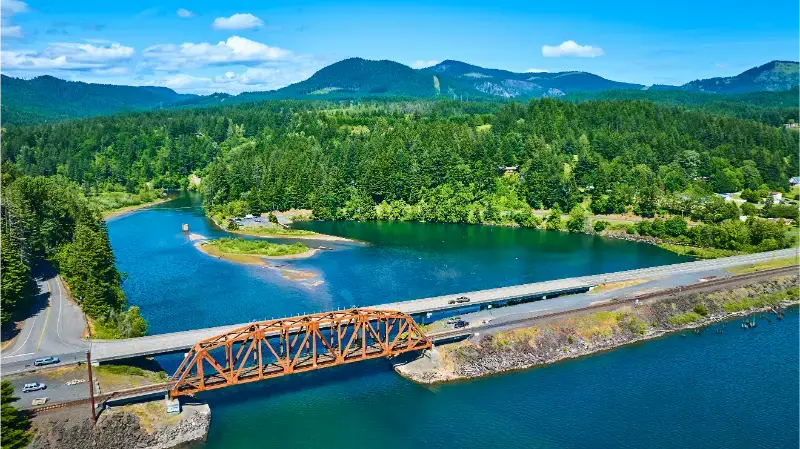
Spokane is Washington’s major eastern city and a useful base for a trip that is not centered on Seattle. The Palouse is about rolling agricultural landscapes and photography rather than marquee attractions. The Columbia River Gorge forms Washington’s southern edge opposite Oregon and supports hiking, waterfalls and river views. Lake Wenatchee and Snoqualmie Pass create mountain stops that can break up longer drives.
These destinations show why “Washington State” should not be reduced to rainy Seattle stereotypes. East of the Cascades, sunshine, open landscapes and agricultural regions change the feel of the trip completely.
23–25. Long Beach Peninsula, Cape Disappointment and the Olympic coast
Southwest Washington has a broad sandy coast, cranberry country and Cape Disappointment’s headlands and lighthouse landscapes. Farther north, Olympic beaches such as Rialto, Ruby and Kalaloch feel wilder and more rugged. Coastal Washington rewards travelers who accept wind, fog and rain as part of the atmosphere rather than waiting for a guaranteed blue-sky day.
Build beach time around tides and safe access, not just sunset. Drift logs, surf and cold water create real hazards. A coast day should remain flexible if conditions are rough.
How to choose your Washington regions
- For 4–5 days: Seattle + one major nature region.
- For 7–9 days: Seattle + Olympic + Mount Rainier, or Seattle + San Juans + North Cascades.
- For 10–14 days: add an east-of-Cascades loop such as Leavenworth/Methow/Yakima.
- For winter: favor Seattle, Leavenworth, storm-watching coast and snow activities rather than high seasonal roads.
- For families: use fewer bases and one major activity per day.
Official sources to check before departure
Conditions change quickly in Washington because ferries, wildfire smoke, mountain snow and road projects can affect a route. Start with State of Washington Tourism, the relevant National Park Service site and WSDOT for ferries and roads. These are more useful for final-week checks than a static itinerary published months earlier.
A better way to build this Washington trip
Build the route around geography first. A trip that looks efficient on a state map can become exhausting when it crosses Puget Sound, waits for a ferry, circles the Olympic Mountains and then returns across Seattle traffic before heading to Rainier. Keep each day inside one travel corridor whenever possible, and use two-night bases to reduce repacking.
Reserve the difficult pieces first—summer park-area lodging, San Juan vehicle ferry space, festival weekends in Leavenworth and any permit-dependent hike. Leave ordinary city meals and flexible stops until later. That balance gives you certainty where capacity is scarce without turning the whole trip into a chain of nonrefundable appointments.
Continue planning Washington State
Start with the Seattle guide, Mount Rainier, Olympic, North Cascades and San Juan Islands guides, then use our 14-day Washington road trip to connect them.
For deeper planning beyond the headline parks, compare Tacoma Washington, Spokane Washington, Walla Walla Washington, Lake Chelan Washington, Whidbey Island Washington, Bainbridge Island Washington, Bellingham Washington, Winthrop Methow Valley, Palouse Washington, Columbia River Gorge Washington. These places show how different the state feels once you move between Puget Sound, the Cascades and Eastern Washington.
For more specific planning, continue with Mount Baker Artist Point, Port Townsend Washington, Olympia Washington, Yakima Valley Washington, Tri-Cities Washington, Vancouver Washington, Snoqualmie Falls and Pass, Washington Coast Road Trip, Washington State Ferries, Washington with Kids. Choose the guides that match your route rather than adding every region to one trip.